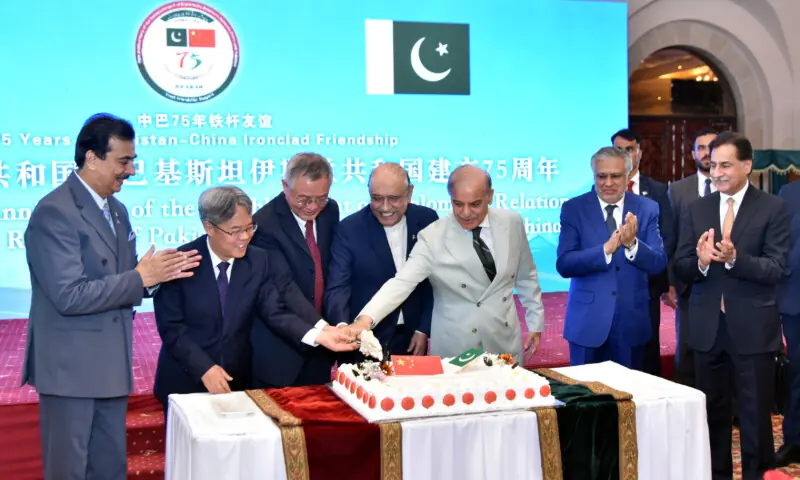
Pakistan and China marked 75 years of diplomatic relations, with both sides reaffirming support for an all-weather strategic partnership and deeper CPEC cooperation. The article highlights continued Chinese backing for Pakistan across infrastructure, technology, agriculture, and security, including support for CPEC 2.0 and Gwadar Port. The tone is broadly positive but largely ceremonial, with limited immediate market impact.
The market relevance here is less about rhetoric and more about policy durability: Beijing is signaling that Pakistan remains a strategic sink for capital, which lowers the probability of a hard reset in CPEC-related spending even as global China exposure gets repriced elsewhere. The second-order winner is Pakistan’s external financing stack — not because funding suddenly improves, but because Chinese support can function as a backstop that compresses near-term default and rollover risk, particularly around sovereign USD bonds and Pakistan-linked EM sentiment.
The more interesting tradeable channel is not Pakistan equities themselves, but regional industrial and logistics beneficiaries tied to CPEC 2.0 if the scope shifts toward mining, agriculture, digital infrastructure, and power transmission. Those sectors imply higher capex intensity and longer-duration project pipelines, which tends to favor engineering, grid, and equipment suppliers with China exposure more than pure commodity exporters. The defense/security angle also matters: if Chinese personnel protection becomes a binding constraint, incremental Pakistani fiscal resources may be diverted toward security rather than growth, limiting upside for broad domestic consumption.
Contrarian risk: the headline optimism can mask execution drag. Pakistan’s history of project delays, FX shortages, and security incidents means the economic payoff likely arrives over years, while the political benefit is immediate; that mismatch can make any rally in local risk assets vulnerable to disappointment over the next 1-3 quarters. For China, the upside is strategic access, but the cost is concentration risk in a politically fragile corridor — if terrorism or domestic instability rises, Beijing could become more selective on disbursements, capping the re-rating.
Overall, this is mildly positive for Pakistan sovereign risk and China-aligned infrastructure names, but the cleaner expression is through volatility and relative-value rather than outright beta. The consensus likely overstates the near-term growth impulse and understates how much of the value accrues through risk mitigation, not earnings acceleration.
AI-powered research, real-time alerts, and portfolio analytics for institutional investors.
Request DemoOverall Sentiment
mildly positive
Sentiment Score
0.25
