
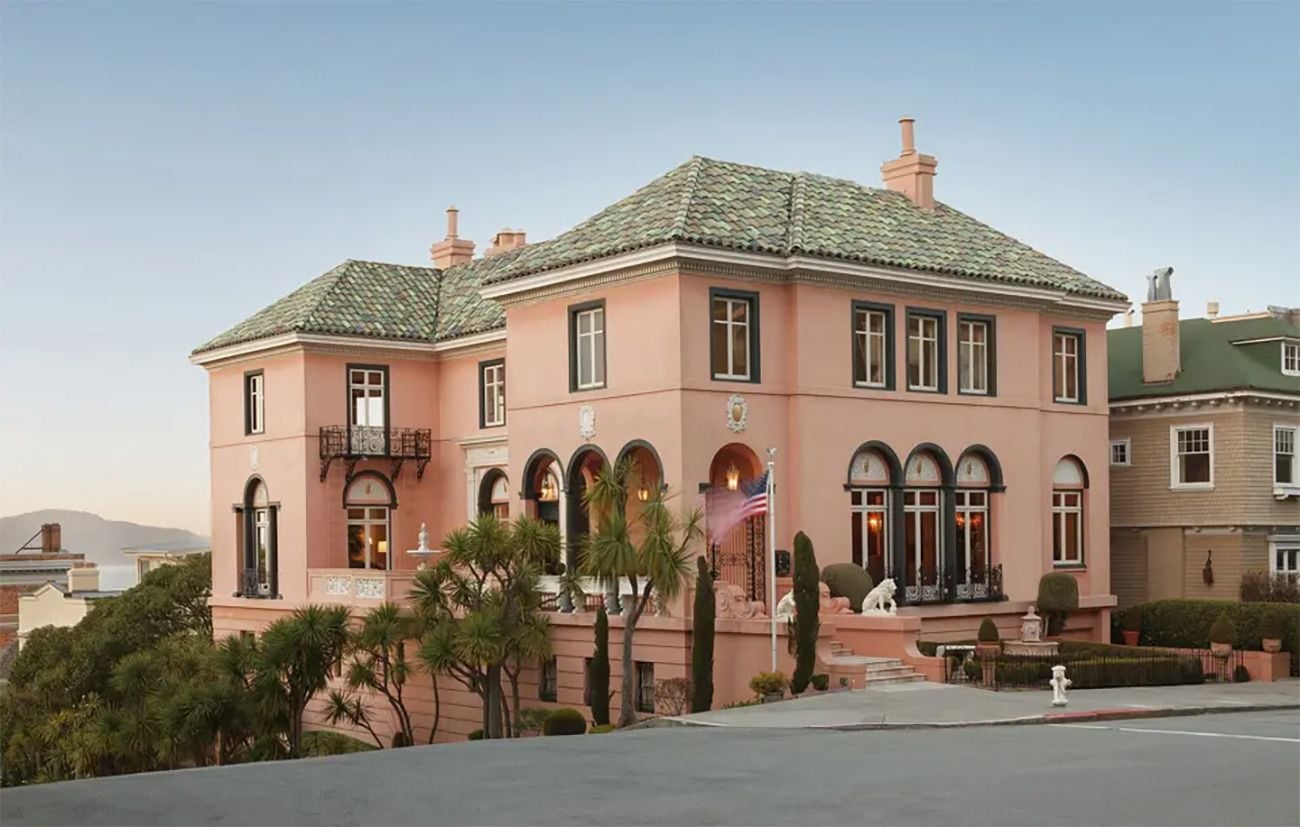
A Pacific Heights mansion sold for $56 million, the neighborhood's biggest sale since Laurene Powell Jobs's $70 million purchase two years ago, highlighting continued strength at the top end of the luxury housing market. The rest of the article covers a severe Pacific storm, a fatal police chase, a missing persons case, a reward for a missing Oakland coffeeshop owner, Eric Swalwell's resignation announcement, and BART ridership topping 200,000 daily weekday riders in March, still roughly half of pre-pandemic levels. Overall, the piece is mostly local-news roundup with limited direct market impact.
The clearest market signal here is not the trophy sale itself, but the continued durability of upper-end Bay Area wealth despite higher rates and tighter transaction liquidity. That implies luxury housing in a handful of prime micro-markets remains insulated from broader affordability stress, while related services — private banking, high-end construction, bespoke furnishing, and property management — keep capturing wallet share even as the average transaction market weakens.
The more interesting second-order angle is that a very localized wealth effect can mask broader regional fragility. If tech compensation and liquidity events stay constrained, the demand base for trophy assets narrows further, making this segment even more dependent on a small set of ultra-high-net-worth buyers; that raises the probability of lumpy, headline-driven pricing rather than a smooth recovery. For public comps, the signal is better read as support for premium-branded luxury housing and private wealth managers than as a broad real-estate beta indicator.
On weather, the rapid intensification narrative matters more than the storm track itself: it reinforces a higher-volatility regime for Pacific weather, which tends to reprice insurance, reinsurance, and catastrophe-exposed municipal credit with a lag. The base case is not immediate earnings damage, but a months-long tightening in risk models and underwriting assumptions if the winter pattern validates, especially for carriers with concentrated coastal exposure. Transportation prints are similarly mixed: BART’s ridership improvement is constructive for a slow recovery in urban transit utilization, but it still signals a structurally smaller addressable market than before, which keeps pressure on fare-funded operators and municipal subsidy needs.
The contrarian takeaway is that consensus may over-interpret one trophy sale as a broad luxury rebound. In reality, the asset class is likely becoming more bifurcated: ultra-prime homes with scarcity value should remain liquid, while broader high-end residential and adjacent services remain rate-sensitive. The risk/reward therefore sits in relative-value expressions rather than outright housing longs.
AI-powered research, real-time alerts, and portfolio analytics for institutional investors.
Request TrialOverall Sentiment
neutral
Sentiment Score
0.02
Ticker Sentiment
