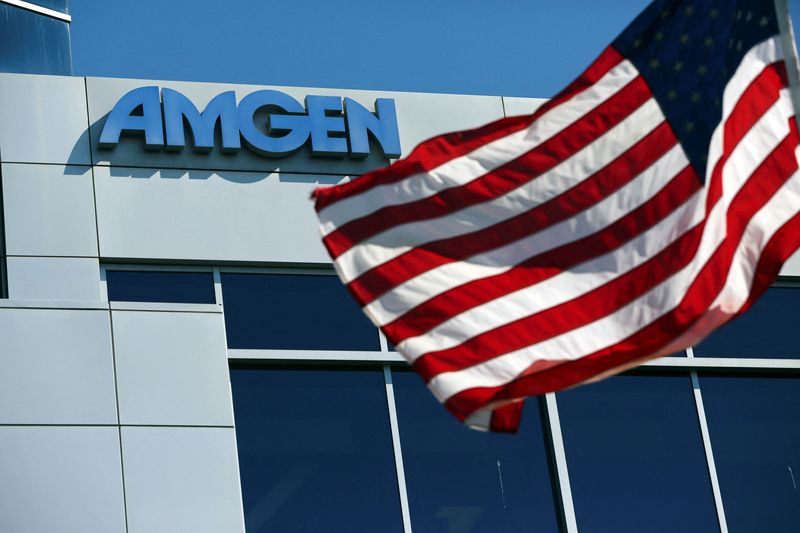
Amgen’s results beat expectations, with revenue 1% above consensus and EPS 8% above consensus, helped by strong growth in six key franchises that now represent nearly 70% of product sales. Repatha grew 34% year over year, and management raised guidance for the rest of the year. Offseting the positives, BofA kept an Underperform rating while lifting its price target to $307 from $304, citing LOE headwinds and a cautious view on MariTide and olpasiran.
AMGN’s setup is improving operationally, but the market is likely still discounting it as a mature cash-flow compounder rather than a re-rating candidate. The key second-order effect is that the growth mix is becoming less dependent on legacy blockbusters, which reduces near-term earnings fragility and should support multiple stability even if headline revenue growth remains only mid-single digit. That said, the stock’s main overhang is not the current quarter; it is whether the next wave of obesity/weight-loss assets can credibly extend growth beyond the current franchise rotation.
The contrarian read is that good execution may actually cap upside in the near term: when a large-cap biotech beats and raises off efficiency gains and mix shift, sell-side models usually move up only modestly because investors remain anchored to LOE risk. In other words, the market may treat this as “defensive confirmation” rather than “new growth story,” which limits immediate multiple expansion unless MariTide or other pipeline assets de-risk meaningfully over the next 3-6 months. Competitively, stronger uptake in cardiovascular and immunology indications can pressure peers with adjacent portfolios by tightening payer and physician attention around high-value chronic care franchises.
The biggest tail risk is that consensus underestimates how sensitive AMGN remains to pipeline disappointment once the current growth drivers mature; if the next readout cycle slips, the stock could revert to being valued on ex-growth cash yield rather than innovation optionality. Over the next 1-2 quarters, the path of least resistance is modest upside from estimate revisions, but over 12-24 months the move depends on whether the company can convert balance-sheet strength into a durable pipeline narrative. In short: near-term fundamentals look better than sentiment, but the longer-duration debate is still unresolved.
AI-powered research, real-time alerts, and portfolio analytics for institutional investors.
Request DemoOverall Sentiment
mildly positive
Sentiment Score
0.35
Ticker Sentiment
