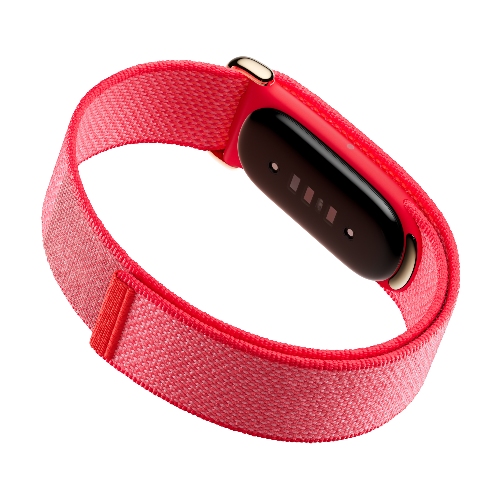
Google's Fitbit Air launches on May 26 and introduces an AI-powered health coach priced at $10 per month, alongside a lightweight 12g design and roughly one-week battery life. The article is broadly positive on the product's convenience and health-tracking utility, while flagging privacy and medical-advice risks around sharing personal health records with an AI model. Market impact appears limited, but the launch reinforces Google's push into AI-enabled health and wearable devices.
GOOGL is trying to turn wearables from a hardware engagement problem into a software subscription problem. The strategic upside is not the device margin; it is the creation of a higher-frequency consumer health loop that can improve retention across Android, Fitbit, and Health app touchpoints and raise the value of the underlying user graph. If adoption is real, this creates a path to modest ARPU expansion without depending on ad load, while also strengthening Google’s position in health data aggregation ahead of broader AI assistant monetization.
The second-order winner is likely the accessory and channel ecosystem, not the tracker itself. A lightweight, week-long battery device expands the installed base of “always-on” users, which should support band/strap attach rates and keep Fitbit relevant in a category where many devices become drawerware within months. It may also pressure Apple and Samsung to respond on practicality rather than sensor wars; convenience and adherence are the real moat here, not marginal accuracy gains.
The key risk is trust. Health advice that is even occasionally wrong can trigger regulatory scrutiny, app-store backlash, or consumer hesitation, and that risk is amplified by the subscription layer because paid advice raises expectations. The realistic time horizon is months, not days: initial engagement can look strong while retention, complaint rates, and physician-validation signals will determine whether this becomes a durable service or a novelty. The biggest reversal catalyst would be any widely publicized harmful recommendation or privacy concern tied to personal medical records.
AI-powered research, real-time alerts, and portfolio analytics for institutional investors.
Overall Sentiment
mildly positive
Sentiment Score
0.20
Ticker Sentiment
