
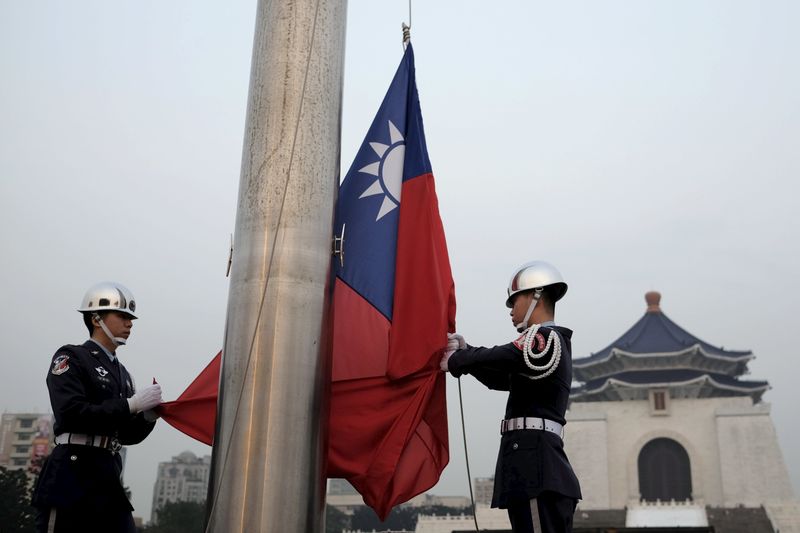
Taiwan criticized China after Beijing reportedly expelled New York Times reporter Vivian Wang, citing coverage of Lai Ching-te and other sensitive topics. The episode underscores rising cross-strait tensions, pressure on foreign journalists in China, and continued risks to press freedom and regional stability. The article is largely political and reputational in nature, with limited direct market impact.
This is a low-direct-fundamental but high-signal geopolitical catalyst for NYT: the marginal impact is not revenue loss in China so much as a higher probability of continued friction with the PRC ecosystem that can impair access, reporting cadence, and local sourcing over time. For a premium news brand, the second-order risk is asymmetric: even small constraints on foreign bureau operations can degrade content differentiation and subscription conversion at the margin, especially if they force more reliance on wire copy or remote reporting.
The broader market read-through is that Beijing is still willing to use journalist access as a signaling tool, which raises the probability of additional non-tariff retaliation against Western media, tech platforms, and brand-heavy consumer names whenever cross-strait headlines intensify. That tends to extend the “China risk discount” beyond direct Taiwan exposure into companies with advertising, licensing, or newsroom footprints tied to China-sensitive narratives. The reaction window is usually short in price but long in operational drag: headline risk can fade in days, while bureau-level constraints can persist for quarters.
Consensus may be underestimating the reputational boost for NYT outside China: being targeted by Beijing can reinforce the paper’s editorial positioning with its core audience and may even support engagement/subscription retention among politically engaged readers. So the trade is not a clean short on fundamentals; it is more likely a volatility and event-risk expression than a directional equity bet. The asymmetry favors selling upside volatility after the first headline flush rather than pressing a large cash short, unless tensions escalate into a broader media crackdown.
For Taiwan-linked geopolitics, the more important consequence is that these incidents increase the odds of further administrative retaliation around visits, airspace permissions, and information controls. That keeps the geopolitical risk premium elevated in semis and Asia-exposed multinationals, but with a lag and only if the rhetoric translates into concrete restrictions. Absent escalation, the market will likely treat this as another noisy but contained China/Taiwan data point.
AI-powered research, real-time alerts, and portfolio analytics for institutional investors.
Request TrialOverall Sentiment
neutral
Sentiment Score
-0.10
Ticker Sentiment
