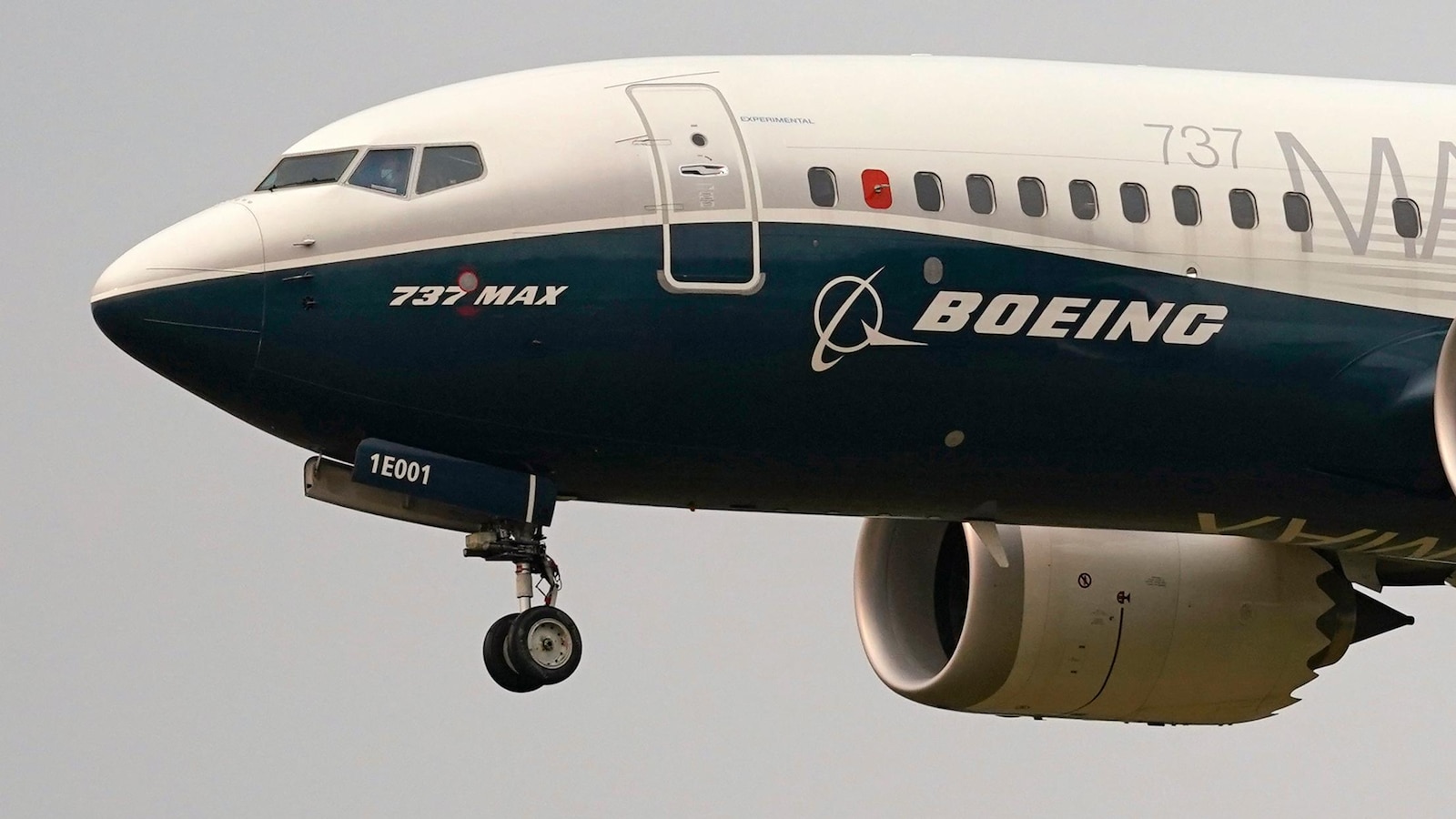
Boeing posted fourth-quarter revenue of $23.95 billion, up nearly 60% from $15.24 billion and above the $22.6 billion FactSet estimate, as commercial deliveries rose to 160 from 57 a year earlier. The company reported a GAAP profit of $8.13 billion ($10.23/share), including a $9.67 billion gain from sale of parts of its Digital Aviation Solutions business, and adjusted EPS of $9.92 versus Wall Street's expected loss of $0.44. The FAA raised the 737 Max production cap to 42 jets/month and a federal criminal charge was dismissed under a deal that includes $1.1 billion in payments, reducing key legal and production overhangs that had weighed on the stock.
Market structure: Boeing (BA) is an outright beneficiary of a reaccelerating narrowbody cycle — 160 deliveries in 4Q and an FAA-backed production cap lift to 42/mo materially increases cash conversion (buyers pay on delivery). Winners include OEM engine/avionics suppliers (GE, RTX, Honeywell) and capital markets (BA equity and corporate credit); airlines benefit long-term from fleet renewal but face near-term capex timing risks. Commodities (aluminum, titanium) see incremental demand; jet-fuel sensitivity persists for airline demand elasticity.
Risk assessment: The headline $8.13B profit is skewed by a $9.67B one-time sale; normalized operating cash flow and free cash flow excluding the Digital Aviation disposal are the true health signals. Tail risks: renewed FAA production constraints, a fresh safety incident, or a reversal on legal concessions could erase >30% equity value quickly; key horizons: days (earnings reaction), 1–6 months (production/FAA developments), 1–3 years (brand/revenue recovery). Hidden dependency: reliance on delivery cadence and supplier throughput — a single supplier disruption can cascade into missed revenues.
Trade implications: Tactical long exposure to BA is justified but size-constrained and conditional on operational metrics: target 12-month upside of 25–35% if deliveries sustain >140/qtr and free cash flow turns positive ex-sale within 2 quarters. Use options to buy convexity (12-month LEAPs ~30% OTM) and income strategies (60-day 15% OTM cash-secured puts) to lower entry. Credit: BA bond spreads should tighten; opportunistic bond buys if spreads exceed +150bps over Treasuries.
Contrarian angles: Consensus glosses over the signal that profitability relied on disposals — the market may be underpricing governance/regulatory tail risk from FAA independence and self-selected compliance consultant. Historical parallels (post-2019 quality crisis) show stop-start recovery; if another production incident occurs, downside could be 30–40%. Conversely, if Boeing converts backlog into steady FCF for 2 consecutive quarters, upside re-rating could be rapid and underappreciated.
AI-powered research, real-time alerts, and portfolio analytics for institutional investors.
Request DemoOverall Sentiment
strongly positive
Sentiment Score
0.68
Ticker Sentiment
