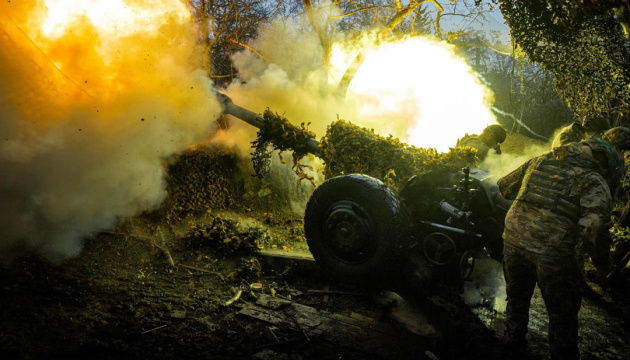
ISW reports Ukrainian gains on the southern front (Kinska River through Orikhiv and advances in the Oleksandrivka sector) have put the Russian command in a tactical deadlock, forcing competing redeployments across axes including the Donetsk "fortress belt," Dobropillia, Kupiansk and buffer-zone efforts in Kharkiv and Sumy. These constraints likely disrupt Russia's Spring–Summer 2026 offensive preparations and could lead to modest repricing of regional risk and selective upside for defense suppliers, while broader market impact should be limited.
The operational dilemma facing the Russian command is a demand shock for sustained munitions, ISR, and mobility rather than a one-off strike campaign — that shifts value from short-term strike platforms to companies that can deliver throughput, spares, and persistent surveillance. Expect procurement cycles to lengthen and budgets to prioritize repeatable production (artillery, guided shells, loitering munitions) and on-demand imagery for 12–36 months; this favors firms with scalable manufacturing and near-term capacity expansion plans over bespoke systems with long lead times.
Second-order supply-chain winners will be parts suppliers, precision-fuze/submunition assemblers, and commercial space/remote-sensing providers because militaries will pay a premium to shorten lead times; conversely, commodity-exposed European OEMs that rely on Russian inputs or single-source subcontractors may see margin pressure and schedule risk. Logistics and repair ecosystems (wheeled/tracked vehicle makers, depot-level maintenance providers) will see steady annuity-like revenue while the front-lines remain contested, creating multi-quarter visibility for a subset of suppliers.
Key catalysts to watch are tranche timing of Western aid packages (days–weeks), announced multi-year procurement frameworks (3–12 months), and any shift to strategic escalation (weeks–months) that would reroute production or open financing windows. The primary contrarian point: markets can misread headline operational gains as an immediate structural drawdown in risk, when in fact the path creates a long tail of demand — so prefer trades that capture sustained procurement upside while hedging event-driven volatility (earnings, tranche approvals, or ceasefire talks).
AI-powered research, real-time alerts, and portfolio analytics for institutional investors.
Request DemoOverall Sentiment
mildly positive
Sentiment Score
0.08
