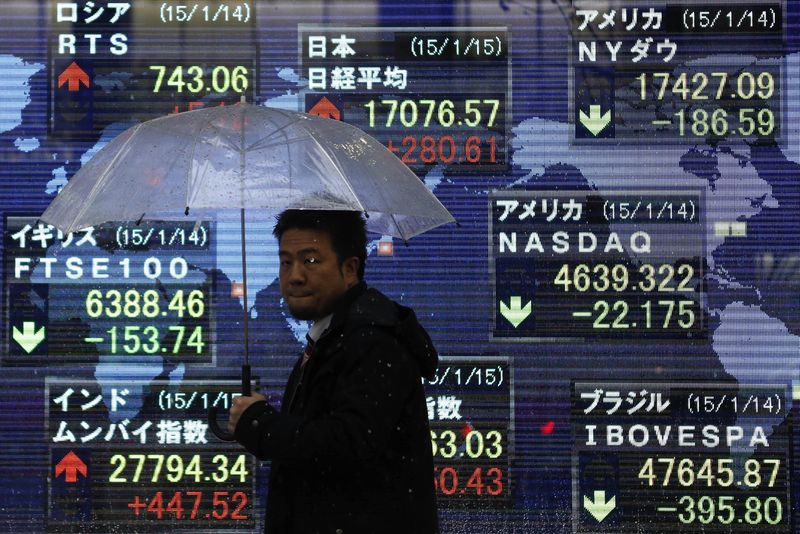
Asian markets rose in holiday-thinned trading, tracking record U.S. closes, while oil prices eased after Brent briefly topped $126 per barrel, its highest in four years. Geopolitical risk remains elevated as the Strait of Hormuz disruption persists and Iran warns of retaliation against any new U.S. attack. Japan’s April CPI stayed below the BOJ target, with Tokyo core CPI up 1.5% year-on-year versus 1.7% in March and below the 1.8% forecast, while Coles Group reported 3.1% third-quarter sales growth on supermarket and e-commerce strength.
The key market takeaway is not the intraday pullback in oil, but the regime shift in volatility: when a narrow shipping lane becomes the marginal pricing mechanism, energy becomes a macro hedge rather than a pure supply-demand asset. That tends to lift the entire inflation complex with a lag of days to weeks: breakevens, energy equities, freight, and eventually defensives with pricing power outperform while cyclicals tied to discretionary demand get compressed. The first-order beneficiaries are producers and refiners, but the second-order winners are any balance-sheet-light companies with pass-through pricing and low fuel intensity.
A more important tell is that the market is already struggling to discriminate between a temporary headline spike and a persistent supply shock. If disruption risk remains elevated for several sessions, the market will start repricing not just crude, but terminal rates and the timing of central bank easing; that is bearish duration and high-multiple growth even if oil itself retraces. The BOJ backdrop matters here: softer inflation data in Japan reduces policy urgency, but imported energy pressure can flip that quickly and create a cross-asset tightening impulse that is underappreciated.
Apple’s beat is helpful for sentiment, but it also reinforces a bifurcation: mega-cap quality can absorb macro noise, while the broader index is more vulnerable to input-cost shock and margin compression. The likely second-order winner from stronger consumer-tech sentiment is not the whole Nasdaq, but the suppliers and ecosystem names with cleaner margin structures; the loser set is hardware- and retail-exposed names facing both cost inflation and demand elasticity risk. In this tape, the consensus may be underestimating how quickly a geopolitically driven oil move can become a rates story, which is the real threat to the April equity rally.
AI-powered research, real-time alerts, and portfolio analytics for institutional investors.
Request DemoOverall Sentiment
neutral
Sentiment Score
0.05
Ticker Sentiment
