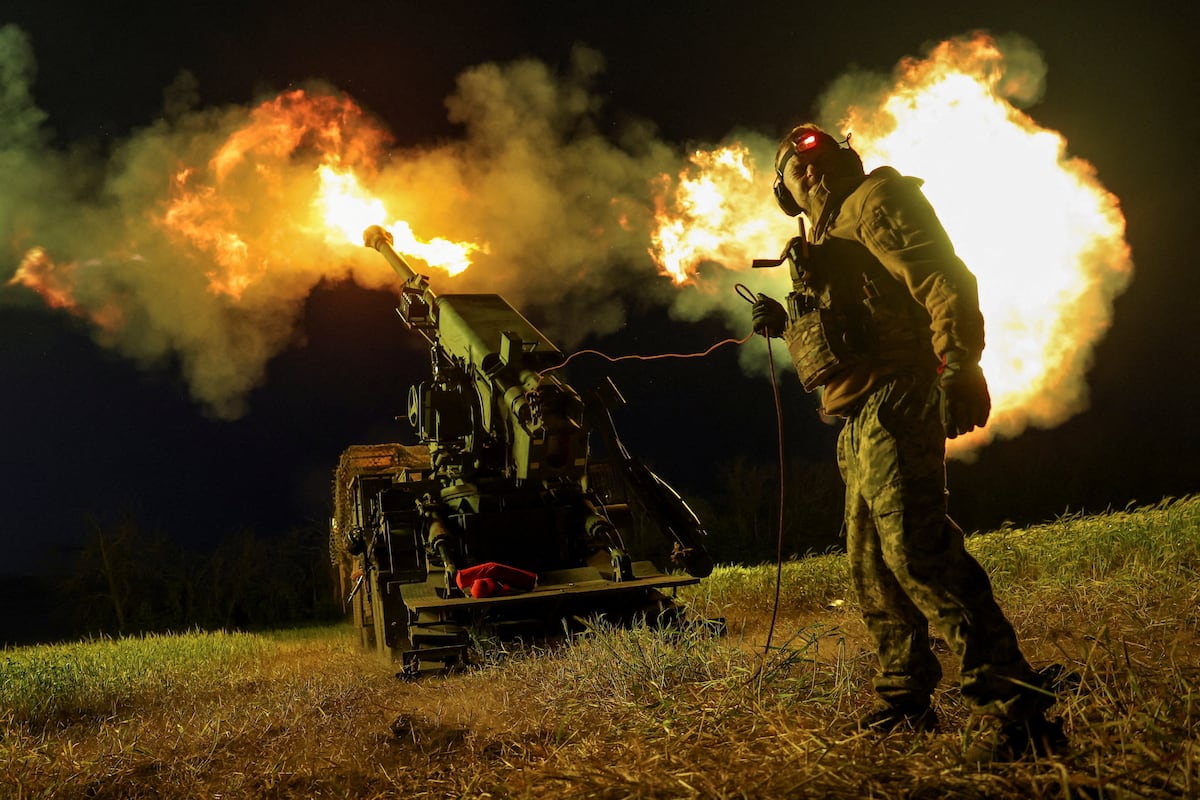
Britain’s GCHQ said nearly 500,000 Russian soldiers have been killed in Ukraine since 2022, implying total Russian casualties are materially higher than prior Western estimates of roughly 1.2 million killed and wounded. The article also says Russia is losing about 1,000 troops a day and has suffered its first net territorial loss in 20 months, suggesting its battlefield momentum is deteriorating. The news reinforces a more adverse geopolitical backdrop and may support defense-related sentiment while increasing broader risk-off positioning.
The market implication is not the headline casualty count itself; it is that Russia’s marginal cost of sustaining the war is rising faster than its ability to translate spending into territorial gains. That tends to shift the war from an attritional “can they keep going?” question to a balance-sheet question: how much longer can Moscow absorb labor destruction, equipment burn, and logistics strain before domestic macro effects become visible in energy exports, industrial output, and fiscal priorities. The key second-order signal is that Ukraine’s air-defense and counterstrike capability is now forcing Russia into a less efficient mode of warfare, which increases the probability of a longer-dated squeeze on Russian defense procurement and repair supply chains.
For defense beneficiaries, this is not a one-day read-through but a multi-quarter procurement impulse. European air-defense, loitering munition, counter-drone, and battlefield ISR demand should remain structurally bid because the conflict is validating layered defense and expendable systems over legacy platforms. Cybersecurity also becomes a higher-conviction adjacency: sustained hybrid operations usually force governments to harden critical infrastructure budgets, and those spend cycles tend to outlast the battlefield narrative by 6-12 months.
The main tail risk is escalation rather than de-escalation. If Moscow concludes that manpower is no longer the binding constraint, it can shift toward broader mobilization, deeper strikes, or sabotage escalation, which would extend the defense premium and raise European risk premia. The contrarian view is that the market may be overestimating the immediacy of regime stress; Russia has shown it can substitute cash, prisoners, and external manpower to delay political pain, so the more tradable catalyst may be procurement re-rating in NATO supply chains rather than a near-term macro collapse in Russia itself.
AI-powered research, real-time alerts, and portfolio analytics for institutional investors.
Request DemoOverall Sentiment
strongly negative
Sentiment Score
-0.55
