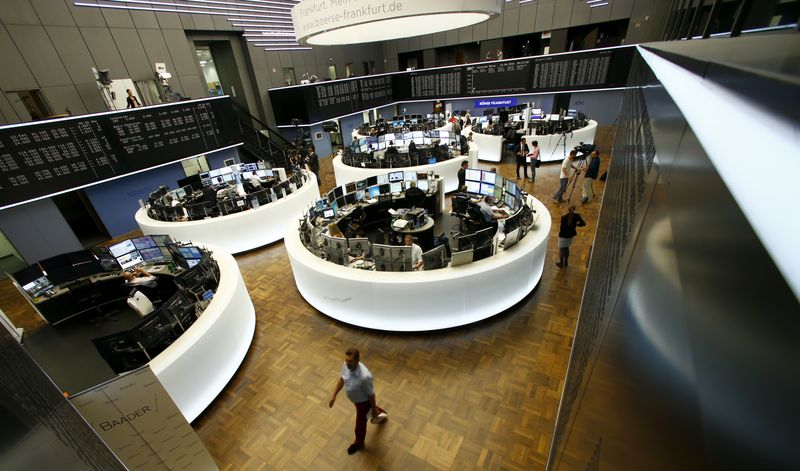
Brent crude fell 1.3% to $92.54 a barrel as reports said the U.S. and Iran have agreed to extend their ceasefire by 60 days, pending President Trump’s approval. The deal would reopen shipping through the Strait of Hormuz, easing supply disruption risks after weeks of war-related restrictions. The news lifted European equities modestly and improved risk sentiment across markets, while keeping energy and inflation concerns in focus.
The first-order move is a classic geopolitics-to-energy volatility crush, but the second-order effect is a regime shift in cross-asset leadership: if shipping lanes normalize, the market will quickly reprice from scarcity/defense into duration/AI growth. That matters because a softer oil tape reduces near-term inflation impulse and removes one of the main arguments for a more hawkish central-bank path, which mechanically supports higher-multiple equities and cyclically sensitive rate-duration assets.
The bigger beneficiary is not just consumers, but any business with heavy transport, jet fuel, or feedstock exposure. Airlines, parcel/logistics, chemicals, and industrials should see the fastest earnings delta over the next 1-2 quarters if spot energy stays contained, while upstream energy names face a multiple overhang even if absolute prices remain elevated; the market tends to discount the slope change, not the level.
The risk is that this is a headline-driven reprieve rather than a durable settlement. If the truce extension slips, shipping insurance costs and tanker routing could gap wider within days, and the oil move can reverse violently because positioning is likely still long after the recent spike; a failed deal would restore the inflation scare and likely punish rate-sensitive growth first, then the broad market.
The contrarian angle is that the market may be underestimating how much of the conflict premium is already embedded in implied vol and CTA positioning, so the immediate upside from peace may be smaller than the downside from any disappointment. In that setup, the better expression is to fade energy beta on strength rather than chase absolute beta lower; the payoff is asymmetric if diplomacy holds, but the bleed from an outright short oil trade is limited by the still-uncertain supply backdrop.
AI-powered research, real-time alerts, and portfolio analytics for institutional investors.
Request DemoOverall Sentiment
mildly positive
Sentiment Score
0.25
