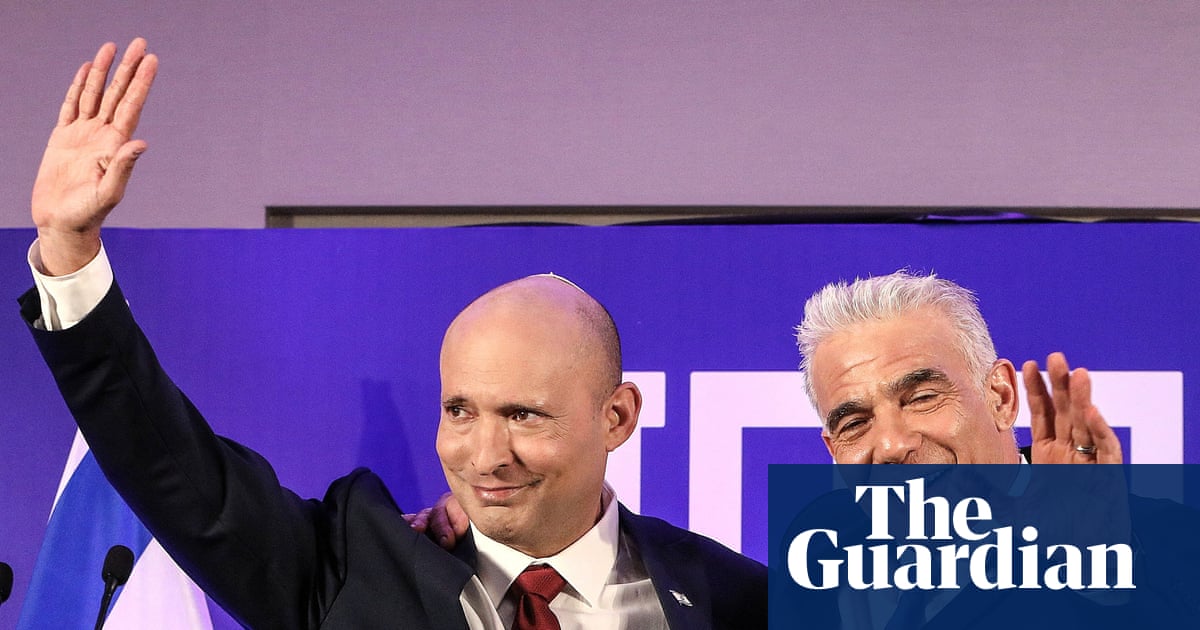
Former Israeli prime ministers Naftali Bennett and Yair Lapid are merging their parties to challenge Benjamin Netanyahu in an election expected by the end of October. Polling cited in the article shows Bennett’s bloc potentially reaching at least 60 Knesset seats versus 50 for Netanyahu’s coalition, while Lapid remains much weaker individually. The article highlights continued political instability in Israel amid the Gaza war and broader regional conflict, but the immediate market impact appears limited.
The merger matters less as a headline than as a signal that the anti-incumbent vote is trying to solve its classic coordination problem. If the bloc can stay consolidated, the relevant pricing variable is not ideology but seat arithmetic: a cleaner “anyone-but-Netanyahu” channel increases the probability of a governing coalition, even if the margin remains thin and unstable. That favors domestic-exposure assets tied to policy continuity and lower tail risk, while leaving the market vulnerable to a post-election unwind if coalition math re-fragments.
The second-order effect is that Bennett’s tighter positioning on Arab-party cooperation and territorial concessions may improve his right-of-center credibility without fully eliminating Lapid’s centrist appeal. That creates a broader but less coherent opposition tent, which is good enough for elections but bad for post-election governance. For markets, the key risk is not the election outcome itself; it is a repeat of 2021-style coalition fragility, which would keep fiscal, defense, and regulatory policy in a holding pattern for months after the vote.
Consensus seems to be pricing this as a binary anti-Netanyahu trade, but that is too simplistic. A likely underappreciated scenario is that Bennett’s leadership reduces opposition fragmentation in the near term yet makes cabinet formation harder if he wins, because he has already narrowed his coalition options. That argues for favoring instruments that monetize volatility and event risk over outright directional bets, since the path from election victory to investable policy clarity is likely long and noisy.
From a timing perspective, the next catalyst window is the polling grind over the coming 4-8 weeks, followed by list finalization and any security escalation that re-centers the campaign on wartime leadership. If security headlines intensify, Netanyahu’s incumbency premium can re-expand quickly; if they fade, the market will start to handicap coalition arithmetic rather than personal brand. In either case, downside in the anti-incumbent thesis is probably faster than upside because one successful security event can reverse months of polling drift.
AI-powered research, real-time alerts, and portfolio analytics for institutional investors.
Request DemoOverall Sentiment
neutral
Sentiment Score
-0.05
Ticker Sentiment
