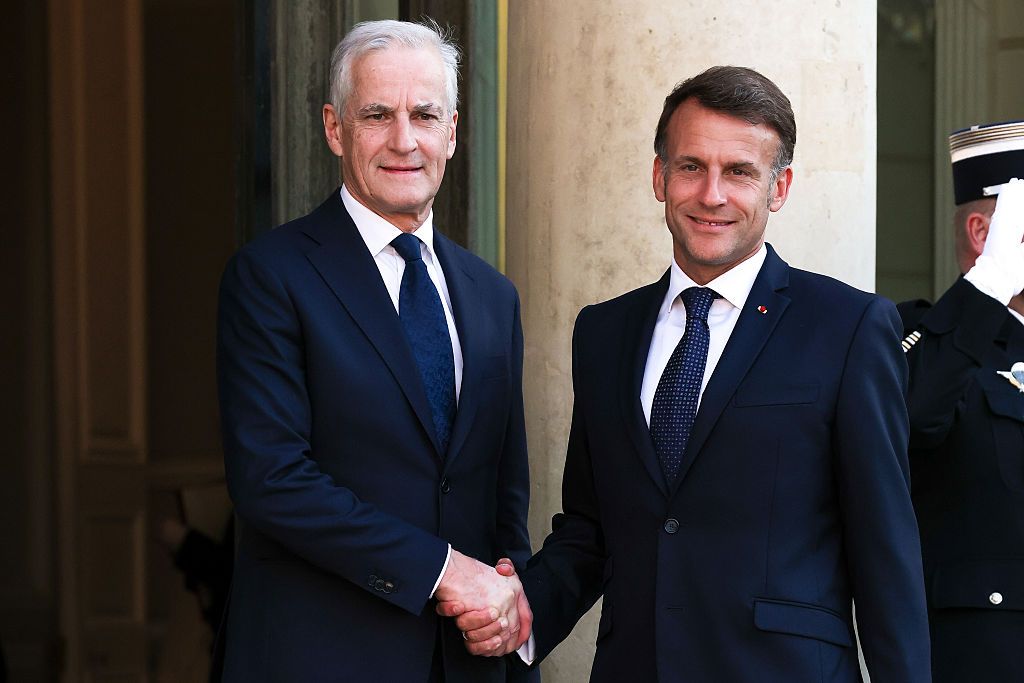
France and Norway announced talks on Norway joining France's nuclear umbrella and signed a mutual defense agreement expanding cooperation on forward nuclear deterrence. The move underscores Europe’s efforts to strengthen defense autonomy amid uncertainty over U.S. security commitments and ongoing tensions with Russia. While strategically significant for European defense, the direct market impact is likely concentrated in defense and geopolitical risk sentiment rather than broad equities.
This is less about immediate military capability than about a slow re-pricing of Europe’s defense autonomy premium. The key second-order effect is procurement: once a non-nuclear NATO state is pulled into forward deterrence planning, it raises the value of command-and-control, secure communications, missile defense, EW, and hardened infrastructure — not just platforms. That argues for the defense trade broadening beyond traditional primes into European systems integrators and network/security names with revenue exposure to multiyear modernization cycles.
The market risk is that this remains a signaling event unless it is followed by budget line items and exercise commitments. If U.S. security rhetoric stabilizes over the next 3-6 months, the urgency premium embedded in European defense multiples could compress, especially in names that have rerated purely on headline geopolitical risk. The more durable beneficiaries are businesses tied to irreversible capex: air defense, base hardening, submarine/anti-sub warfare, and sovereign communications, where spending is sticky even if headlines fade.
A contrarian read is that the market may be underestimating the political constraints on true nuclear integration. Full deterrence coordination is a years-long process and likely to trigger domestic debate in multiple capitals, limiting how quickly this becomes executable policy. That makes the setup better for a barbell: own the secular defense buildout, but fade the most crowded “Europe needs to rearm now” momentum names if they trade as if near-term adoption is guaranteed. The sharper trade is relative value between European defense beneficiaries and U.S. contractors that are less exposed to the specific European autonomy theme.
AI-powered research, real-time alerts, and portfolio analytics for institutional investors.
Request TrialOverall Sentiment
neutral
Sentiment Score
0.15
