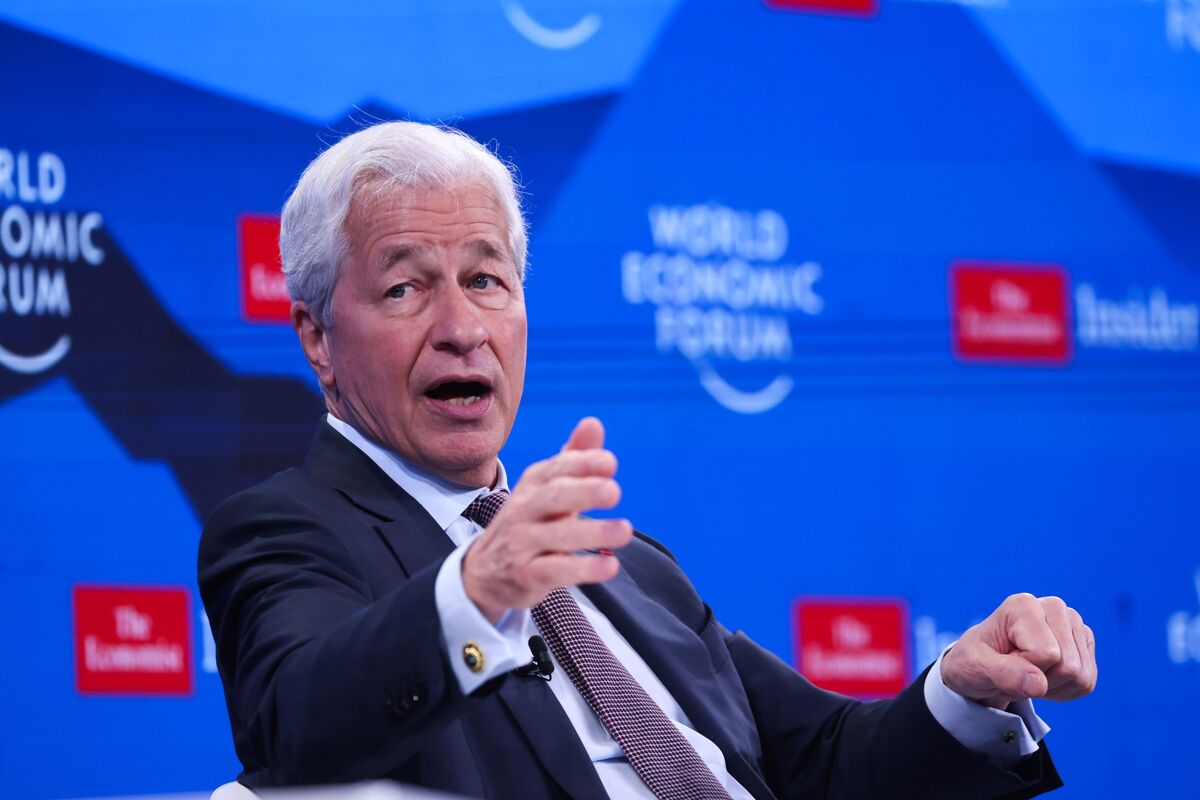
Donald Trump is urging a Florida judge not to let JPMorgan CEO Jamie Dimon 'escape liability' in a debanking lawsuit tied to alleged blacklisting after Jan. 6, 2021. The filing reasserts claims that Dimon personally directed the bank to drop Trump as a client and place him on an industry blacklist, keeping legal and reputational pressure on JPMorgan. The article is primarily litigation-focused and does not include new financial amounts or operating metrics.
This is less about the underlying merits of one lawsuit and more about whether Trump can turn a bank’s compliance-driven client decision into a reputational and governance overhang for JPM. The market usually prices these cases as nuisance risk, but the second-order issue is discovery: any attempt to show a centralized, executive-level “debanking” decision increases the odds of document production around politically sensitive client screening, which is the real equity risk because it can broaden from one case to a template for copycat claims.
For JPM, the earnings impact is likely immaterial; the real transmission channel is multiple compression if investors start to assign a persistent political-litigation discount to a premium franchise. That said, banks are structurally better insulated here than in a consumer-facing scandal because the business model is diversified and the regulatory defense is stronger when decisions can be framed as risk-management rather than discrimination. The bigger loser could be the broader large-bank cohort if this encourages plaintiffs to test similar theories across institutions, but the market should discriminate: firms with more concentrated politically exposed-client footprints and weaker compliance paper trails are more exposed than JPM.
The catalyst path is likely slow-moving over months, not days, unless a court ruling expands venue or allows broad discovery. A quick dismissal or narrow procedural win would remove most of the headline risk; conversely, denial of the motion to keep the case in Florida would matter because it signals a plaintiff-friendly forum and extends the timeline into the 2H, when legal spend and headline churn can build. The contrarian take is that this may be overstated as an earnings issue but underappreciated as a governance signal for a bank that trades at a quality premium—when the market is already paying up for “best-in-class,” small legal slippage can matter more to valuation than to EPS.
AI-powered research, real-time alerts, and portfolio analytics for institutional investors.
Request TrialOverall Sentiment
mildly negative
Sentiment Score
-0.20
Ticker Sentiment
