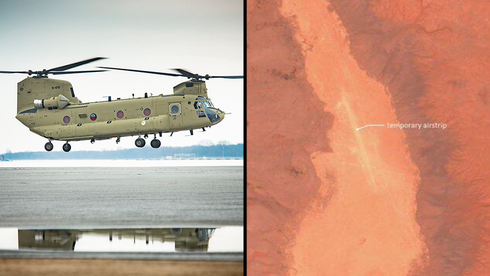
The report says Israel established two secret military bases in Iraq in 2024 to support air operations against Iran, with one reportedly known to the U.S. since summer 2025 and used during last summer’s 12-day war. The bases were allegedly used for air support, refueling and medical treatment to shorten strike routes, while U.S. officials reportedly concealed the activity from Baghdad and disabled Iraqi radar systems. The revelation has triggered anger over Iraqi sovereignty and highlights heightened regional tensions and the risk of broader escalation.
The market implication is not the headline itself but the normalization of cross-border basing and deniable logistics inside a sovereign buffer zone. That raises the probability of a broader, more fragmented conflict architecture where airpower is less constrained by distance and more reliant on exposed refueling, ISR, and medevac nodes; the second-order effect is higher operating tempo for Israeli strikes and a longer tail of retaliation risk across Iraq, Syria, and the Gulf. For defense primes, this kind of conflict usually supports near-term sentiment more than fundamentals, but it reinforces demand for air defense, EW, and hardened mobility systems over the next 6-18 months.
The bigger tradeable risk is on regional risk assets, not the direct equity exposure to the reporting outlet. Iraqi sovereignty anger matters because it increases pressure on Baghdad to demonstrate independence, which can force a harsher posture toward U.S. assets, contractors, and logistics corridors even if policy remains ambiguous. That creates a tail risk of intermittent disruption to supply chains and embassy/security operations rather than an immediate energy shock; the highest-probability damage path is elevated insurance, transport, and contractor costs, with low-probability but high-impact escalation if a U.S.-linked facility is misattributed.
The contrarian read is that the market may overestimate the durability of covert infrastructure advantage. Once a hidden support network is exposed, it becomes a fixed target and loses much of its marginal utility; any future use will need deeper electronic masking, more dispersed basing, or substitution with airborne tanking. Over months, that tends to compress the tactical edge and push both sides toward either escalation or de-escalation faster than expected. If diplomacy weakens and Iraq is forced to choose sides, the most asymmetric outcome is not a one-day headline spike but a broader repricing of MENA geopolitical risk premia.
AI-powered research, real-time alerts, and portfolio analytics for institutional investors.
Request DemoOverall Sentiment
strongly negative
Sentiment Score
-0.55
Ticker Sentiment
