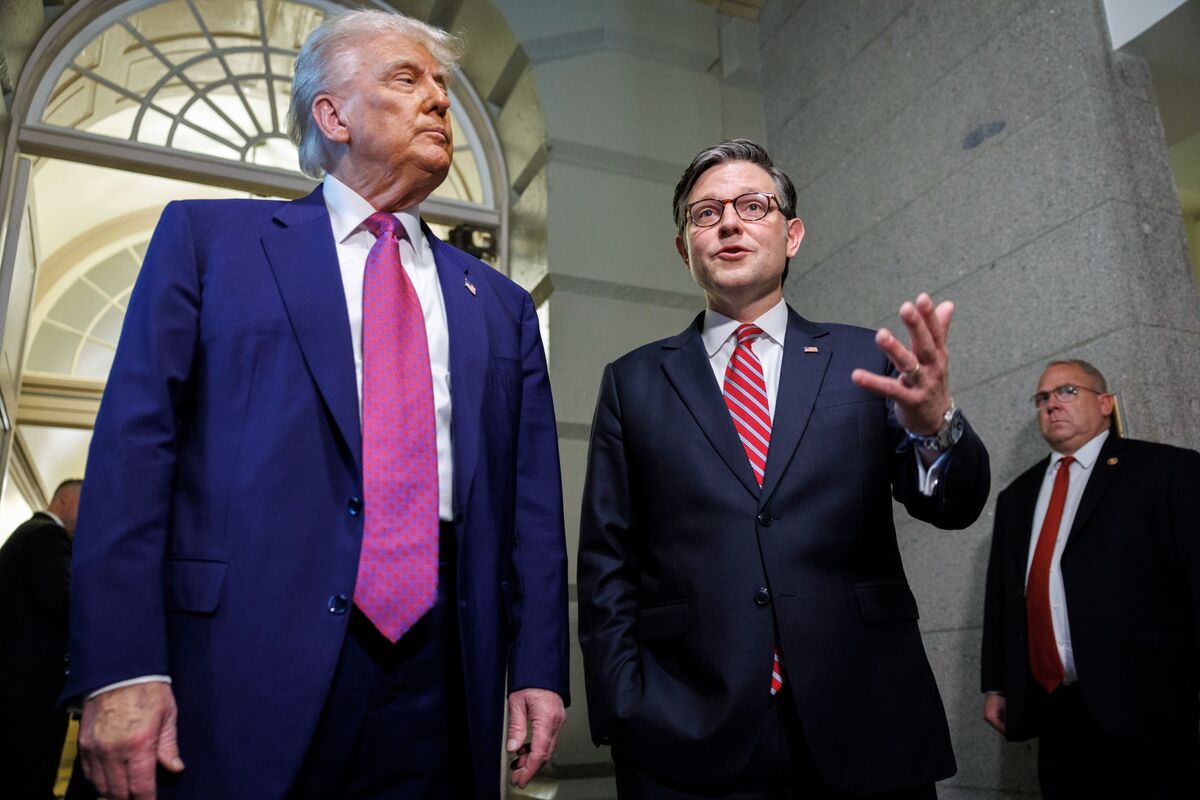
The Republican tax-cut and spending plan, a key legislative priority for Donald Trump's second term, faces ongoing challenges in the House despite months of development and debate. The bill's progress remains uncertain, requiring further negotiation and consensus-building among Republican lawmakers.
The proposed Republican tax-cut and spending plan, identified as a cornerstone of potential future legislative efforts, is encountering significant procedural challenges within the House, indicating that its passage is far from assured despite months of development. The ongoing "11th-hour wrangling," extensive committee debates, and direct presidential involvement underscore the complexity and contentious nature of the negotiations. The prevailing sentiment is neutral (-0.1) with an "uncertain" tone, reflecting the current legislative gridlock and the bill's indeterminate future. While the market impact score is currently low at 0.3, this likely reflects the early stage of the bill and the lack of concrete details rather than an insignificant potential impact if enacted. The situation highlights the intricate interplay of fiscal policy, tax reform, and domestic political maneuvering, with significant implications for future economic policy direction.
AI-powered research, real-time alerts, and portfolio analytics for institutional investors.
Request DemoOverall Sentiment
Neutral
Sentiment Score
-0.10
