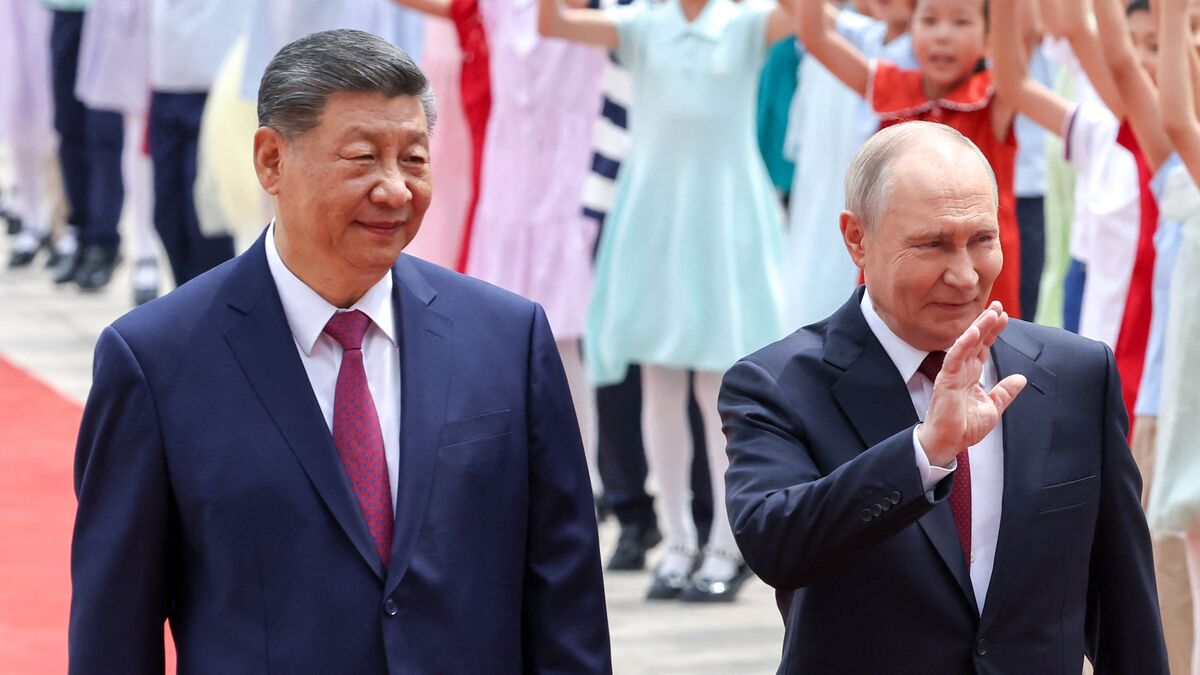
Russia plans to sell 10-year government bonds denominated in Chinese yuan, marking its second such issuance after Vladimir Putin's visit to China. The bonds will have a face value of 10,000 yuan per note, with orders collected on May 28 and placement on the Moscow Exchange scheduled for June 3. The announcement is primarily a financing and currency diversification move, with limited immediate market impact.
This is less a funding event than a signal that sanctions are hardening into a parallel capital market architecture. A credible yuan curve onshore in Moscow lowers Russia’s marginal dependence on dollar clearing, but it also deepens China’s role as the residual liquidity provider to sanctioned sovereigns—an incremental strategic win for Chinese banks and settlement infrastructure, not just for Russia. The second-order effect is that any institution facilitating distribution will likely demand a wider risk premium, so the “China hedge” may actually be expensive funding dressed up as diversification.
For FX, the near-term effect is modest, but the medium-term message is clearer: RUB liquidity becomes more tethered to CNH/CNY flows and less to Western capital markets. That raises the odds of episodic dislocations in offshore yuan during geopolitical stress, especially if investors treat yuan assets as quasi-sanctions exposure rather than true reserve substitutes. The larger beneficiary is gold and other non-sovereign stores of value: the more fragmented the reserve system, the more attractive assets outside the major settlement blocs become.
The contrarian risk is that markets overestimate how scalable this is. A tiny sovereign curve does not equal a durable funding channel; if execution is weak, domestic demand thin, or pricing punitive, the issuance becomes a symbolic headline with limited balance-sheet impact. The tail risk over months is regulatory retaliation or secondary-sanctions scrutiny on Chinese intermediaries, which would cap enthusiasm for broader Russian yuan financing and could pressure CNH sentiment at the margin.
From a positioning standpoint, this is a relative-value story rather than a directional macro one. The cleanest trade is long gold versus short a basket of EM FX proxies most exposed to reserve diversification narratives, because the structural beneficiary of fragmentation has better convexity than any single sovereign currency. A second-order trade is selective long CNH-liquidity beneficiaries versus short global banks with larger sanctioned-flow compliance overhangs; the market may underprice the cost of policing these corridors.
AI-powered research, real-time alerts, and portfolio analytics for institutional investors.
Request DemoOverall Sentiment
neutral
Sentiment Score
0.05
