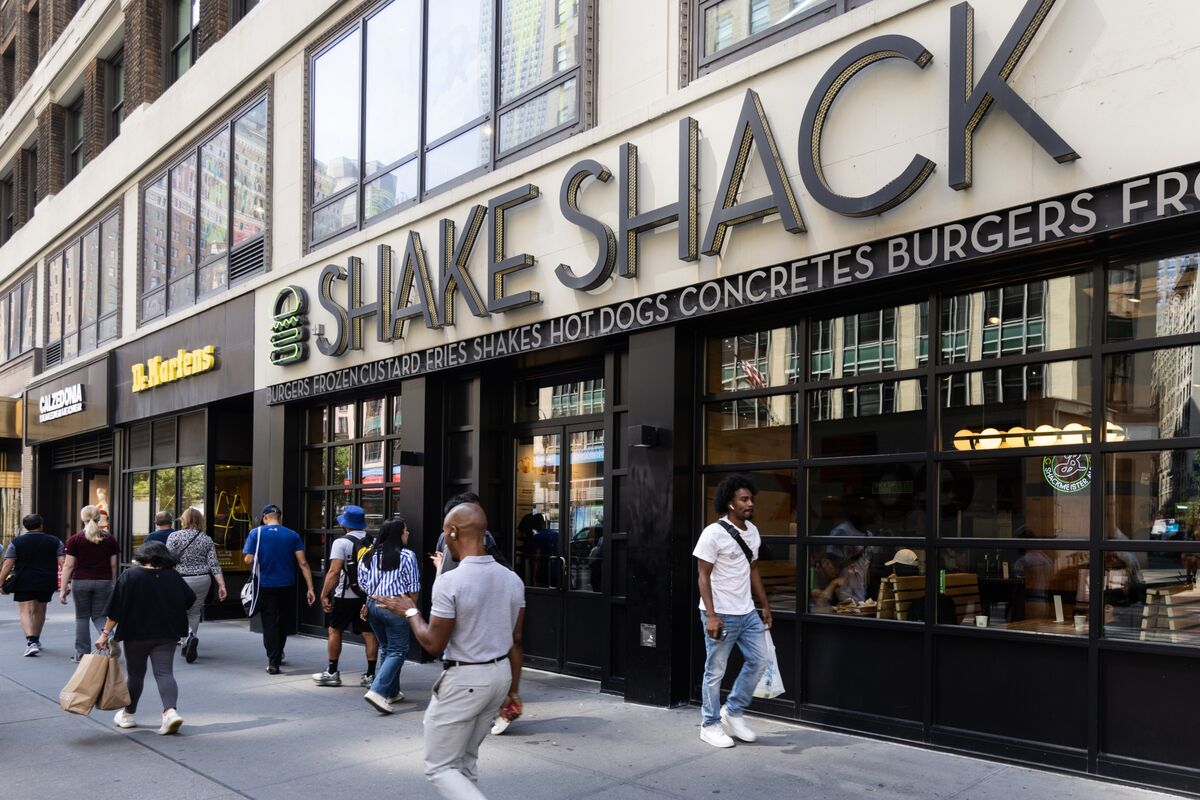
Activist Jeff Smith disclosed a new position in the fast-casual dining chain focused on hamburgers, per the Bloomberg Deals segment. The broader item set also notes that Ethan Allen is under pressure and that a French company is exploring a sale, but the excerpt provides no deal/financial figures to quantify impact.
Activism in a consumer discretionary name usually matters more for capital allocation than for the core demand curve. The first 1-2 quarters are mostly about signaling: menu rationalization, labor scheduling, and reframing store-level economics can lift the multiple even before EBITDA changes, but only if traffic does not deteriorate. For the public fast-casual burger group, the near-term winners are likely the activists and any cleaner operators with better unit economics; the losers are adjacent chains that share the same premium valuation and will be judged against a newly visible margin-improvement path.
Second-order, the pressure often shifts value from front-of-house growth stories to input and operating leverage. If the target pushes higher throughput and lower promo intensity, beef, buns, dairy, and delivery volume can soften, while weaker landlords and franchisees may face harder negotiations if unit payback periods lengthen. The more important M&A angle is that an activist-cleaned-up asset can become a takeout candidate at a lower entry multiple, but only after one or two quarters of verifiable comp stabilization.
The contrarian read is that the market often overprices "Starboard = unlock" in restaurants. This is rarely a 30-day story; if same-store sales are soft, cost cuts simply mask traffic erosion and the stock can rerate lower when the next earnings print shows no comp inflection. Falsifiers are a sustained improvement in guest traffic and a guidance raise; absent that, the better trade is to fade the initial pop rather than chase it.
AI-powered research, real-time alerts, and portfolio analytics for institutional investors.
Request DemoOverall Sentiment
neutral
Sentiment Score
0.05
