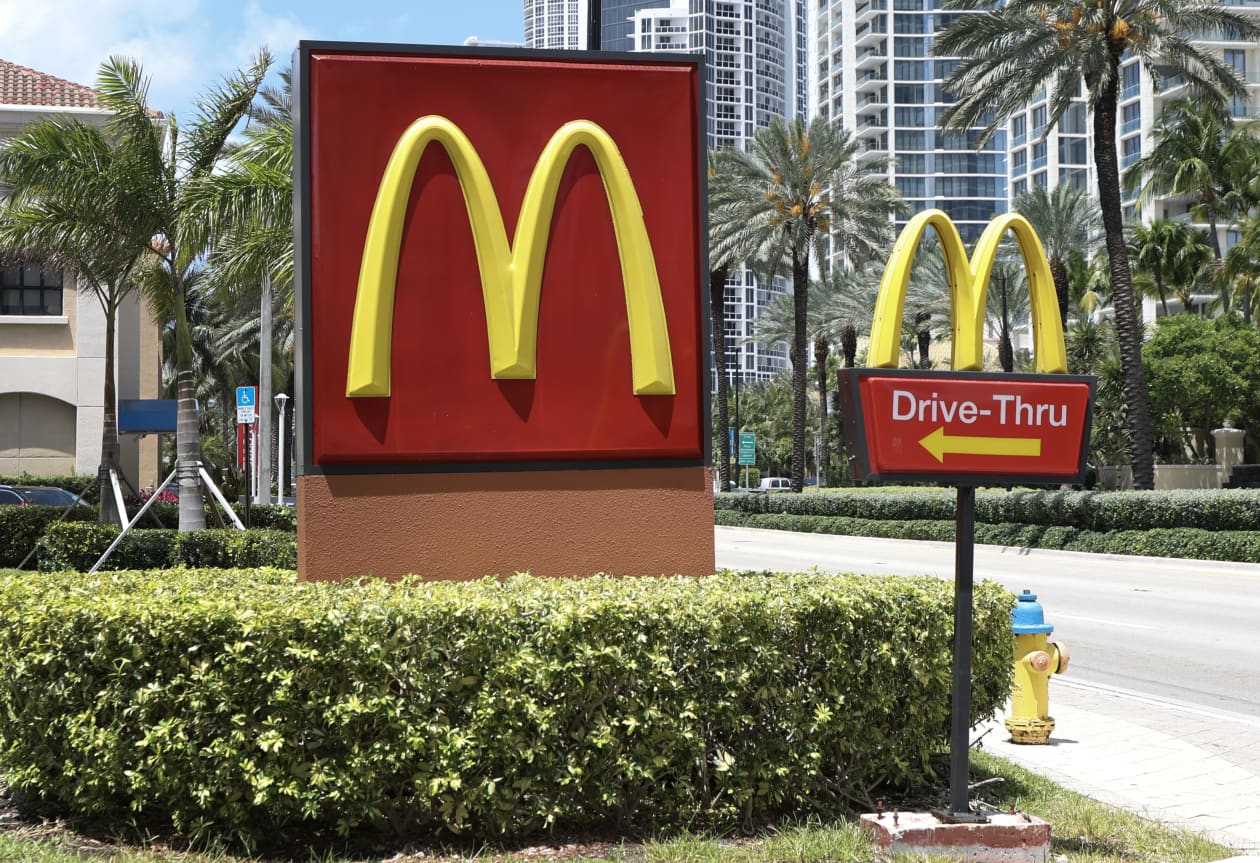
McDonald’s is set to relaunch its value menu on Tuesday with options including items under $3 and $4 breakfasts, which UBS says should further support the company’s value proposition. The note frames the move as a strength rather than a sign of weakness, as lower-income consumers remain frugal amid persistent restaurant price inflation. Analysts also pointed to McDonald’s scale as a key advantage.
The market is likely to read this as more than a promotional refresh: a large, recognizable value platform is being used to defend traffic in a consumer environment where trade-down behavior is still alive. The second-order benefit is not just incremental visits, but better menu architecture that can pull lower-income diners back into the brand without forcing a full-ticket recovery first, which matters because traffic loss is harder to fix than margin compression.
The key risk is that cheaper items can be a signal of elastic demand rather than pure share gain if the company needs to lean on value longer than expected. Near term, that can cap average check and put pressure on franchisee-level unit economics, especially if food, labor, or delivery costs stay sticky; the stock may still work if investors believe the traffic elasticity offsets mix dilution over the next 1-2 quarters.
Competitively, this is most damaging to smaller QSR players and local burger chains that lack the balance sheet and supplier leverage to match a national value platform. Larger peers with similar value credentials may be forced into a broader price response, which can turn this into an industry-wide margin squeeze rather than a single-name share shift. The underappreciated angle is procurement: a company of this scale can protect margins better at lower price points because input-cost spreads, packaging, and labor scheduling improve with volume.
The contrarian view is that the move may be already partially priced in as a quality-of-defense story, so the trade is less about chasing upside and more about timing the confirmation from traffic data. If same-store sales or visit data show stabilization in the next monthly reads, the stock can re-rate; if not, this becomes a value trap narrative centered on selling growth at cheaper price points.
AI-powered research, real-time alerts, and portfolio analytics for institutional investors.
Request DemoOverall Sentiment
mildly positive
Sentiment Score
0.25
Ticker Sentiment
