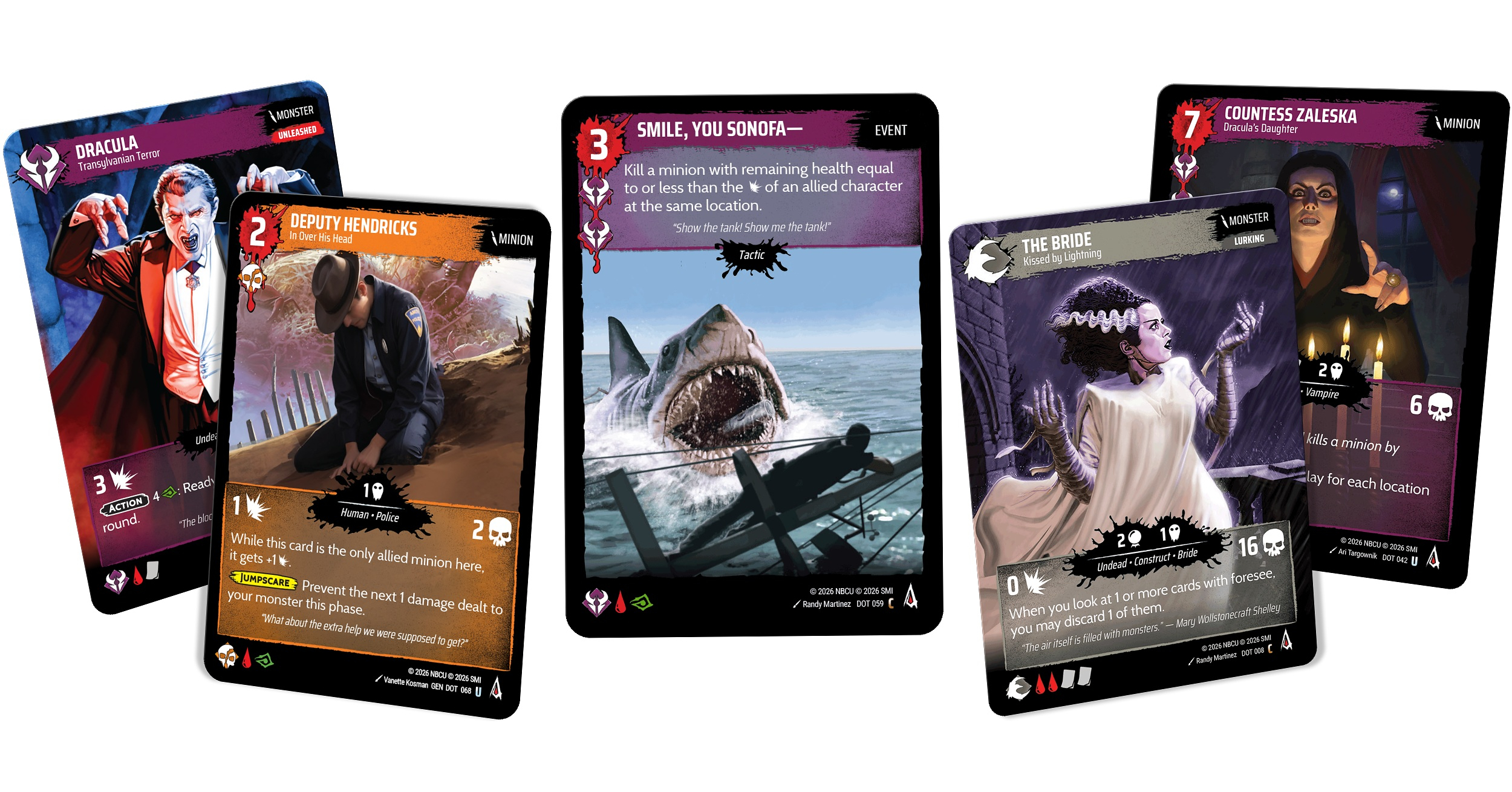
Spin Master announced Hellbreak, its fall 2026 horror trading card game, expanding studio collaborators to Universal (previously announced), plus AMC Global Media, Blumhouse, and Lionsgate. The game will feature Dracula, the Bride of Frankenstein, and Jaws in set one, with custom illustrated art from 43+ artists and head-to-head deckbuilding/scenario gameplay. The update is a modest positive for Spin Master’s entertainment IP monetization pipeline, but it is unlikely to be a near-term stock mover.
This is more about Spin Master proving it can monetize third-party IP across formats than about one game becoming material revenue. The strategic signal is that TOY is trying to upgrade mix toward lower-capex, higher-margin licensed content with better shelf velocity and fewer development losses than in-house launches. If the title gains traction, the second-order benefit is leverage in future negotiations with other studios and retailers, but the P&L inflection is likely small until there is evidence of repeat prints, organized play, and digital community formation.
For CMCSA, LION, and the other licensors, the economics are mostly option value: incremental brand exposure and a royalty stream with limited downside. The key competitive issue is whether this crowds out other licensed tabletop opportunities or simply broadens a niche collector base; in either case, the likely winners are ecosystem enablers rather than the studios themselves. The real beneficiary could be adjacent peers with licensing-heavy, asset-light models that can replicate this playbook if sell-through data is strong.
The market risk is overreading a press release into a durable earnings story. Over the next 1-3 months, the stock will trade on whether management starts talking about preorder momentum, retailer commitments, or margin accretion; without that, the move should fade. Over 6-18 months, the thesis is falsified if the product fails to build a community loop or if working capital and marketing spend rise faster than royalties and gross profit.
AI-powered research, real-time alerts, and portfolio analytics for institutional investors.
Overall Sentiment
mildly positive
Sentiment Score
0.18
Ticker Sentiment
