
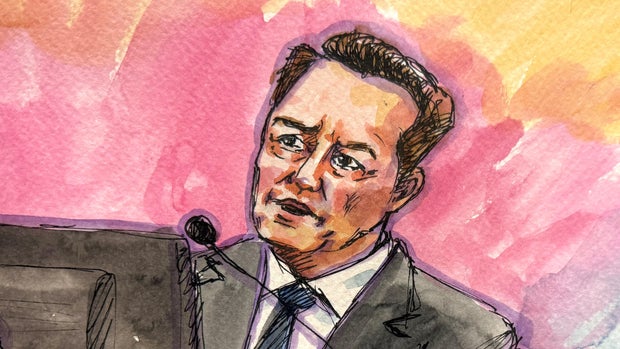
Elon Musk testified in a shareholder trial alleging he made false and misleading public statements that drove down Twitter's stock ahead of his $44 billion 2022 takeover, with plaintiffs representing shareholders who sold between May 13 and Oct. 4, 2022. Key events cited include Musk's May 13 tweet putting the deal “temporarily on hold” (after which Twitter stock fell nearly 10%) and his July 8 tweet abandoning the deal, when the stock closed at $36.81 (about 32% below his $54.20 offer); plaintiffs allege he waived due diligence yet later used bot-count claims to pressure or renegotiate the merger. The trial centers on alleged securities-law violations and market manipulation, posing reputational and legal risk that could influence investor sentiment and disclosure practices for high-profile M&A transactions.
Market structure: Musk’s testimony keeps governance and litigation risk center-stage, benefiting large ad-platform incumbents (GOOGL, META) as advertisers reallocate away from X; expect a 1–3% incremental ad-share swing into Google/Facebook over 3–6 months if advertiser confidence remains weak. Small-cap ad-dependent/social names and programmatic ad-tech vendors face pricing pressure and higher churn; expect CPM weakness and revenue downside concentrated in Q2–Q3 ad buys. Cross-asset: anticipate elevated idiosyncratic volatility in TSLA (options IV +100–200bps near-term) and mild USD strength on risk-aversion; corporate credit for high-MarketCap founder-led firms could see 10–30bps widening on headline shocks.
Risk assessment: Tail risks include an SEC enforcement action or civil penalties against Musk that could lead to reputational contagion to TSLA leadership (low probability, high impact) and potential activist or governance changes at Tesla within 6–18 months. Immediate (days) risk is headline-driven IV spikes; short-term (weeks–months) is sustained advertiser flight impacting digital ad comps; long-term (quarters–years) is structural governance discount on founder-led equities. Hidden dependencies: advertisers’ reallocation depends on measurable KPI drops (CTR or MAU declines >5% QoQ) and major agency directives (e.g., WPP/GroupM guidance), which would accelerate flows.
Trade implications: Tactical plays: hedge TSLA idiosyncratic risk with options (30–45 day ATM straddle or 3-month 10% OTM put spread sized to cover 1–2% portfolio exposure). Take modest longs in ad beneficiaries: establish 1% positions each in GOOGL and META with 3–6 month horizon to capture ad-share reallocation; avoid overweighting SNAP/SMALL social peers that lack scale. Use pair trades: long GOOGL, short SNAP (equal-dollar, 3–6 month) to express ad reallocation while neutralizing broad tech beta.
Contrarian angles: Consensus assumes persistent advertiser exodus from X; that may be overdone — if X stabilizes ad safety and rolls out premium ad products within 6 months, some ad dollars will return, creating short-squeeze risk in ad-tech shorts. Historical parallels: platform governance shocks (e.g., FB-Cambridge Analytica 2018) created 3–6 month dislocations but incumbents recovered within 12–18 months; so time-limited volatility trades (options calendar spreads) may be better than multi-quarter directional bets. Monitor two triggers: (1) SEC/DOJ filings within 60–90 days and (2) major agency buy/sell guidance — each should prompt rebalancing.
AI-powered research, real-time alerts, and portfolio analytics for institutional investors.
Request TrialOverall Sentiment
moderately negative
Sentiment Score
-0.50
Ticker Sentiment
