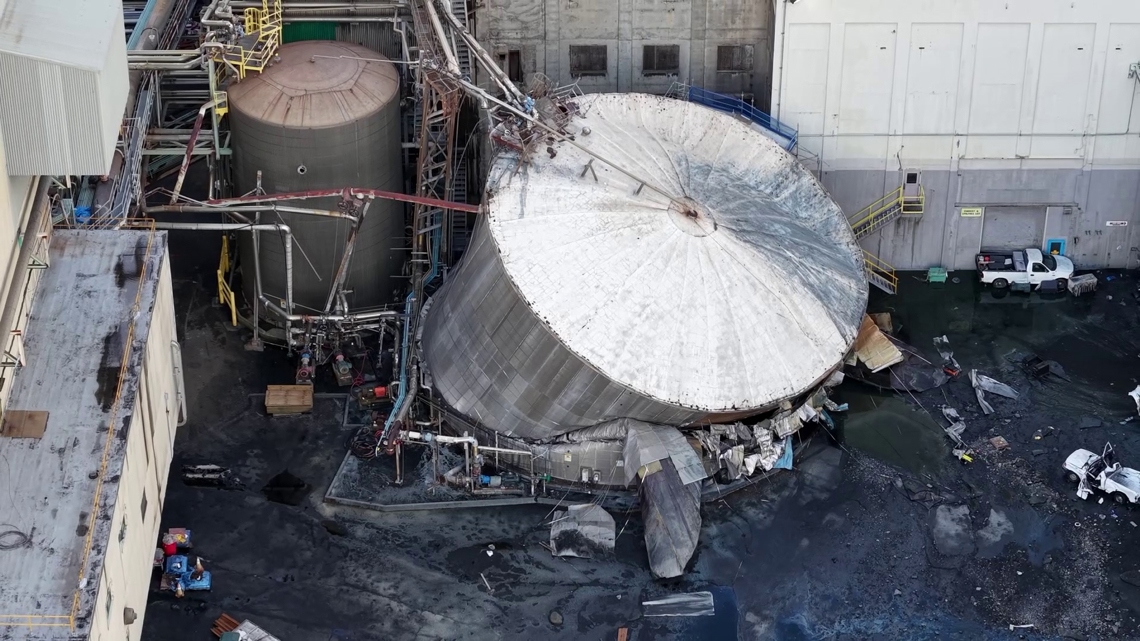
A federal agency is investigating a fatal tank implosion at Nippon Dynawave’s Longview paper mill that killed 2 people, injured several others and left 9 missing. The rupture involved a 900,000-gallon tank of highly corrosive white liquor, with 90,000 gallons still inside, and the site remains unstable, hampering recovery and creating contamination risks. The incident is likely to drive legal, regulatory and operational scrutiny rather than broad market impact.
This is first and foremost a liability shock, not an earnings shock. The direct hit is concentrated in the industrials/insurance ecosystem around a single-site outage, but the second-order effect is broader: any operator with high-pressure, high-corrosion chemical storage becomes a candidate for a re-rating of maintenance capex, remediation reserves, and carrier scrutiny over the next 3-12 months. The market usually underprices how quickly a “contained” industrial accident turns into a cash drain via downtime, cleanup, legal defense, and permit friction. The most attractive relative losers are firms with exposed pulp/chemical processing assets, especially where a single catastrophic event can interrupt regional supply. If this site is offline for weeks, nearby competitors may benefit from temporary pricing power in white-likely input-sensitive products, but that tailwind is small versus the likely margin hit to mills facing replacement chemicals, logistics rerouting, and higher inspection costs. The bigger beneficiary may be insurers and engineering inspection vendors, as this kind of event typically leads to tighter underwriting and mandatory retrofits across the category. The main contrarian point: the initial impulse is to fade the whole pulp/paper complex, but the equity reaction may be too localized if the damaged asset is not a meaningful share of industry capacity. The more durable trade is on regulatory overhang and capex inflation rather than on near-term supply loss. Expect the legal/regulatory overhang to persist for months, while the operational disruption is days-to-weeks unless structural damage forces a prolonged shutdown. A cleaner second-order trade is to favor companies with diversified chemical/process footprints and short-cycle service revenue over single-site industrial operators. If investigators find a maintenance or design failure, this can quickly expand into an industry-wide audit cycle, which would be negative for margins but positive for inspection, safety equipment, and environmental remediation providers.
AI-powered research, real-time alerts, and portfolio analytics for institutional investors.
Request DemoOverall Sentiment
strongly negative
Sentiment Score
-0.78
