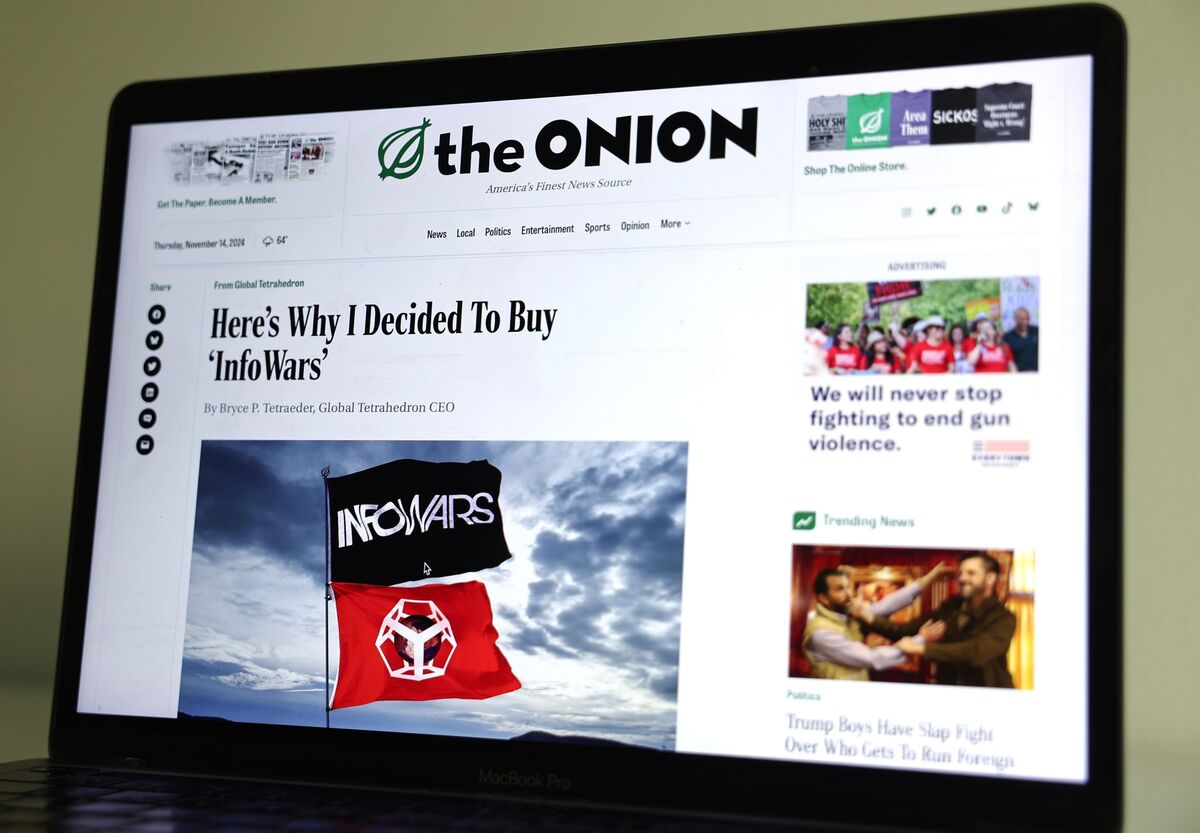
The Onion has moved to license the intellectual property of Alex Jones’ Infowars, including the trademark and associated domains, as part of an effort to take control of the platform. A court-appointed receiver overseeing Free Speech Systems LLC filed papers in Texas seeking approval of the licensing agreement. The development is a legal and ownership matter around a niche media asset, with limited expected market impact.
This is less a headline about a media property than a test case for how distress-driven IP transfer can be weaponized. The economic value is not the content library; it is control over distribution channels, search footprint, and the optionality to redirect a small but sticky audience to a new brand wrapper. If the licensing structure survives court scrutiny, the more important second-order effect is that bankruptcy/receivership can become a mechanism for reputationally toxic assets to be monetized faster and more cheaply than through a clean sale.
The main winner is the party that can turn controversy into traffic at low marginal cost; the main loser is any incumbent relying on legacy brand authority to defend attention share. That matters because attention is already zero-sum in fringe media, and a forced brand transition can actually improve monetization if it resets a worn-out product into a fresh distribution shell. The bigger strategic implication is for adjacent platforms and ad-tech intermediaries: anything that lowers legal friction around distressed IP may encourage more aggressive acquisition of deplatformed brands, increasing moderation and compliance costs across the ecosystem.
Catalyst timing is binary and near-term: court approval or rejection can move the asset within days to weeks, while the real monetization test unfolds over months as traffic, sponsorship, and payment-processing access are rebuilt. The tail risk is that legal challenges unwind the licensing path, in which case the IP retains value but the operating franchise loses momentum. The contrarian view is that the market may overestimate the value destruction from controversy alone; for niche media, a forced reset can be accretive if it preserves domain authority and redirect equity, even if the headline brand is impaired.
AI-powered research, real-time alerts, and portfolio analytics for institutional investors.
Request TrialOverall Sentiment
neutral
Sentiment Score
0.05
