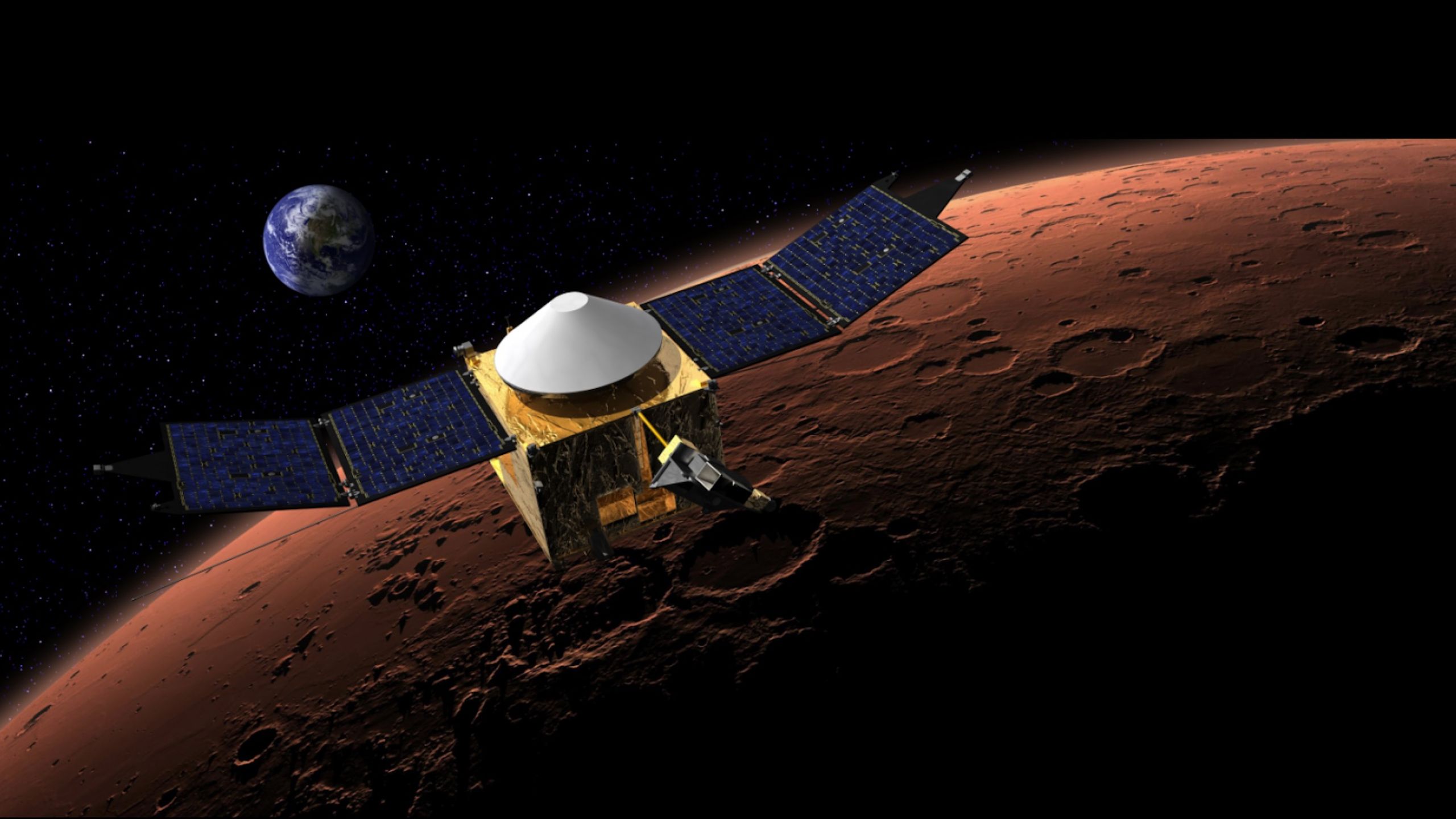
NASA has officially declared the MAVEN Mars orbiter dead; even under nominal end-of-mission procedures, it would have remained in orbit for 50 to 100 years before atmospheric decay or a collision. The article is largely a retrospective on Mars exploration infrastructure, noting that only 6 Mars orbiters and 2 surface craft remain operational today. The piece is informational rather than market-moving, with no direct financial or corporate earnings implications.
This is not a traditional market-moving event, but it does reinforce a slow-burn theme: Mars remains a contested, high-friction operating environment where durability, autonomy, and orbital-debris management matter more than headline launch cadence. The near-term beneficiary set is not the science vendors but the infrastructure layer around deep-space operations — avionics, fault-tolerant components, ground software, and mission assurance services — because every “dead craft” episode increases the value of systems that extend mission life and reduce unplanned loss.
The second-order implication for the space ecosystem is that orbital congestion risk on Mars is becoming a real constraint, even if it is measured in years rather than quarters. That favors players with inspection, rendezvous, navigation, and end-of-life disposal capabilities, and it modestly disadvantages pure-play deep-space science programs that lack robust servicing architecture. Over a multi-year horizon, agencies and primes will likely shift budget share toward debris-aware mission design and autonomy, which is incremental demand for defense-adjacent space contractors rather than commercial launch names.
For HOPE, the article is only indirectly relevant: the UAE’s Mars asset is one of the few operational orbiters, so a world where legacy probes fail but active missions persist slightly strengthens the prestige value of staying operational. The risk is more reputational than financial — any loss of the remaining fleet would pressure perception of Mars program resilience and could tighten future science funding or collaboration budgets. The contrarian point is that “graveyard” language can obscure the economic reality: most of the value is already captured at launch, and the real monetization is in the service stack, not the probe itself.
Timing matters. There is no immediate catalyst here, but the next 12-36 months should see more procurement emphasis on autonomous navigation, collision avoidance, and long-life power/communications subsystems as Mars traffic increases. Any future anomaly involving a surviving orbiter would be a catalyst for this trade, because it would quickly validate the need for more resilient architectures and likely accelerate defense-style procurement behavior in civil space.
AI-powered research, real-time alerts, and portfolio analytics for institutional investors.
Request DemoOverall Sentiment
neutral
Sentiment Score
0.05
Ticker Sentiment
