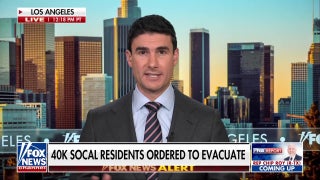
A volatile methyl methacrylate leak at GKN Aerospace in Garden Grove has triggered a state of emergency and evacuation of more than 40,000 residents, with the tank temperature rising to 90°F and officials warning of only two catastrophic outcomes: a spill of 6,000-7,000 gallons or thermal runaway and explosion. Crews are now trying to neutralize a separate 15,000-gallon tank and prevent a chain reaction, while preparing diking and damming measures to avoid environmental damage. The situation poses operational and reputational risk for the facility and could create localized environmental and public-safety consequences, though it is not likely to be a broad market event.
This is a localized industrial accident, but the market impact is really about tail-risk repricing across anything with hazardous-material exposure, not a direct earnings event for the facility owner. The immediate second-order effect is on insurers and municipal liability: once an event shifts from containment to evacuation and environmental runoff risk, reserve uncertainty widens, and that tends to matter more for excess casualty, environmental remediation, and airport/industrial property underwriters than for the operating company itself.
The bigger near-term winner is the emergency-response ecosystem: specialized environmental services, hazardous waste logistics, and industrial cleanup contractors typically see accelerated call volumes after incidents like this, especially when regulators get involved and remediation scope expands over days rather than hours. A less obvious loser is the regional logistics web around Orange County—temporary road closures, labor absenteeism, and precautionary shutdowns can ripple into just-in-time manufacturing and airfreight scheduling for 1-2 weeks even if the physical incident is contained, pressuring already thin aerospace supply chains.
From a catalyst standpoint, the key binary is whether the chemical hardens in place versus transitions to a spill or vapor event. That means the market may misprice the risk in the first 24-72 hours: if containment holds, the headline fades quickly, but if there is any runoff into storm channels or a prolonged shelter-in-place, the story shifts from acute safety event to multi-week remediation and litigation overhang. The contrarian angle is that the worst-case stock reaction may be overdone for broad industrials while still being underdone for insurers and waste-remediation names, because the damage tail is concentrated in cleanup, claims, and compliance rather than enterprise-wide demand destruction.
GE is not a direct read-through here, but the event is a reminder that aerospace and defense supply chains carry non-trivial environmental and operational fragility; any name with high-consequence chemical handling, local concentration, or sole-source production should trade with a higher governance and shutdown premium until the situation is resolved. If authorities successfully convert this into a controlled cure, the risk premium should compress rapidly; if not, expect a reassessment of safety capex and permitting scrutiny across the sector over the next quarter.
AI-powered research, real-time alerts, and portfolio analytics for institutional investors.
Request DemoOverall Sentiment
strongly negative
Sentiment Score
-0.78
Ticker Sentiment
