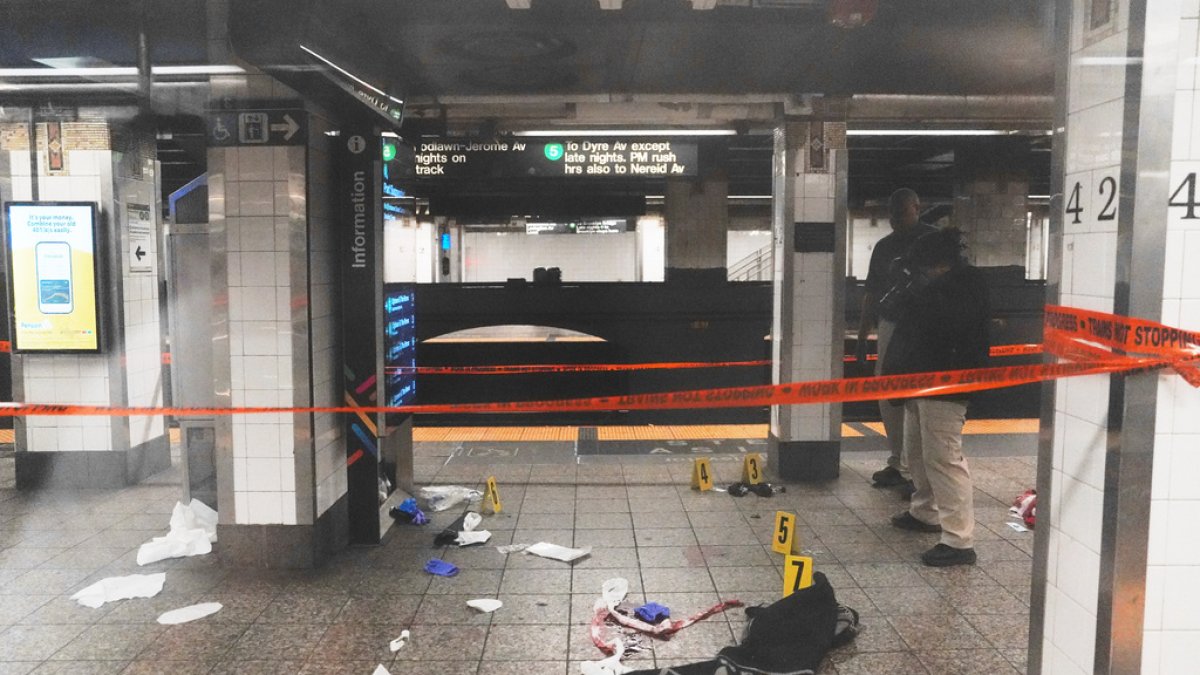
A machete attack at Grand Central Station wounded 3 people before police shot and killed the suspect, Anthony Griffin, 44, after he advanced on officers. All three victims were expected to survive, but the incident triggered an NYPD investigation and temporary disruptions to the 4/5/6 subway lines at Grand Central-42 Street. The event is primarily a public safety and transit disruption story with limited direct market impact.
This is a near-term mobility shock, not a structural earnings event, but the second-order effect is a measurable pulse of operational friction around one of the city’s most systemically important transit nodes. The immediate beneficiaries are not obvious equities so much as public-sector and security-adjacent demand: incident response, surveillance, access-control, and private security vendors tend to see procurement urgency rise after highly visible station events, especially when they occur at a major commuter nexus.
The more investable read-through is to New York-centric transportation exposure. Even a few hours of platform disruption can create a small but real drag on commuter confidence, with the risk that repeated incidents incrementally worsen perceived safety and reduce discretionary off-peak ridership. That matters most for operators with high fixed costs and thin incremental margins, because a 1-2% hit to ridership in peak corridors can have an outsized effect on fare revenue recovery, while also increasing pressure on the state and MTA to accelerate capital/security spend.
For defense and security contractors, the catalyst window is weeks to months: agencies typically move from statements to budget reallocations only after public pressure persists. The contrarian point is that these events often produce a short-lived political response but a durable procurement response, especially if leadership is forced to show visible changes at marquee stations. The risk to that thesis is that the issue is framed as isolated criminality rather than transit-system vulnerability, in which case the policy reaction stays cosmetic and the trade fades quickly.
AI-powered research, real-time alerts, and portfolio analytics for institutional investors.
Overall Sentiment
mildly negative
Sentiment Score
-0.20
