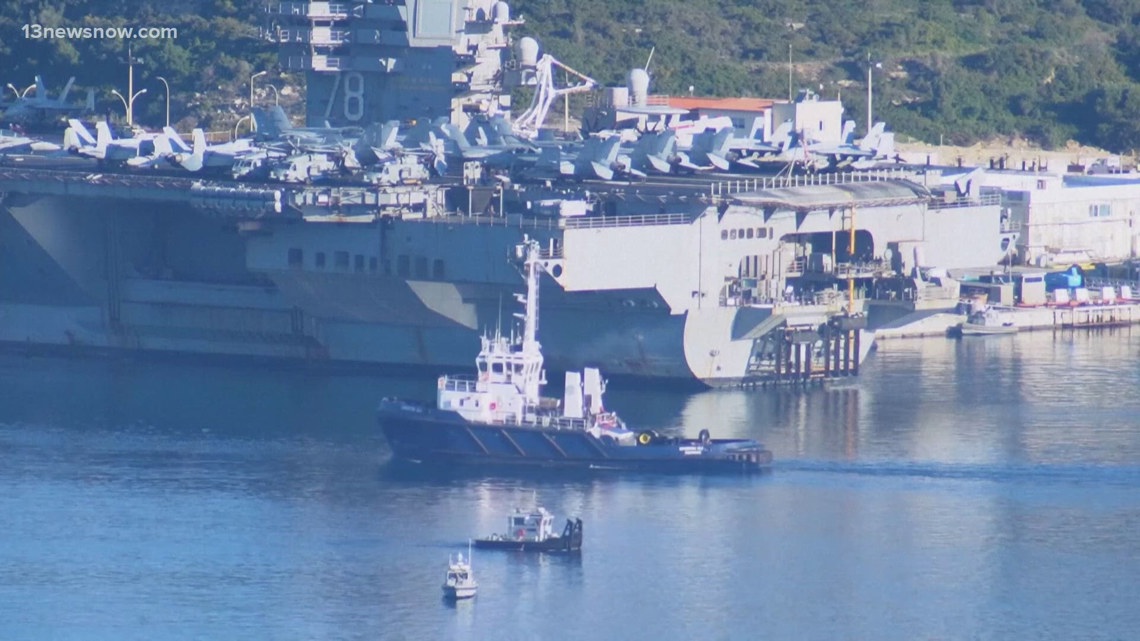
Nearly 4,500 sailors returned home as the Gerald R. Ford Carrier Strike Group completed an almost 11-month deployment, described as the longest carrier strike group mission since the Vietnam War. The group supported operations in the Caribbean Sea and later backed a mission tied to the war in Iran, highlighting ongoing U.S. military engagement overseas. The article also notes operational problems during deployment, including a laundry-room fire that injured two sailors and bathroom issues reported by Sen. Tim Kaine.
The more important signal here is not the homecoming itself, but the proof that the Navy is being forced to treat carrier presence as a sustained rotational tool rather than a short-duration deterrent. That raises the effective utilization rate of a very expensive asset class, which tends to tighten maintenance slack, accelerate component wear, and increase unplanned downtime risk across the carrier fleet over the next 6-18 months. Second-order beneficiaries are logistics, ship repair, and naval training contractors; the hidden loser is fleet readiness optionality, which becomes more fragile just as geopolitical demand for visible force projection is rising.
The operational mishaps matter because they create a political opening for budget reallocation. Extended deployments plus quality-of-life failures strengthen the case for more O&M, maintenance availability, and crew-support spending rather than pure new-build procurement, which can delay marginally accretive revenue for platform primes while lifting smaller services names tied to sustainment. If Congress leans into readiness fixes, the best exposure is not necessarily shipbuilders with long-cycle backlog, but firms that monetize repair cadence, base infrastructure, and crew support over the next 1-3 budget cycles.
The contrarian angle is that market participants may overread the deployment as straightforwardly bullish for defense primes. In reality, a record-length mission is a stress test on the force structure and could increase scrutiny of carrier concentration risk, especially if another deployment ends with readiness issues or safety incidents within the next quarter or two. That creates a tactical opportunity to fade crowded defense-beta names on spikes while preferring names that benefit from sustainment spending and domestic defense logistics, which is where incremental dollars are likeliest to flow.
There is also a geopolitical tail-risk: high-visibility maritime operations tied to regime change or regional escalation can compress decision timelines and raise the odds of retaliatory incidents against U.S. assets. That means a premium should remain on contractors and cyber/ISR suppliers that benefit from elevated alert posture, but the broader market impact is likely to be episodic rather than structural unless the tempo converts into a sustained procurement cycle.
AI-powered research, real-time alerts, and portfolio analytics for institutional investors.
Request DemoOverall Sentiment
neutral
Sentiment Score
-0.05
