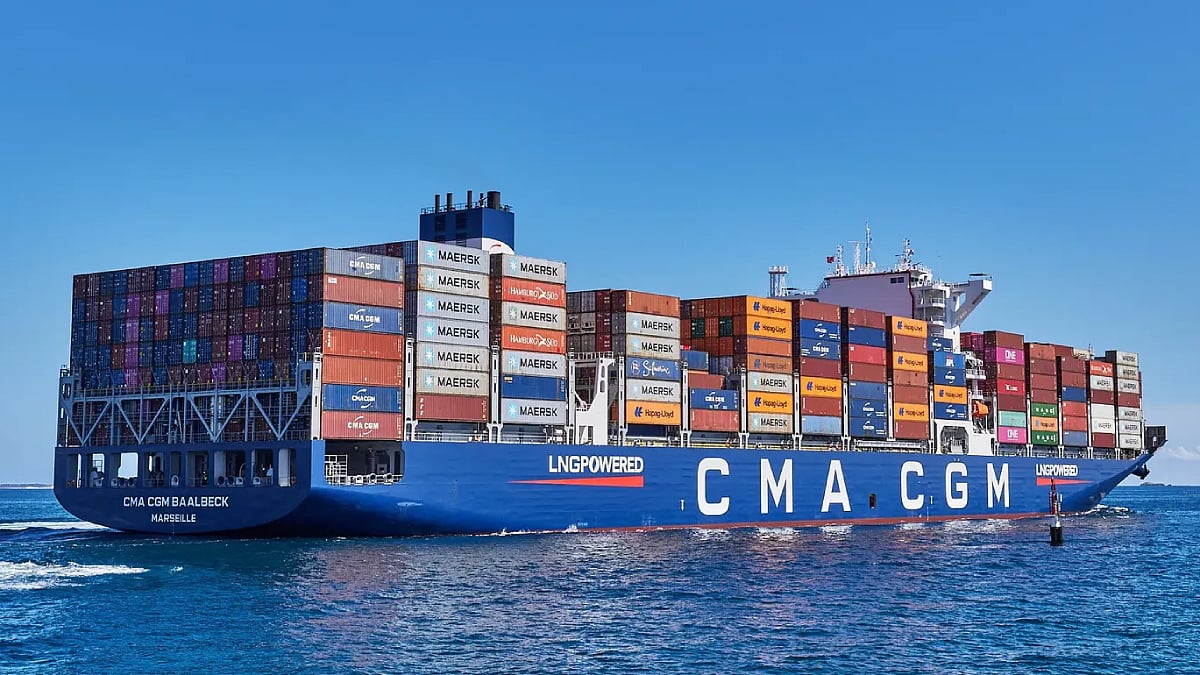
CMA CGM will impose an emergency fuel surcharge of $65–$180 per standard container for loadings from March 23 until further notice, citing significant increases in bunker fuel costs driven by the Middle East conflict. The company has halted services to the Persian Gulf and vessels inside the Strait of Hormuz have been immobilised; rival MSC has also introduced emergency surcharges (effective March 16 on N. Europe to Red Sea/East Africa). Crude oil logged its biggest weekly gains since 2020, reinforcing near-term ocean-transport cost pressures that are likely to push up freight rates and import costs.
Shipping economics are being reshuffled through two channels: higher bunker costs that can be passed through rapidly on spot and short-cycle contracts, and route-choice shocks that mechanically increase days-at-sea and vessel utilisation. Rerouting around closed or risky choke points effectively increases voyage fuel burn by a non-trivial percent (mid-teens to low-30s depending on origin/destination), which acts like an immediate capacity cut — fewer round-trips per ship per year amplifies spot-rate sensitivity to demand pulses.
Second-order winners are carriers and owners with large spot exposure and flexible blanking ability, plus refiners that can capture heavier fuel/heating-oil spreads; losers are long-term contracted shippers, thin-margin forwarders, and energy-intensive end-users who cannot pass costs through. Over a 1–3 month horizon, expect elevated freight FFA volatility and pockets of acute tightness on high-frequency lanes (Europe-Asia, Red Sea transits); over 3–12 months, persistent insurance/war-risk premia and route diversification (nearshoring, transshipment hubs) could structurally raise unit transport costs by several percentage points.
Key catalysts that will change this picture: a rapid diplomatic de-escalation or restoration of safe-transit corridors (days–weeks) would collapse the premium; sustained production losses or broader regional escalation would push oil and bunker spreads materially higher (months). Watch insurer war-risk premiums, liner schedule adjustments (blank sailings announcements), and Spot vs Contract renewal flow in the next 30–90 days as the primary triggers for outsized P&L moves.
AI-powered research, real-time alerts, and portfolio analytics for institutional investors.
Request DemoOverall Sentiment
mildly negative
Sentiment Score
-0.25
