
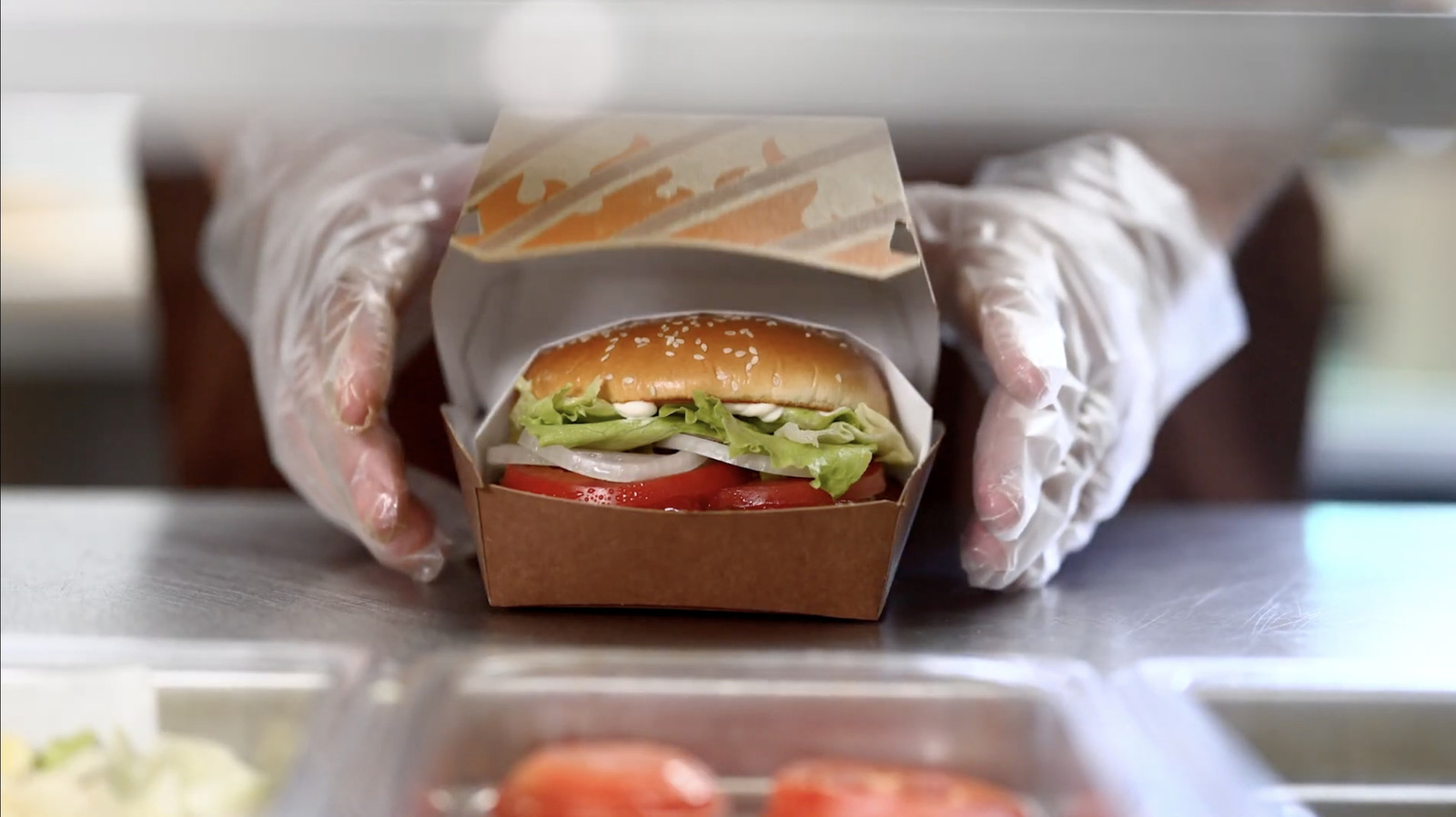
Burger King has introduced a first major refresh to the Whopper in years—retaining the same patty but adding freshly cut onions and tomatoes, a new mayo, a more premium bun and cardboard box packaging—positioning the change to drive customer re-engagement. CNN reports the upgrades will cost franchisees roughly $4,000 per year, a potential pressure point for franchise economics that corporate is advising should not be passed to consumers, implying modest operational and pricing implications for franchise margins and comparable-store performance rather than a material corporate earnings event.
Market structure: The Whopper refresh primarily benefits upstream suppliers — premium-bun bakers, fresh-produce vendors (tomatoes/onions) and cardboard-packaging firms — and Burger King’s brand perception; franchisees absorb about $4,000/yr each (likely <0.5% of unit revenue), constraining quick pass-through. Competitive dynamics: McDonald's (MCD) keeps scale and pricing power; any BK share gains are likely modest (estimate 0.5–2% share shift) over 6–12 months unless promotions follow. Supply/demand: incremental fresh-produce and packaging demand is small but concentrated; no material beef demand change. Cross-asset: negligible bond/FX effects; modest uplift to packaging equities and short-dated volatility in QSR/RBI (QSR) options around franchisee reactions.
Risk assessment: Tail risks include franchisee litigation, coordinated refusals to implement upgrades, or a supplier bottleneck that raises costs >2% for units; regulatory risk is low but reputational and franchise-relations risk is material. Time horizons: immediate (days) — muted market move; short-term (4–12 weeks) — franchisee rollouts, commentary, early comps; long-term (3–12 months) — traffic trends and margin pass-through clarity. Hidden dependencies: franchise disclosure updates, localized pricing tests, and supplier contract terms. Catalysts: first-month system comps, QSR/RBI earnings calls, franchisee association statements.
Trade implications: Tactical long MCD (stable, scale beneficiary) vs short QSR (franchisee-exposed) is highest-probability relative trade; target 2–3% portfolio long MCD vs 1–2% short QSR, horizon 3–12 months. Options: buy MCD 6-month calls ~5–10% OTM (delta ~0.25–0.35) sized to ≤0.5% portfolio to lever upside if comps surprise. Sector rotation: shift 1–3% from franchise-heavy small caps into packaging/food-distribution names; time entries after first 30 days of sales data.
Contrarian angles: Consensus understates the impact of packaging on perceived quality — reducing damaged-sandwich complaints can lift repeat rates by ~1–3% over a year, which is often underpriced. Reaction may be underdone for MCD upside (defensive) and overdone for QSR if franchisees accept costs without immediate price hikes. Historical parallel: McDonald's past product refreshes produced 1–3% comp improvements over 12 months; unintended consequence risk is franchisee pushback leading to slower rollout and temporary margin compression for RBI/QSR.
AI-powered research, real-time alerts, and portfolio analytics for institutional investors.
Request TrialOverall Sentiment
mixed
Sentiment Score
0.05
Ticker Sentiment
