
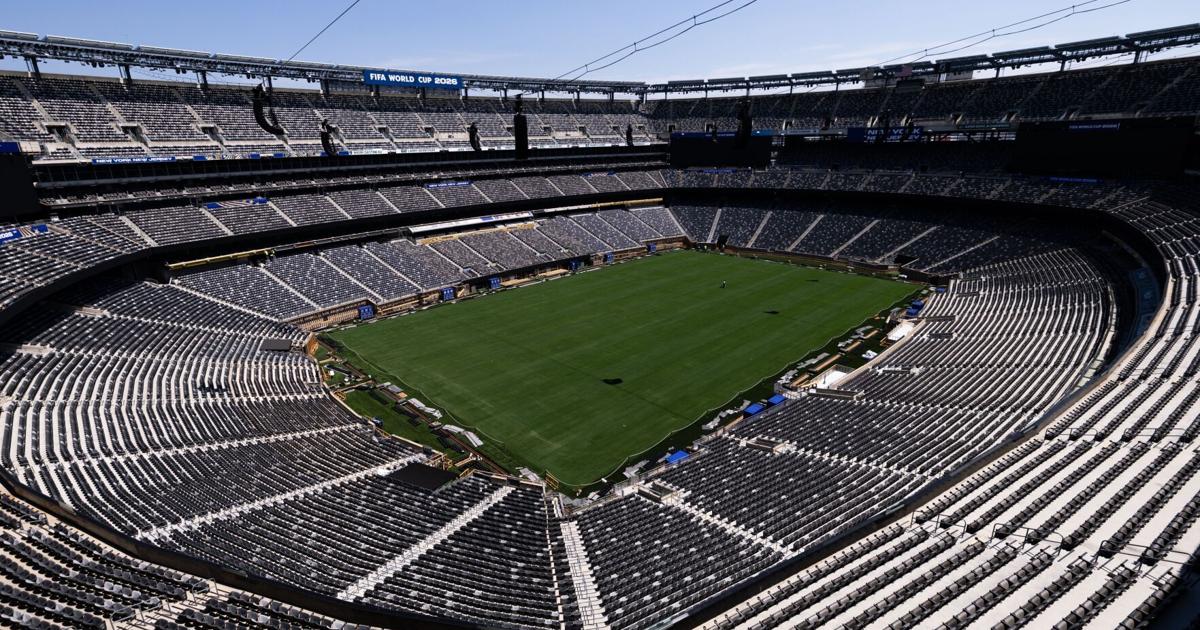
The 2026 FIFA World Cup is prompting expanded public health preparedness across the US, Mexico and Canada, with concerns ranging from measles and heat illness to wastewater surveillance and emergency response coordination. The article highlights a $625 million federal grant program for host cities, CDC and PAHO coordination efforts, and special airport screening protocols tied to the Ebola outbreak in Central Africa. Overall risk to the event is described as manageable, but the scale and cross-border nature of the tournament raise operational and health-security demands.
The investable read-through is not a direct “World Cup trade” but a localized volatility impulse for the public-health stack: testing, diagnostics, hospital staffing, temporary infrastructure, and insurance claims management. The bigger second-order effect is that a multi-country, multi-city event creates a sustained need for low-latency surveillance and rapid specimen handling, which should benefit companies exposed to decentralized diagnostics, mobile labs, and hospital workflow automation more than pure-play vaccine or therapeutics names.
The risk is timing asymmetry: the catalyst arrives in bursts, with prep spend now, utilization spikes during the event window, and then a quick normalization. That makes this a better options or pairs setup than a directional long in broad healthcare. Any meaningful outbreak headline would likely lift some providers, but the market is already conditioned to treat “preparedness” as non-recurring, so multiples should only rerate if management teams can frame World Cup-related capabilities as reusable infrastructure for recurring municipal contracts.
The contrarian angle is that the market may be overpricing headline disease risk and underpricing operational strain. The real economic damage is not an Ebola scenario; it’s heat, crowding, and routine respiratory load pushing ERs, imaging, and short-stay capacity at the exact time cities are trying to maintain service quality. That argues for beneficiaries with volume leverage and low incremental capex, while exposure to travel/leisure and venue operators is more about transient disruption than structural demand impairment.
AI-powered research, real-time alerts, and portfolio analytics for institutional investors.
Request TrialOverall Sentiment
neutral
Sentiment Score
-0.05
Ticker Sentiment
