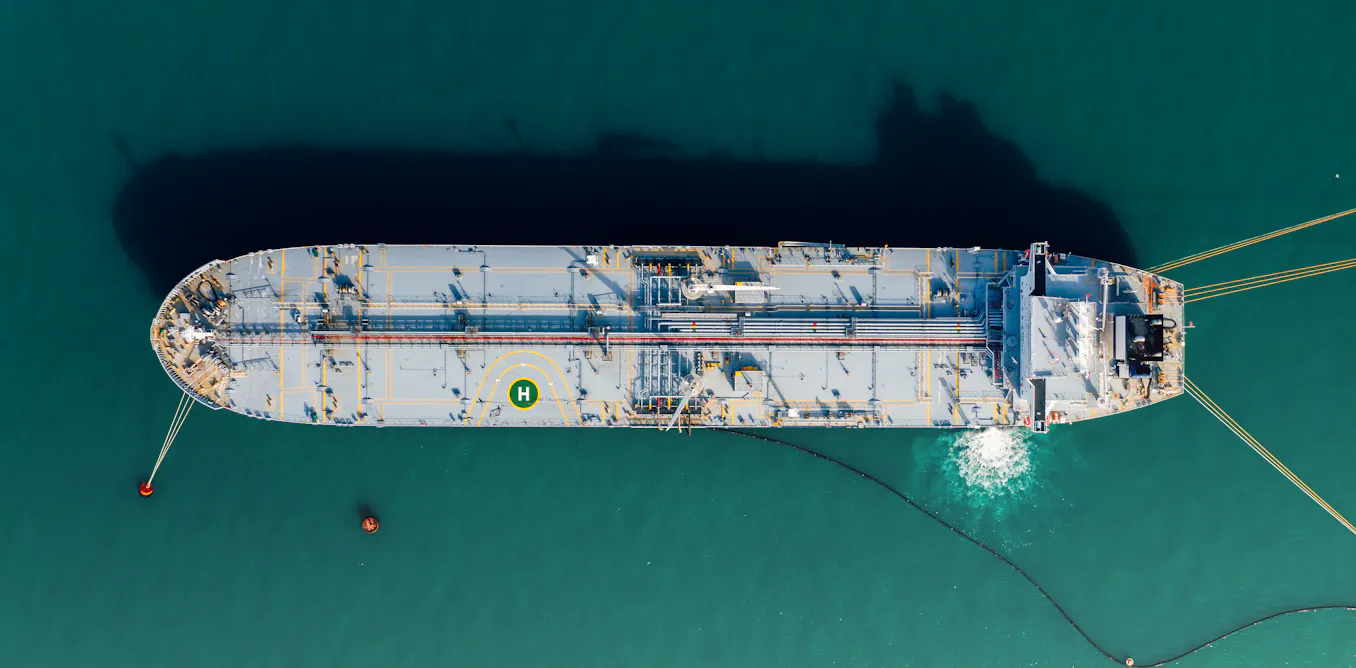
Tanker traffic through the Strait of Hormuz has collapsed by more than 90% since Feb 28, 2026, with over 400 tankers stranded in the Persian Gulf. Iran has threatened to destroy transiting ships, insurers are considering individual-ship coverage refusals, and roughly 1,100 'dark fleet' vessels (~17–18% of tankers) continue moving with transponders off and opaque registries/insurance. The closure of aboveboard trade through the chokepoint means illicit oil flows are the only supply moving, raising acute global oil supply disruption risk and likely upward pressure on oil prices and shipping risk premia.
Immediate market mechanics will favor anything that captures longer voyage economics and opacity premium: expect VLCC/tanker dayrates to spike and hinterland freight differentials to widen as parties avoid Hormuz, raising effective delivered cost of Persian Gulf barrels by a meaningful percentage versus baseline. That increases backwardation in Brent relative to WTI and forces refiners with narrow feedstock flexibility to buy on a more volatile spot basis; a $8–$12/bbl move in Brent versus WTI over 2–8 weeks is plausible under sustained disruption given historical elasticities.
Insurance and counterparty plumbing are the choke points that determine whether “dark” oil scales or remains niche. Rapid growth of non-standard insurance or letter-of-credit workarounds increases credit risk for banks, traders and ports — expect tighter collateral demands and longer settlement cycles within days-to-weeks, compressing trade volumes for sophisticated counterparties while benefitting intermediaries who provide credible cover or verification services.
Medium-term outcomes hinge on three catalysts: coordinated naval/escort guarantees, a market-led war-risk consortium that reinsures legitimate voyages, or an accelerated pivot to alternative routes/pipelines. Each has different timelines (naval escorts can be organized in weeks; a new reinsurance mechanism takes months; new physical pipelines take years). The consensus fear-price may be overshooting in the first 30–90 days as liquidity hoards and token buying amplify moves; if any one catalyst materializes, expect a rapid partial unwind and steep compression of volatility.
AI-powered research, real-time alerts, and portfolio analytics for institutional investors.
Request DemoOverall Sentiment
strongly negative
Sentiment Score
-0.75
