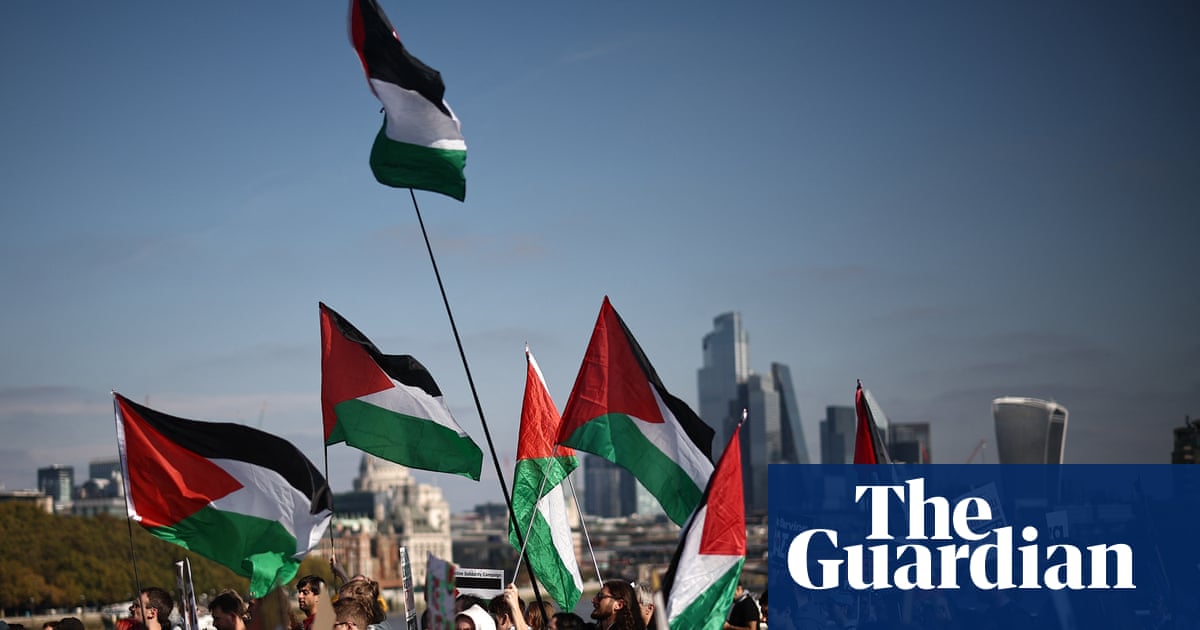
UK Prime Minister Keir Starmer said he would consider stopping some pro-Palestine protests and backing tougher action on slogans such as "globalise the intifada," prompting backlash from protest organisers over free speech and assembly concerns. The debate comes amid heightened tensions after recent attacks on the British Jewish community, including the stabbing of two Jewish men in Golders Green, and has drawn calls from both police and political leaders for tighter protest powers. The issue is politically sensitive but not an immediate market-moving event.
This is less about one protest weekend and more about a regime shift in how the UK prices domestic unrest risk. If the government moves from passive tolerance to selective prohibition, the first-order beneficiary is the state/security apparatus; the second-order losers are transport operators, central-London retail, hospitality, and event-adjacent firms that absorb recurring disruption costs and footfall volatility. The market usually underweights how quickly a civil-liberties dispute can become a policing-budget and public-order spiral: that means a higher probability of recurring headlines, higher security spend, and a longer hangover for consumer confidence in dense urban areas.
The sharper risk is political contagion. A ban attempt would likely harden turnout among activists, increase the probability of confrontations, and force police to choose between inconsistency and visible escalation. Over a 1-3 month horizon, that can translate into more disruptive, less predictable march routes and an elevated odds-of-event premium for insurers and London-exposed landlords/retail REITs; over 6-12 months, it can also widen the gap between firms with suburban/subnational exposure and those dependent on West End or central London traffic.
The contrarian read is that a clampdown may not reduce disorder; it may compress it into fewer, higher-intensity incidents that are harder to police and more damaging to optics. That argues against assuming a clean de-risking of the issue. The better trade is to own beneficiaries of security normalization rather than short the whole protest complex: public-safety vendors and defensive UK infrastructure names should see modest but persistent demand support if the political center keeps leaning into tougher restrictions.
Catalyst-wise, watch for a formal Home Office/police powers announcement, any court challenge to protest restrictions, and the next large London march. A ban order or route restriction around a sensitive site would be the clearest trigger for a 2-4 week volatility spike in UK domestic sentiment names, while a failure to enforce would likely reprice the issue back down but leave the structural risk intact.
AI-powered research, real-time alerts, and portfolio analytics for institutional investors.
Request DemoOverall Sentiment
mildly negative
Sentiment Score
-0.20
