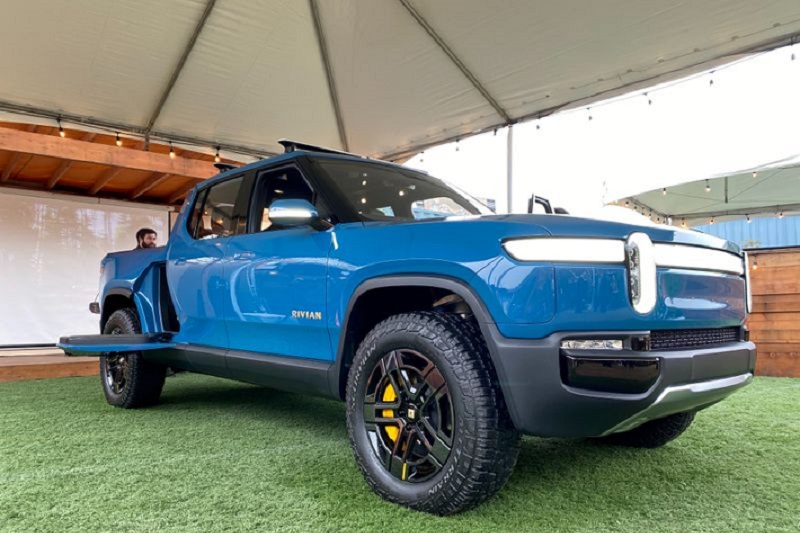
Rivian CFO Claire McDonough sold 10,245 shares for $184,410 at $18.00 each under a prearranged Rule 10b5-1 plan, leaving her with 946,814 shares. Operationally, Rivian’s Q1 deliveries of 10,365 vehicles topped Cantor Fitzgerald’s 9,856 estimate and the Visible Alpha consensus of 9,678, while Cantor reiterated a Neutral rating with an $18 target and UBS kept a Neutral rating with a $16 target. The company also announced a battery energy storage project with Redwood Materials at its Illinois plant using more than 100 second-life battery packs.
RIVN’s real tell is not the insider sale itself but the mismatch between operational momentum and capital-structure skepticism. Better deliveries plus a second-life battery monetization project improve near-term credibility on execution and cost discipline, but they do not yet solve the core equity question: whether the company can turn scale into durable gross margin before dilution or refinancing risk reasserts itself. In that sense, the stock can stay bid on “progress” even while the long-duration valuation debate remains unresolved.
The second-order winner here may be the broader EV supply chain rather than Rivian outright. A successful repurposed-battery energy storage deployment signals a pathway for OEMs to monetize end-of-life packs, which is constructive for recyclers, inverter/grid-storage integrators, and potentially battery material processors that can capture refurbishment and sorting economics. It also gives legacy automakers one more reason to engage on software/architecture partnerships: if Rivian’s stack can be framed as an efficiency layer with energy monetization optionality, the strategic value is larger than just unit vehicle economics.
The risk is that the market is extrapolating a few good quarters into a multi-year re-rating before the company proves repeatable margin leverage. A neutral analyst stance with a price band clustered around current levels suggests upside is already crowded, while the insider plan-based sale is not bearish on its own but does reinforce that management may view present prices as fair. If macro risk appetite weakens, high-beta EV names typically de-rate faster than fundamentals change, so the next catalyst window is likely 1-3 months around further delivery data and any update on platform licensing or energy-storage economics.
Contrarian view: the consensus may be underestimating how much of Rivian’s equity value could come from software, architecture licensing, and energy services rather than vehicle unit growth. If management can demonstrate even modest third-party adoption, the market may reframe RIVN less as a cyclical OEM and more as a platform story, which would justify a higher multiple. But absent that proof, this looks more like a tactical trading opportunity than a durable fundamental breakout.
AI-powered research, real-time alerts, and portfolio analytics for institutional investors.
Request TrialOverall Sentiment
mildly positive
Sentiment Score
0.20
Ticker Sentiment
