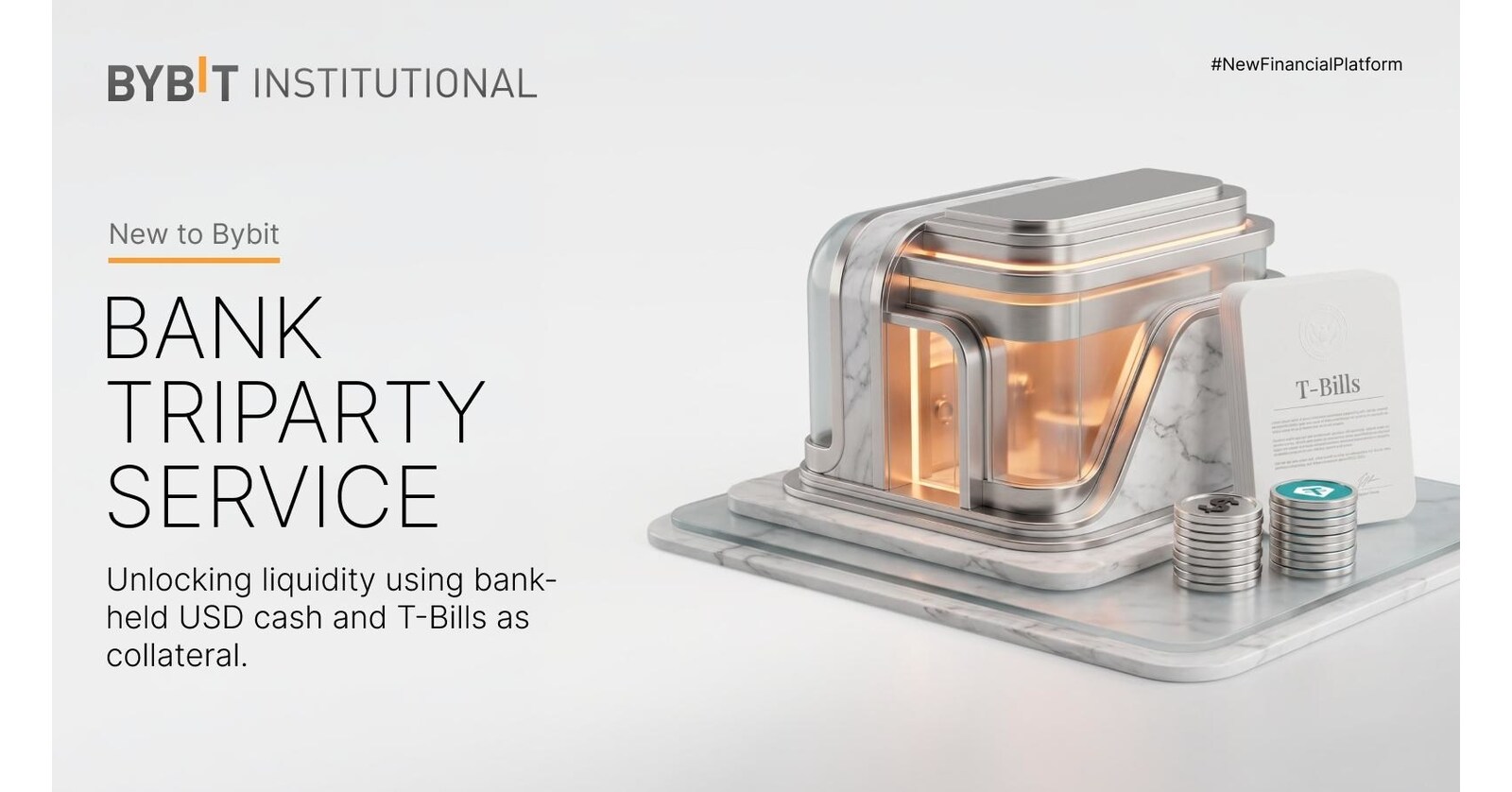
Bybit launched a Bank Triparty service aimed at institutional investors, enabling them to deposit USD or U.S. Treasury Bills with Bybit-approved banking partners and receive USDT loans directly into their Bybit Unified Trading Account (UTA) for immediate deployment across spot, margin, perpetuals, and options. The framework is designed to reduce counterparty risk by keeping collateral in third-party regulated custody while preserving collateral yield via continued APR accrual on Treasury bill collateral. The news is likely modest for markets overall, but meaningfully improves institutional capital efficiency and custody/financing workflow.
This is a capital-efficiency upgrade for crypto leverage, not just a product launch. The economic value sits in letting institutions rehypothecate treasury collateral while preserving custody optics, which should increase wallet size per client and improve trading velocity for venues that can offer it. The first-order winners are market-makers and high-frequency liquidity providers; the second-order winner is any exchange that can convert idle treasury balances into more perpetual and options turnover without taking direct custody risk.
The public-equity read-through is indirect but real. A structure like this tends to broaden the institutional addressable market for crypto derivatives, which is constructive for COIN if it lifts overall crypto risk appetite, but it can also intensify competition for leveraged flow against offshore venues and OTC desks that rely on higher-friction collateral workflows. The key mechanism to watch is whether this changes turnover, not just AUC-like headline balances; if it simply recycles existing balances onto a different rail, the impact on aggregate volumes will be modest.
Near term, the catalyst is adoption data: onboarding counts, average ticket size, and whether BTC/ETH open interest and funding rates tighten over the next 1-3 months. Over 6-18 months, the structural risk is regulatory: any banking partner discomfort or scrutiny around USDT-linked financing could shut the door quickly, especially if crypto volatility rises and liquidation headlines follow. Contrarian take: the market may be overestimating net-new demand; institutions often prefer regulated futures on CME for risk control, so the real prize may be only a niche subset of active crypto funds, not broad-based institutional migration.
AI-powered research, real-time alerts, and portfolio analytics for institutional investors.
Request DemoOverall Sentiment
mildly positive
Sentiment Score
0.25
Ticker Sentiment
