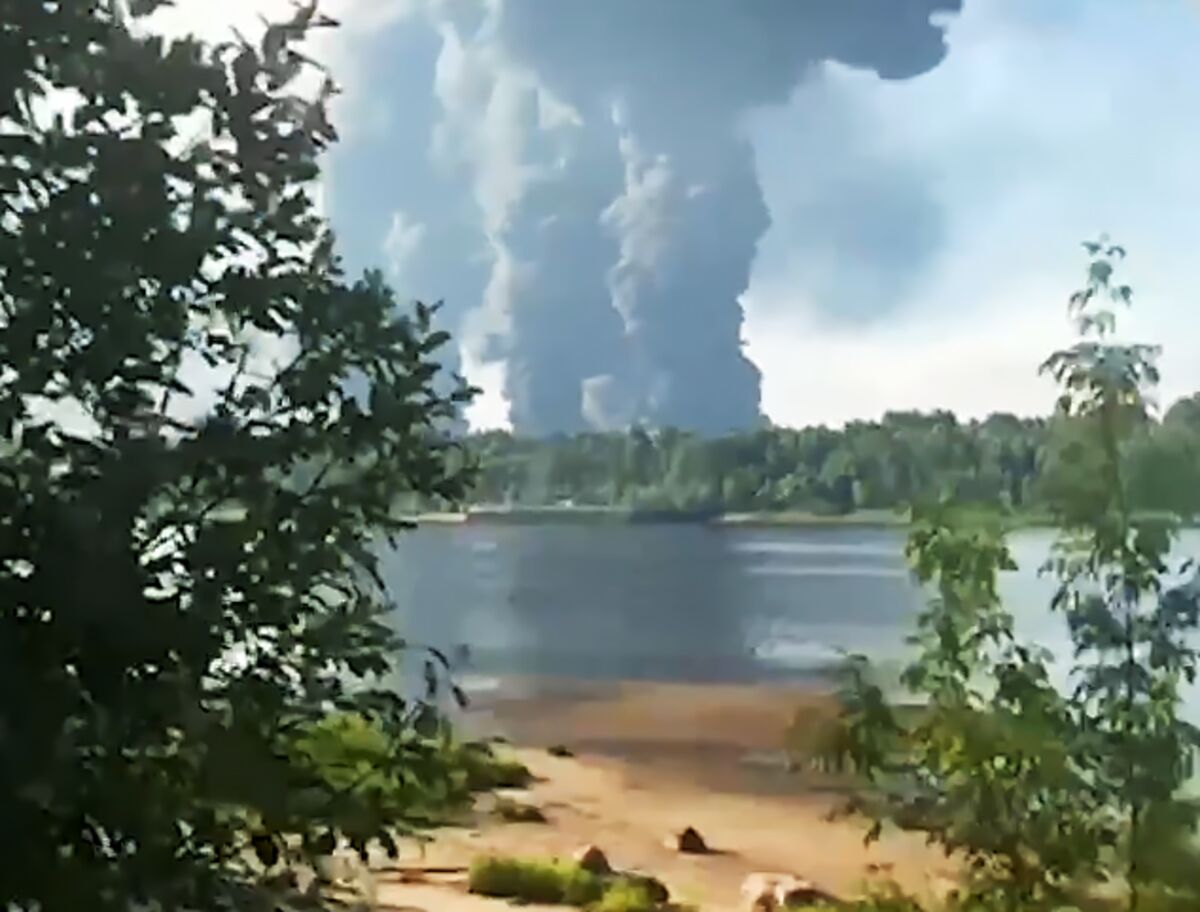
Ukrainian forces struck a Russian fertilizer and chemical plant in Tula and an oil storage facility in Yaroslavl, according to President Zelenskyy, extending deep-strike pressure inside Russia. The Azot plant was described as critical to Russia’s explosives capabilities, while local officials said drone wreckage fell on an industrial site in Novomoskovsk and damage was still being assessed. The attacks are supportive of geopolitical risk premia and could disrupt Russian industrial and energy-related operations.
This is less a one-off battlefield headline than a reminder that Russia’s internal logistics are becoming a more credible target set. The market implication is not an immediate commodity shock from one plant or depot, but a rising tail probability that the Kremlin is forced to spend more on air defense, dispersal, and redundant inventory, which is structurally inflationary for Russian supply chains over months rather than days.
The second-order effect is on fertilizer and nitrogen-intensive industrial inputs: even without a sustained production hit, intermittent disruption can tighten domestic Russian availability, forcing more export management and raising marginal replacement demand from non-Russian producers. That is supportive for global nitrogen pricing and for producers with lower-cost gas feedstock, while also nudging up cost pressure for downstream agriculture and chemicals if attacks become a repeated pattern.
Energy is the cleaner immediate readthrough. Strikes on storage assets increase the odds of local rail, truck, and pipeline rerouting, which typically shows up first as basis volatility rather than outright Brent moves. The risk is not an embargo-style supply loss but a creeping efficiency loss that can lift product differentials and regional crack spreads, especially if Russia responds by hardening facilities and reducing throughput flexibility.
Consensus may be too focused on the headline blast radius and not enough on persistence: a single event is noise, but a campaign changes operational assumptions for Russian industry and insurance of critical assets. If the strikes continue at this cadence, the real trade is not directional crude but volatility in refined products, nitrogen inputs, and defense-adjacent industrial names that benefit from higher air-defense and reconstruction spend.
AI-powered research, real-time alerts, and portfolio analytics for institutional investors.
Request DemoOverall Sentiment
moderately negative
Sentiment Score
-0.35
