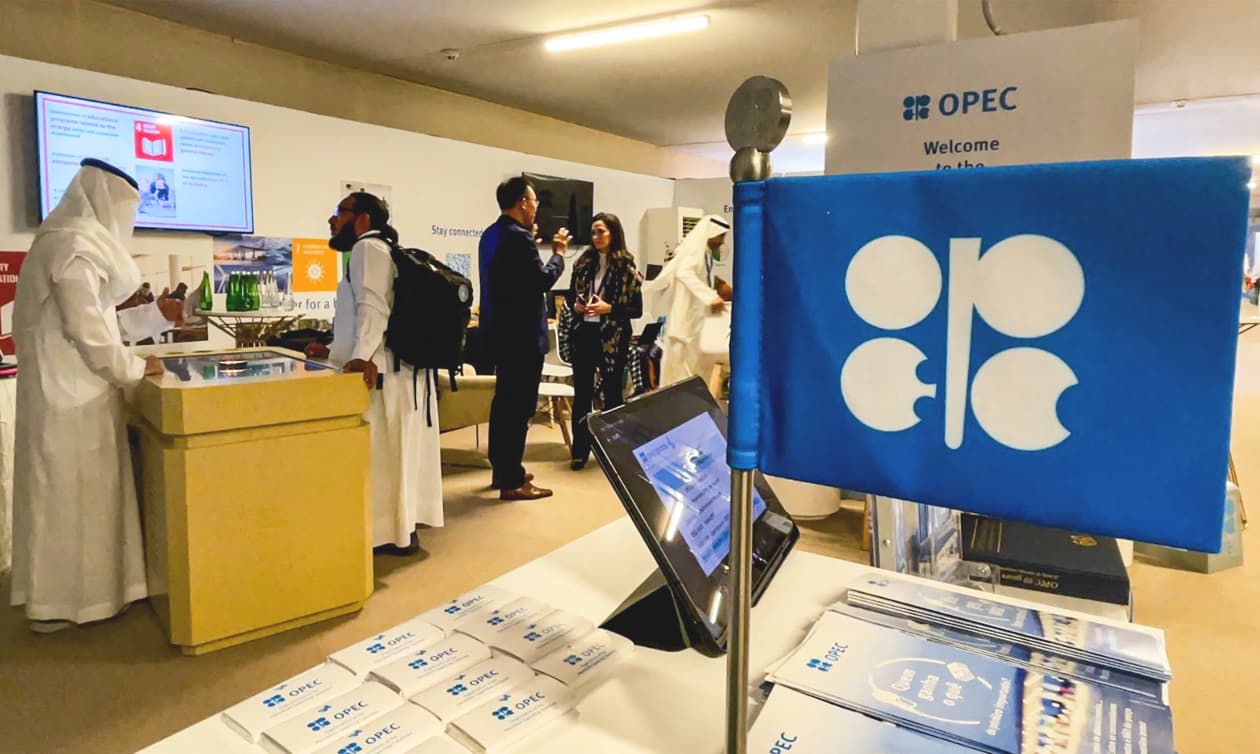
The UAE’s decision to quit OPEC, effective May 1, signals a potential weakening of the cartel’s ability to control global oil supply and prices. The move could increase pricing volatility and reduce OPEC cohesion, with implications for energy markets and broader economic sentiment. No specific price or output figures were given, but the event is potentially market-wide for crude.
This is less a single-country headline than a signal that OPEC+ discipline is becoming more brittle, which matters because marginal supply management is what anchors oil volatility rather than absolute volume. If larger producers start prioritizing optionality over quota compliance, the market typically shifts from a regime of coordinated scarcity to one where the forward curve becomes more sensitive to inventory draws, shipping bottlenecks, and geopolitical disruptions. The immediate effect is not necessarily higher prices; it is a wider distribution of outcomes and a higher risk premium embedded in prompt barrels.
The first winners are non-OPEC producers with short-cycle flexibility and existing spare capacity in logistics, not just upstream names. US shale, offshore Brazil, and select Canadian operators benefit if the market stops assuming OPEC will suppress downside; meanwhile, refiners and transport-intensive end users face more convex input-cost risk even if spot crude does not rally outright. A subtler loser is capital discipline itself: if price ceilings become less credible, producer management teams may be tempted to accelerate drilling, creating a lagged oversupply problem 6-12 months out.
The key catalyst is whether this is a one-off political signal or the start of a broader fragmentation in quota enforcement. In the near term, watch deferred spreads and time spreads rather than headline price; a firmer prompt spread would confirm that physical traders are paying up for immediate barrels. Over a multi-month horizon, the reversal risk is substantial if demand softens or if other producers use this as cover to quietly increase output, which would cap any sustained rally and punish crowded long-energy positioning.
Consensus may be underestimating the asymmetric downside to oil volatility, not the upside to oil price. A looser cartel can produce both spikes and slumps: less coordination usually means a higher chance of localized supply shocks, but also a higher chance that members cheat and flood the market when prices strengthen. That makes option structures more attractive than outright directional exposure until the market proves whether the new regime is truly tighter or simply more chaotic.
AI-powered research, real-time alerts, and portfolio analytics for institutional investors.
Request DemoOverall Sentiment
mildly negative
Sentiment Score
-0.15
