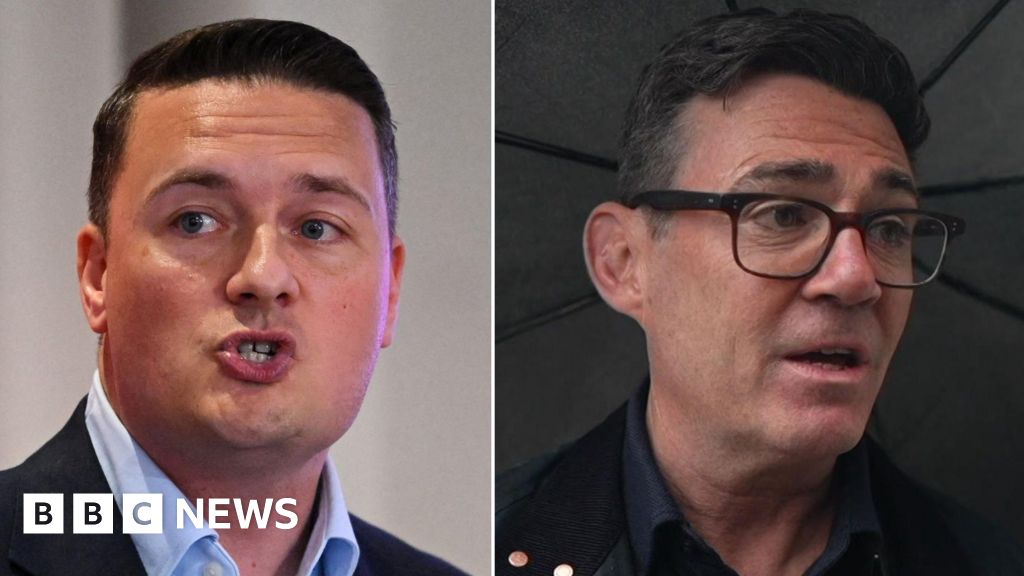
The article centers on mounting Labour leadership turmoil, with Wes Streeting saying he would enter any contest and Andy Burnham preparing for a Makerfield by-election bid that could pave the way for a challenge to Sir Keir Starmer. Nearly 90 Labour MPs have called for Starmer to resign or set a timetable, while more than 150 are said to back him or oppose a contest now. Streeting's renewed criticism of Brexit and Burnham's leadership ambitions add to the uncertainty, but the direct market impact is likely limited.
This is less about one leadership contest and more about a multi-month repricing of UK policy optionality. The market’s immediate read should be that Labour’s governing bandwidth is deteriorating: a contested succession would likely freeze capital allocation, delay fiscal signaling, and widen the spread between “UK beta” assets and defensives. The first-order loser is any domestic cyclicals basket dependent on stable regulation and public spending cadence; the second-order loser is sterling sentiment, because leadership instability tends to raise the probability of looser fiscal rhetoric without clearer growth credibility.
The more interesting nuance is that a Burnham/Streeting bifurcation points to a policy regime fight, not just a personnel fight. Streeting’s EU-reset positioning would be incrementally supportive for UK multinational earners and imported disinflation themes, while Burnham’s working-class, interventionist framing raises odds of higher municipal/regional spending, tougher transport regulation, and greater scrutiny of privatized essentials. That split creates dispersion: beneficiaries are companies with overseas revenue, low UK demand exposure, and pricing power; at risk are regulated utilities, transport, housing-adjacent names, and domestic consumer discretionary tied to policy confidence.
Catalyst timing matters. In the next 2-6 weeks, the by-election is the key event risk: a Burnham win would likely accelerate an internal contest and extend the period of political paralysis. Over 3-6 months, the bigger catalyst is whether this turns into a credible policy reset versus a prolonged intraparty civil war; the latter would be negative for UK duration assets because it increases the chance of fiscal noise, weaker gilt demand from foreign allocators, and a lower sterling risk premium. A reversal would require either a decisive party-management compromise or a leadership figure that rapidly unifies factions and signals fiscal discipline.
The consensus may be underestimating how much of this is a governance trade, not a pure ideology trade. Even if a more EU-friendly leader eventually improves the UK growth narrative, the path there likely includes volatility, and markets usually punish path volatility more than endpoint uncertainty. That argues for positioning into the instability rather than waiting for clarity, especially because leadership fights tend to leak into cabinet turnover, policy deferrals, and investor-capital allocation decisions before any formal vote occurs.
AI-powered research, real-time alerts, and portfolio analytics for institutional investors.
Request DemoOverall Sentiment
mildly negative
Sentiment Score
-0.15
