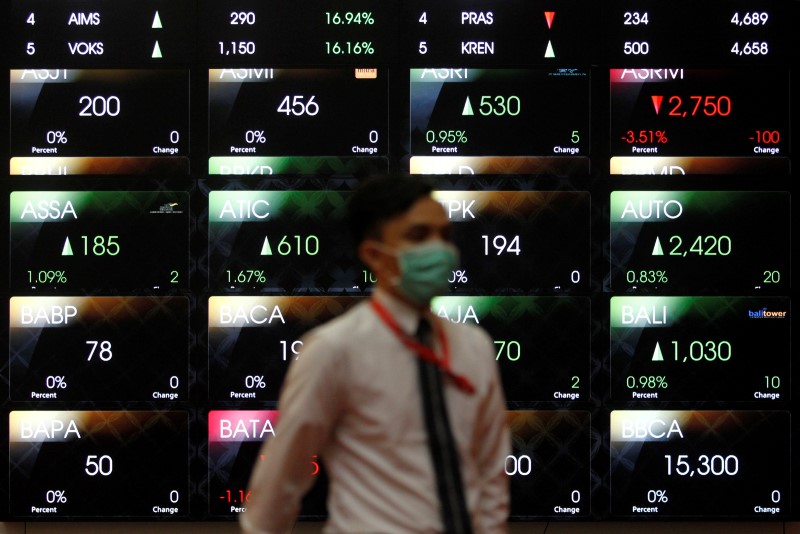
Indonesia's IDX Composite rose 0.03% at the close, with gains led by Agriculture, Basic Industry and Property names. Paramita Bangun Sarana surged 25.0%, while Asia Pramulia fell 14.79%; rising stocks narrowly outnumbered decliners 359 to 353. Commodities were weaker, with July crude down 4.97% to $99.19 and Brent July off 5.33% to $106.12, while USD/IDR rose 0.47% to 17,709.10.
The dominant cross-asset signal is not local equity breadth; it’s the collapse in oil on geopolitical de-escalation risk. If the market starts pricing a lower probability of disruption in the Strait of Hormuz, the first-order loser is energy, but the second-order winners are much broader: Indonesia’s import-sensitive sectors, transport, cement, chemicals, and discretionary consumption all get an immediate margin tailwind from cheaper fuel and a softer inflation impulse. That helps explain why a flat headline index can mask meaningful factor rotation beneath the surface.
The FX move matters almost as much as commodities. A weaker IDR against the dollar can partially offset the benefits of lower oil for domestic importers, especially for sectors with dollar-linked inputs or high external funding needs; in other words, the “oil down = good for Indonesia” trade is not clean unless the currency stabilizes. Over the next days, the market will likely distinguish between companies with direct fuel exposure and those with hidden FX leverage, creating a sharper dispersion trade than an outright index view.
The most interesting setup is that the market may be overpricing the durability of peace hopes while underpricing residual headline risk. Oil can retrace violently if negotiations stall or if shipping/security headlines re-escalate, and that would hit transports and consumer cyclicals fastest on a 1–4 week horizon. Conversely, if the de-escalation sticks for several weeks, the lagged effect should show up in inflation expectations and local rate-sensitive names, with the cleanest beneficiaries being firms that import fuel but sell domestically in rupiah.
The local single-name spikes look more like flow-driven squeezes than fundamental re-ratings, which creates fade opportunities if there is no earnings follow-through. Small/mid-cap moves of this magnitude tend to mean-revert unless accompanied by concrete contract wins, balance sheet improvement, or policy support; absent that, chasing strength after a one-day surge is poor risk/reward. The more durable trade is to express the macro via sector baskets and pair structures rather than isolated momentum names.
AI-powered research, real-time alerts, and portfolio analytics for institutional investors.
Request DemoOverall Sentiment
neutral
Sentiment Score
0.05
