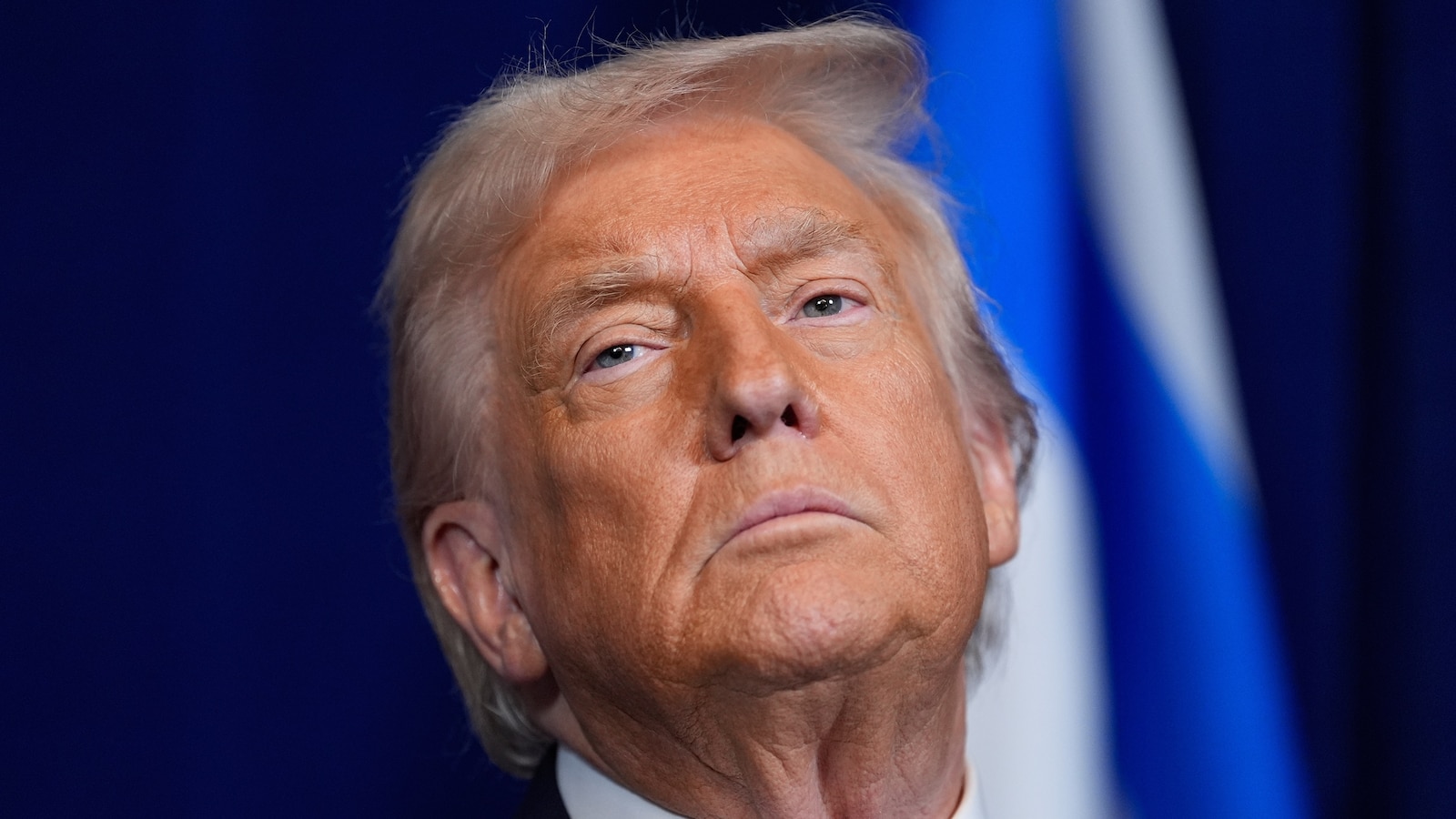
President Trump issued his first vetoes of his second term, rejecting two bipartisan water-related bills — the Finish the Arkansas Valley Conduit Act and the Miccosukee Reserved Area Amendment Act — despite unanimous passage in both chambers; he cited fiscal restraint and immigration-policy objections. The moves escalate tensions with Colorado leaders and could delay a rural water infrastructure project serving Southeast Colorado, though Congress retains the ability to override the vetoes with two-thirds majorities. Politically charged rhetoric and the prospect of an override underscore elevated partisan risk for federal-state infrastructure funding, but the actions are unlikely to be material for broad market positioning.
Market structure: The veto removes a narrowly targeted federal funding path for a rural Colorado water pipeline, directly hurting local construction contractors, small water-works suppliers and the muni borrowers that expected federal grants. Large, diversified water-equipment and regulated utility providers (e.g., XYL, AWK) are largely insulated and may pick up private/state contracts, shifting near-term share toward national firms with balance-sheet capacity. Cross-asset impact is muted but directional: localized credit stress in affected counties could widen high-yield municipal spreads by ~10–30bp if states must replace grants; USD and Treasuries are unlikely to react materially absent broader fiscal policy moves.
Risk assessment: Tail risks include a sustained federal freeze on bipartisan infrastructure funding leading to cascading municipal downgrades in rural areas (low prob, high impact) and a politically driven escalation that could reduce overall federal infrastructure outlays (medium prob). Immediate (days) risk is reputational/political volatility in Colorado equities and muni paper; short-term (weeks–months) risk is project delay and increased muni supply; long-term (quarters–years) risk is re-prioritization of federal grants. Hidden dependencies: state budget capacity and muni reserve levels determine whether localities issue long-term debt or cancel projects. Catalysts: a congressional override attempt within 60 days, state emergency appropriations within 90 days, or court/state-level litigation.
Trade implications: Favor defensive regulated water names (AWK) and global water-tech (XYL) for 6–18 month holds; reduce exposure to regional contractors with concentrated Colorado water backlog (e.g., GVA/Jacobs regional units) for 3–6 months. Use options to express views: buy 3–6 month XYL calls (small sizing 1–2% NAV) for structural upside; buy 3–6 month puts on small-cap muni contractors or short MUB by <1–2% if muni supply increases. Entry: establish positions within 5–30 trading days; trim if override vote is scheduled.
Contrarian angles: Consensus treats this as a local political skirmish; that underestimates the signalling effect that fiscal restraint rhetoric could reduce federal grant baselines by 1–3% next fiscal year, benefiting private water techs able to fund projects commercially. Market may be over-penalizing large diversified contractors and underpricing long-term demand for water-treatment tech — a buying window for XYL on any pullback >8% from current levels. Unintended consequence: state backstop financing could inflate muni issuance and create short-term opportunities to short long-duration muni ETFs when issuance announcements exceed ~$200–300m in affected counties.
AI-powered research, real-time alerts, and portfolio analytics for institutional investors.
Request DemoOverall Sentiment
moderately negative
Sentiment Score
-0.30
