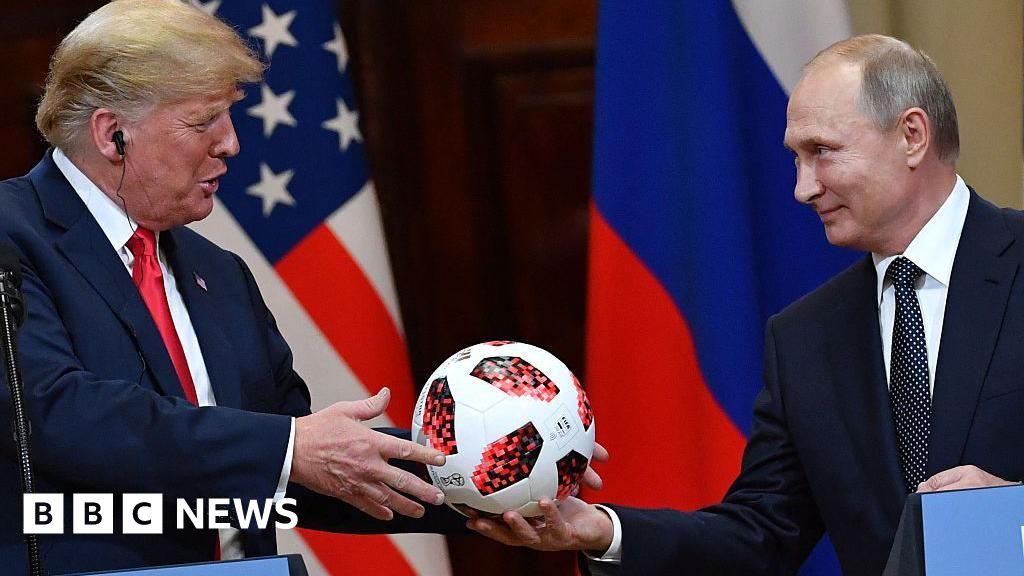
The upcoming Trump-Putin summit in Alaska, aimed at negotiating a ceasefire in the ongoing Ukraine war, is anticipated to be highly unpredictable given the leaders' contrasting styles. Previous encounters highlight Putin's calculated, experienced approach often contrasts with Trump's less prepared, relationship-driven engagement, exemplified by past instances like Trump's defense of Russia. This dynamic, coupled with Trump's mixed signals on the summit's potential, suggests the outcome could significantly impact geopolitical stability, energy markets, and investment sentiment surrounding the conflict.
The upcoming Trump-Putin summit in Alaska presents a significant geopolitical event risk, characterized by high uncertainty stemming from the leaders' divergent negotiating styles. The primary objective is a ceasefire in Ukraine, a conflict that has reportedly seen Russian attacks double since Trump's inauguration. Analysis of past encounters reveals a consistent pattern: Putin employs a meticulously prepared, KGB-trained approach designed to manipulate and control the narrative, as noted by former officials like John Bolton. In contrast, Trump's style is described as improvisational, relationship-driven, and often unprepared, a dynamic that previously led him to publicly side with Putin over his own intelligence agencies in Helsinki in 2018. Trump's current pre-summit messaging is contradictory, oscillating between threats of "very severe consequences" and downplaying the meeting as a "feel-out" exercise. This unpredictability, combined with Putin's history of using gestures and language to assert dominance, suggests that any resulting agreement could be asymmetric or lack substantive enforcement mechanisms, leaving the long-term resolution of the conflict highly tenuous.
AI-powered research, real-time alerts, and portfolio analytics for institutional investors.
Request DemoOverall Sentiment
Neutral
Sentiment Score
0.00
