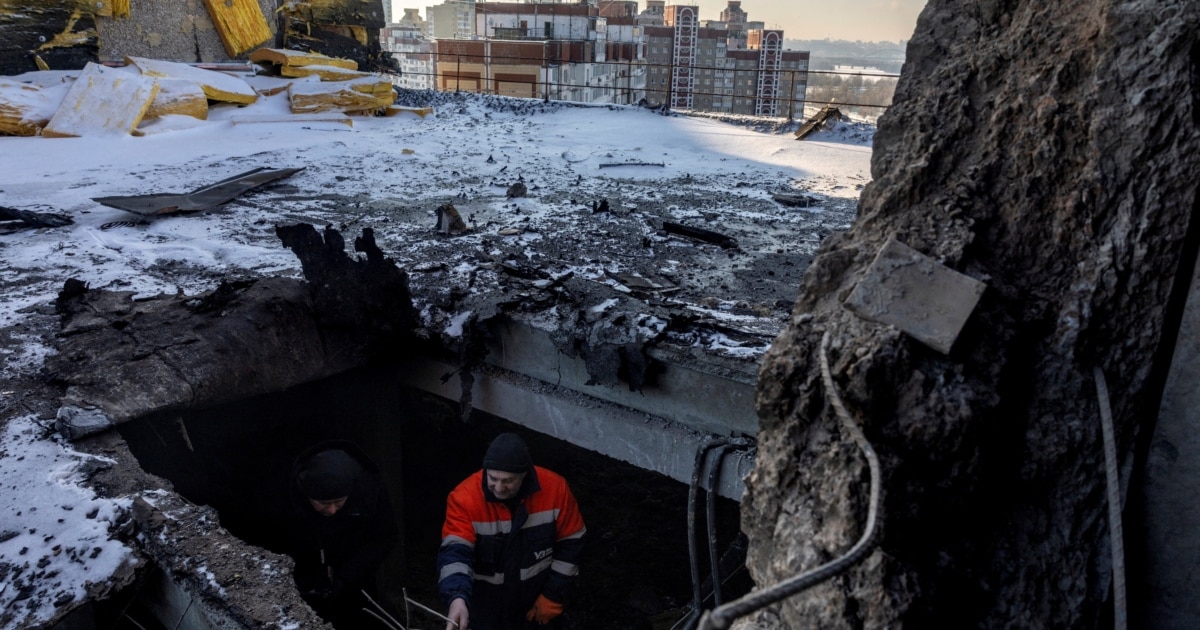
Russian drone and missile attacks have knocked out electricity, water and heating in Kyiv and surrounding regions, affecting roughly 500,000 households, businesses and sites with about 60,000 consumers still without power as of Jan. 10; authorities warned of scheduled blackouts and the need to reduce consumption after a request from state operator Ukrenerho. Kyiv reported major damage from the Jan. 9 barrage—four dead, 26 wounded, 20 residential buildings damaged and half of apartment blocks temporarily without heating—while temperatures are expected to fall to about -15°C and 1,200 warming centers were opened. The strikes, further attacks on frontline infrastructure in Donetsk and a reported Ukrainian strike on an oil depot in Volgograd raise near-term risks to regional energy supply and commodity flows and support a risk-off stance for investors sensitive to European energy and defense-related exposures.
Market structure: Immediate winners are defense primes (contracting tailwinds), LNG/export-focused energy producers, and safe-haven assets (gold, USD); direct losers are Ukrainian utilities, local commerce, and European/Ukraine-exposed cyclical services with revenue hit from cold-weather outages. Pricing power shifts toward energy exporters and defense suppliers for 3–12+ months as incremental military aid and winter-driven fuel demand tighten markets; expect +10–25% volatility in related equities and commodities in the next 2–8 weeks.
Risk assessment: Tail risks include a sharp escalation that disrupts Black Sea grain/oil routes or prompts broader sanctions (low-probability, high-impact — oil to $100+/brent, gas spikes 30%+ within weeks). Immediate horizon (days): operational outages, volatility spikes; short-term (weeks–months): supply-chain & energy rerouting costs; long-term (quarters–years): elevated defense budgets and infrastructure rebuild capex. Hidden dependencies: LNG tanker availability, weather (-15C degree spikes) and NATO aid cadence; catalysts include further mass strikes, major NATO aid tranche announcements, or winter weather forecasts.
Trade implications: Tactical longs in defense and LNG exporters and volatility exposure in energy are preferred; hedge with GLD/USD. Use options to cap downside while capturing asymmetric upside; rotate out of Europe-exposed travel/leisure and select banks over 1–3 weeks as sentiment re-prices regional risk. Pair trades (long defense, short travel) offer relative-value with downside protection if geopolitical news normalizes.
Contrarian angles: Consensus may overstate permanent commodity shortages — if winter ameliorates and Western fuel supply holds, oil/gas could mean-revert 10–20% over 3–6 months. Defense names may already price in some aid; prefer staging buys (add on dips) and favor firms with visible orderbooks and buyback capacity. Rebuild spend creates durable opportunities in steel/construction suppliers over 12–36 months that are under-owned today.
AI-powered research, real-time alerts, and portfolio analytics for institutional investors.
Request DemoOverall Sentiment
strongly negative
Sentiment Score
-0.60
