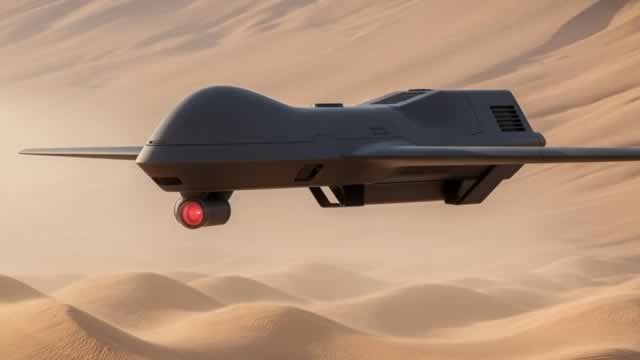
AeroVironment reported Q4 EPS of $1.84 and revenue of $642M, both ahead of Street estimates, with revenue more than doubling YoY. Despite the upside results, Jim Cramer urged investors to “be careful” on AVAV shares, tempering the immediate read-through for momentum. Likely positive stock reaction given the beat, but with caution around sustainability.
The market question is not whether AVAV had a good quarter; it is whether this is a one-quarter catch-up to defense demand or the start of a sustained re-rate. In hardware-heavy defense names, the stock usually cares more about order conversion, backlog quality, and incremental margin than the headline revenue burst, so a strong print can still be a bad entry if the next two quarters merely normalize.
The second-order winner set is broader than AVAV. If autonomous systems spending is accelerating, smaller drone peers like KTOS and RCAT can benefit on sympathy, but AVAV’s scale also raises the bar for them by making execution and margin expansion look easier at a larger platform. The bigger long-duration winners may still be primes such as LMT, NOC, and RTX, which can package drones into larger multi-year programs and absorb procurement budgets that might otherwise flow to pure plays; that limits how far AVAV’s multiple can run if investors decide scale and integration matter more than growth.
The near-term catalyst is sentiment-driven over days, but the next 1-3 months should be all about whether bookings and guidance validate the quarter. The contrarian risk is that the move is being extrapolated from shipment timing rather than durable demand, and that usually shows up first in book-to-bill or margin compression before it hits revenue. If the next update fails to show order momentum, this can de-rate quickly even if defense demand remains structurally healthy over 6-18 months.
AI-powered research, real-time alerts, and portfolio analytics for institutional investors.
Overall Sentiment
mildly positive
Sentiment Score
0.15
Ticker Sentiment
