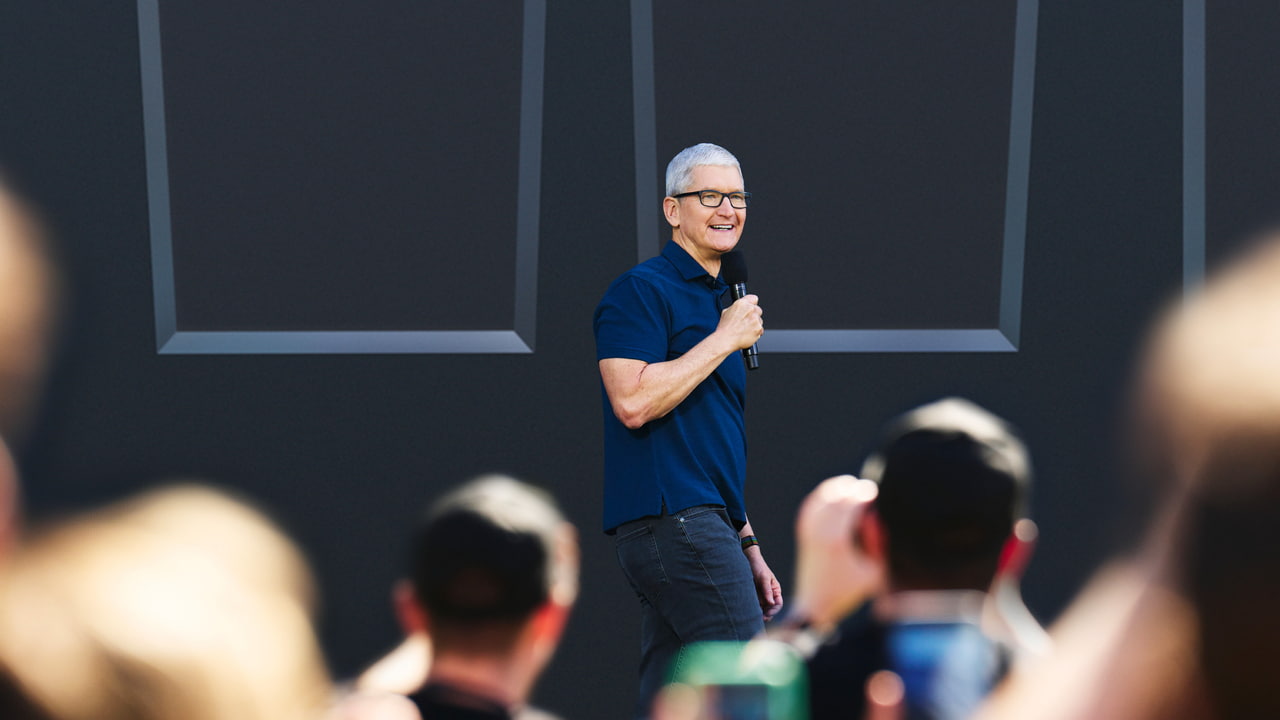
Tim Cook highlighted Apple Maps as his "first really big mistake" in 2012, citing an unready product rollout that triggered a leadership shakeup and public apology. He contrasted that misstep with Apple Watch, which he described as a major success after growing from a basic heart-rate monitor to life-saving health device features. The remarks are largely retrospective and unlikely to move shares, with Cook set to step down on September 1 and transition to executive chairman.
The important read-through is not the mea culpa itself, but what it signals about the next regime at AAPL: tighter product governance under a successor who is being introduced as continuity, not disruption. That lowers execution variance, which is usually worth more to a $4T platform than another “moonshot” narrative, especially when services monetization depends on preserving trust and reducing friction across the installed base. If management is explicitly validating the discipline to kill half-baked hardware/software efforts, the market should assign a modestly higher multiple to cash generation and a lower probability to capital being tied up in prestige projects with poor hurdle rates.
For GOOGL, the competitive issue is subtler: Apple’s mapping stack improving over a decade means one more durable distribution point where Google’s consumer surface area is structurally capped. The incremental risk is not a near-term traffic collapse, but a slow compression of Apple-mediated query and navigation usage that reduces default-placement value over years, not quarters. That said, the market may be overestimating the impact on GOOGL because Maps is now less about raw consumer mindshare and more about local ads, merchant data, and embedded workflows, where Google still retains deep network effects.
The contrarian angle is that this is mildly bullish for both names in different ways. AAPL gets credit for operational maturity and succession clarity; GOOGL may actually benefit if investors rotate from “all consumer surfaces are at risk” fear toward a recognition that Apple’s in-house stack is good enough to coexist rather than fully displace. The bigger second-order loser is any company whose thesis depends on Apple shipping ambitious but under-tested features on aggressive timelines; the takeaway is a more conservative Apple product cadence over the next 12-24 months.
AI-powered research, real-time alerts, and portfolio analytics for institutional investors.
Request TrialOverall Sentiment
neutral
Sentiment Score
0.05
Ticker Sentiment
