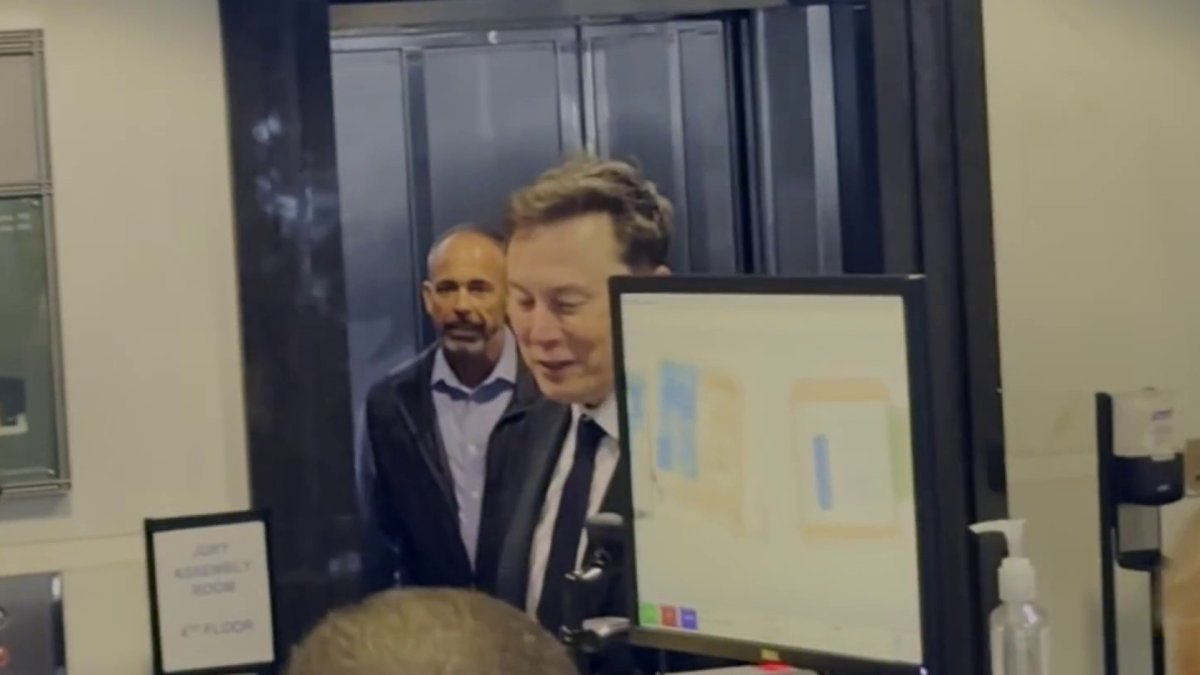
Elon Musk testified for a third day in OpenAI's trial over the company's 2015 nonprofit origins and subsequent pivot toward a for-profit structure reportedly valued at hundreds of billions of dollars. The dispute centers on whether OpenAI violated promises made to remain a nonprofit dedicated to humanity's benefit, while OpenAI argues Musk's lawsuit is intended to hinder its growth and support his rival xAI. Judge Yvonne Gonzalez Rogers limited testimony on AI existential risk, and the trial in federal court in Oakland is set to continue through late May.
The market-level impact is less about the courtroom headline and more about capital allocation drag inside the AI ecosystem. As long as the dispute keeps attention on governance and mission drift, it raises the probability that institutional capital demands tighter control terms from frontier-model private rounds, which can slow fundraising for smaller labs and push the market further toward a few well-capitalized incumbents. That favors vertically integrated players with existing distribution and compute access, while increasing the valuation gap between “real platform” AI assets and story stocks.
For TSLA, the direct earnings impact is negligible, but the second-order effect is reputational: Musk’s bandwidth remains a persistent governance discount across his public equity holdings, and this trial reinforces the narrative that his strategic attention is split across multiple high-stakes ventures. The more important read-through is competitive — xAI is now part of the same public comparison set as OpenAI, meaning any perception that Musk is using litigation to handicap a competitor could invite counter-pressure from customers, partners, and regulators around his AI initiatives. That does not change near-term TSLA fundamentals, but it can cap how much investors are willing to pay for optionality embedded in the AI story.
The contrarian view is that the headline risk may be overemphasized relative to economic reality: AI progress is increasingly compute- and distribution-constrained, not founder-myth constrained. Even if the legal case drags on for months, it is unlikely to materially alter the pace of model deployment or enterprise adoption over the next 1-2 quarters. The bigger risk is binary and longer dated: if the court’s commentary hardens into evidence that governance promises were vague, it could embolden future disputes around “purpose” clauses in private AI firms and increase the legal friction cost for venture-backed scaling.
The cleanest expression is to avoid directional beta and trade the governance spread. If you want to express skepticism on Musk-specific distraction without taking a view on AI demand, short-dated TSLA calls into any trial-related strength look attractive as event premium. For a relative-value angle, long a diversified AI infrastructure basket versus a single-founder, high-headline-risk AI name should outperform if this case keeps institutional allocators focused on governance quality over narrative.
AI-powered research, real-time alerts, and portfolio analytics for institutional investors.
Request DemoOverall Sentiment
neutral
Sentiment Score
-0.05
Ticker Sentiment
