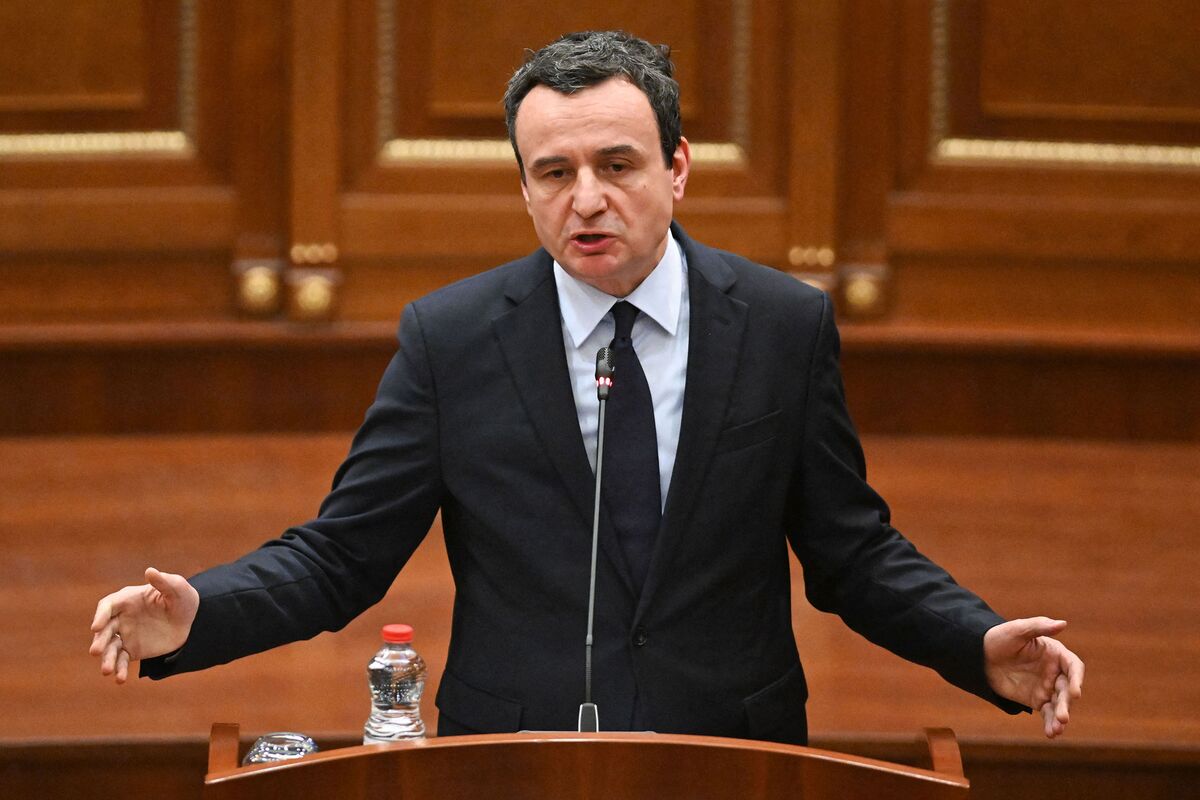
Kosovo lawmakers face a midnight deadline to elect a president, with failure likely to trigger snap elections amid deep party divisions and an opposition boycott threat. The article highlights ongoing constitutional disputes and legal challenges at the top court, underscoring continued political instability in Kosovo. Market impact is likely limited, but the headline adds to emerging-market political risk.
This is less a country-specific event than a volatility signal for the Western Balkans political-risk basket. The immediate market impact should be contained, but the second-order effect is a higher probability of governance drift: delayed budgets, slower procurement, and weaker execution of donor-backed projects. That tends to widen the spread between sovereigns with functioning coalitions and those with repeated institutional deadlock, particularly in a region where external financing and EU-accession optics matter more than near-term growth data.
The key tradeable issue is not the presidency itself but the escalation path if the vote fails: a snap election can extend uncertainty for weeks and freeze administrative decision-making for months. In EM microcaps and local banking/telecom exposures, that usually shows up as lower transaction velocity, deferred capex, and a temporary increase in working-capital drag. If the opposition boycott is tactical rather than strategic, the market may be overpricing a crisis; if it becomes a repeat pattern, the premium for policy continuity should persist into the next budget cycle.
The contrarian view is that headline political noise may be masking the fact that institutional stalemate can reduce reform risk in the very short run by preventing aggressive regulatory changes. In other words, the loser is not necessarily the economy immediately, but the probability distribution around future policy surprise. For regional investors, the cleaner expression is to short any basket that is most sensitive to funding continuity and public-sector capex rather than trying to express a country-specific directional view.
Catalyst timing is days to weeks for the vote outcome, but months for any real economic translation. The reversal case is straightforward: a credible cross-party deal or a technocratic compromise would compress risk premia quickly, while a failed vote and election campaign would keep the overhang alive into the next quarter.
AI-powered research, real-time alerts, and portfolio analytics for institutional investors.
Request DemoOverall Sentiment
mildly negative
Sentiment Score
-0.20
