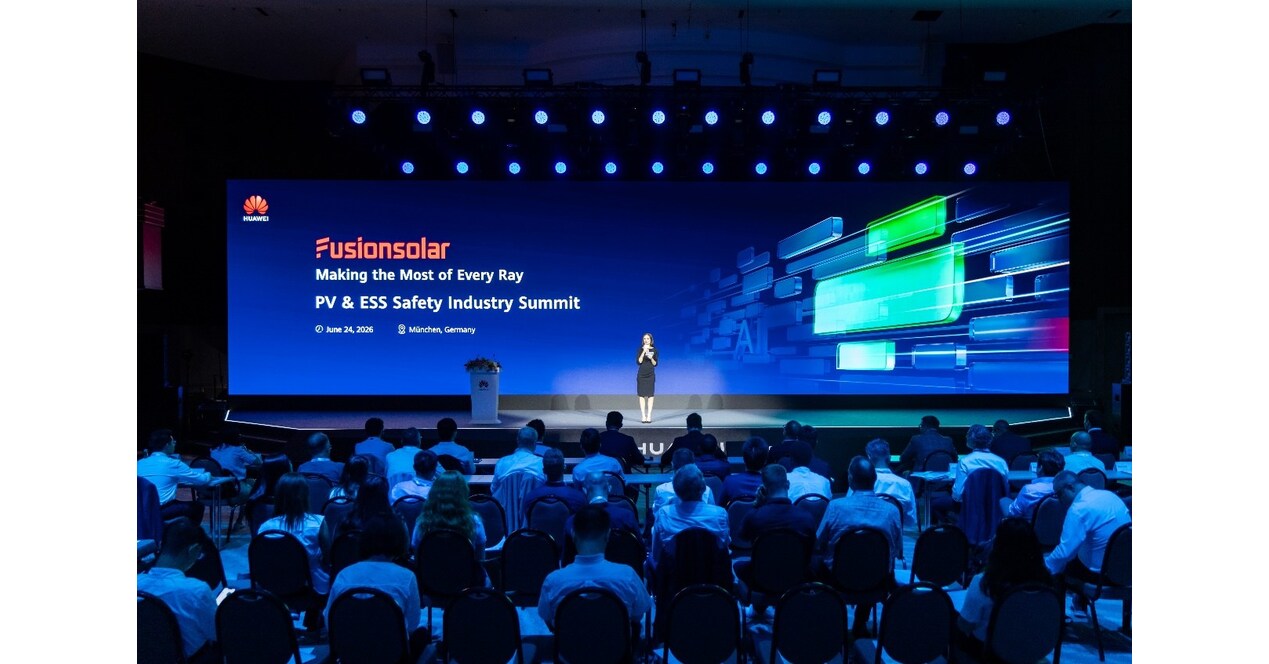
Huawei Digital Power convened the inaugural 2026 PV & ESS Safety Industry Summit in Munich (Jun 24, 2026) to address growing safety risks in PV+ESS and the insurance coverage mismatch. The article cites Germany’s BESS capacity at 19 GW and notes that ~70% of BESS defects occur at the system level, with calls to evolve test standards toward “installation-level” scenarios and release UL 9540A test data. It also highlights a newly released Grid-Forming ESS Safety White Paper on quantitative safety assessment and digitalization pathways, but provides no direct financial impacts or pricing changes.
This reads less like an energy headline and more like a cost-of-capital event for storage. The market mechanism is higher diligence, tighter underwriting, and more conservative coverage structures, which should compress project IRRs for marginal BESS sponsors before it shows up in OEM revenue. The durable beneficiaries are insurance intermediaries and risk-engineering franchises; WTW is the only listed name here with a plausible monetization path, but even that is incremental rather than transformative.
Near term, I would not expect a tradable price reaction in GLP or RNWB absent confirmed BESS exposure in their portfolios. The first real catalyst is renewal season and project-finance committee behavior over the next 1-3 months: if insurers begin demanding installation-level tests, 24/7 support, or higher deductibles, COD schedules slip and the weakest merchant-storage projects see the sharpest valuation air pocket. Over 6-18 months, those standards should widen the moat for large, bankable integrators and testing/certification firms, while low-data developers pay a financing penalty.
Contrarian view: the consensus may be treating safety as a headwind when it can also expand the addressable market by lowering loss severity and making insurers willing to write larger limits. That is bullish for the broker/advisory layer, but the trade is not obvious in the near term because the earnings delta is likely small until pricing data proves out. For WTW, the setup is a slow-burn positive; for GLP/RNWB, there is no clean thesis unless we can verify direct storage exposure.
AI-powered research, real-time alerts, and portfolio analytics for institutional investors.
Overall Sentiment
neutral
Sentiment Score
0.08
Ticker Sentiment
