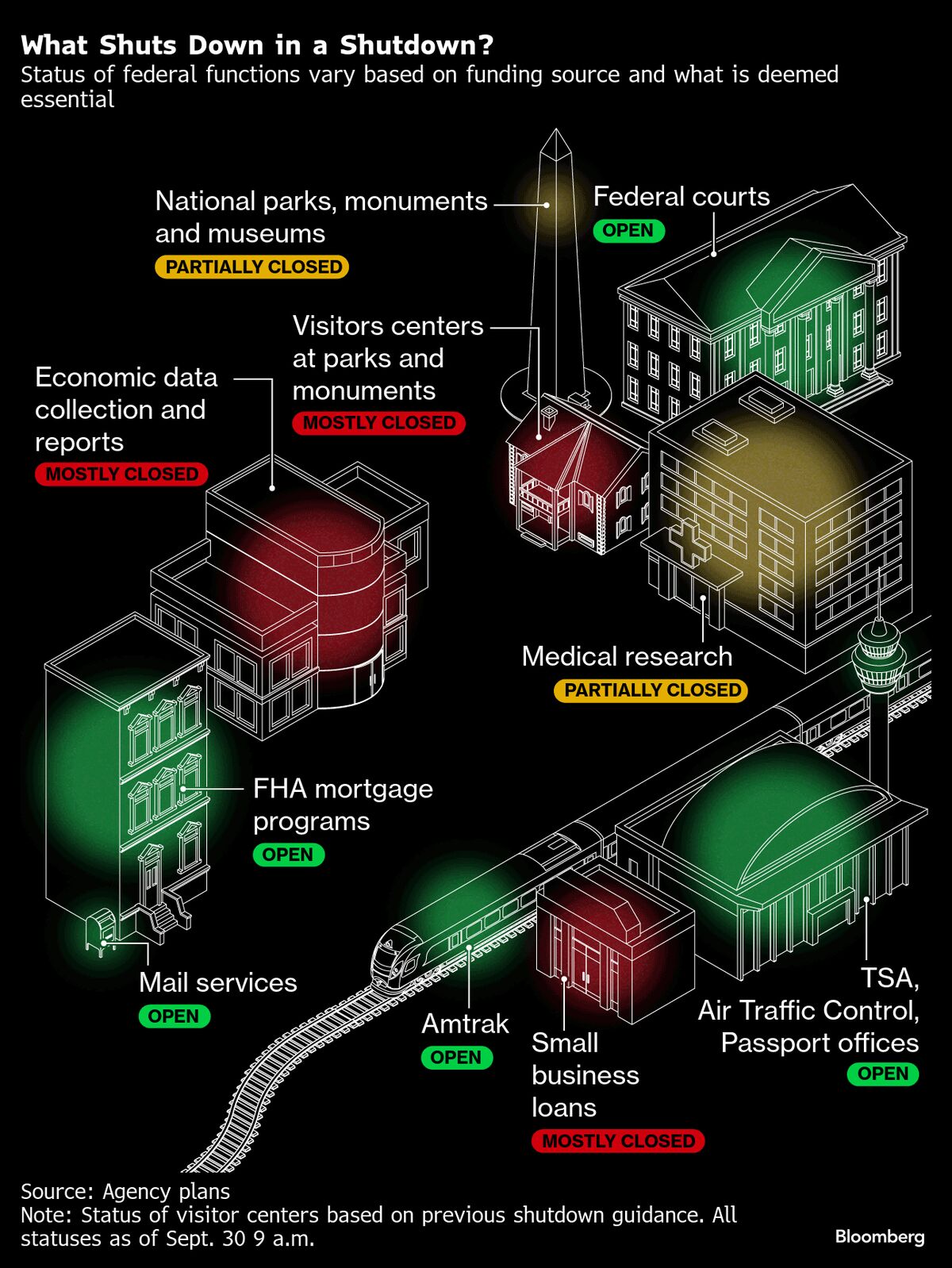
The U.S. government has initiated its first shutdown in nearly seven years, and the third under President Donald Trump, after Congress failed to meet a midnight funding deadline. This lapse will halt non-essential federal operations, affecting hundreds of thousands of government employees and disrupting public services, signaling potential operational and economic uncertainty.
The United States government has initiated a shutdown, its first in nearly seven years, following Congress's failure to meet a midnight funding deadline. The event, marking the third such shutdown under the Trump administration, has triggered the cessation of non-essential federal operations, directly disrupting public services and the employment of hundreds of thousands of federal workers. The accompanying signals, including a 'strongly negative' sentiment score of -0.75 and a high market impact score of 0.7, indicate that investors perceive this not as a minor political event but as a source of significant economic uncertainty. This legislative gridlock introduces a notable headwind for the US economy, with potential negative consequences for consumer confidence and government-related economic activity, the severity of which will depend on the shutdown's duration.
AI-powered research, real-time alerts, and portfolio analytics for institutional investors.
Request DemoOverall Sentiment
strongly negative
Sentiment Score
-0.75
