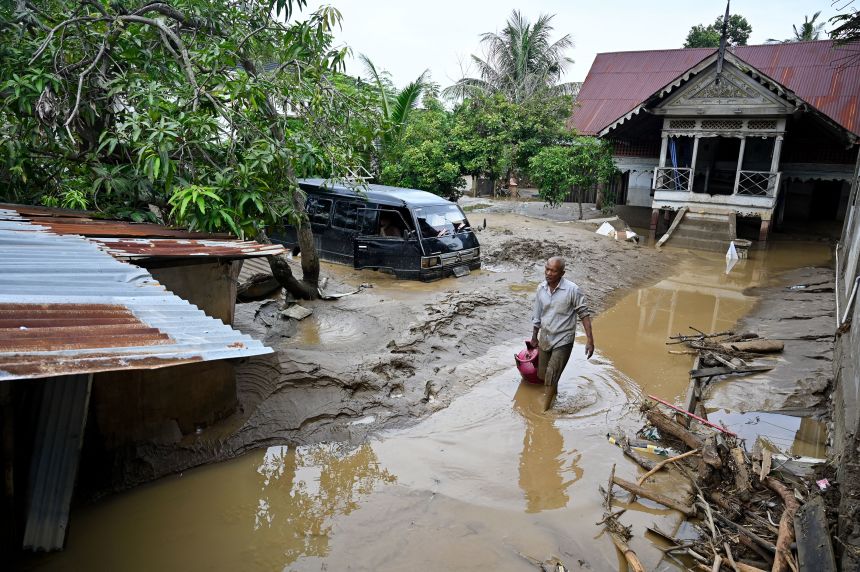
Severe cyclone-fueled downpours and related storms have caused widespread flooding and landslides across Southeast Asia, killing more than 600 people (at least 303 in Indonesia, 162 in Thailand, 153 in Sri Lanka and 2 in Malaysia) with hundreds still missing and tens of thousands displaced; Indonesia reports 279 missing, Sri Lanka about 191 missing, over 25,000 homes destroyed and roughly 147,000 people in temporary shelters. The events—driven in part by Cyclone Senyar in the Malacca Strait and Cyclone Ditwah near Sri Lanka—are producing localized infrastructure disruption (airlifts, evacuations, cancelled flights), major humanitarian need and potential insurance, logistics and tourism losses that could pressure regional economic activity and recovery spending in affected markets.
Market structure: Immediate winners are re/insurance providers and construction/mining suppliers; expect short-term (3–12 month) reinsurance rate repricing of +10–30% in affected lines (flood, property) at upcoming renewals, benefiting Everest Re (RE) and brokers (MMC, AON). Losers include regional travel & leisure (JETS ETF), local RE and small banks in Thailand/Indonesia/Sri Lanka where loan books have concentrated flood exposure; EM FX (IDR, THB, LKR) should see 3–8% downside pressure near-term while commodity inputs for reconstruction (copper/iron) firm.
Risk assessment: Tail risks include a prolonged storm season or successive cyclones that push insured losses >$10–20bn regionally and strain reinsurer capital (forcing equity raises), or sovereign funding shocks in Sri Lanka spreading to nearby EM debt. Immediate (days) effects: travel disruption, flight cancellations; short-term (weeks–months): claims & supply-chain idling; long-term (quarters–years): structural capex on flood resilience and higher insurance premiums. Hidden dependencies: retrocession capacity, reinsurance collateral timelines, and IMF/aid disbursements; catalysts to watch: Jan–Mar reinsurance renewals, official reconstruction packages, and El Niño forecasts.
Trade implications: Direct plays: establish modest longs in reinsurers (RE, MMC, AON) sized 1–3% portfolio with 3–12 month horizons to capture pricing tailwinds; pair trade by shorting JETS ETF (1–2%) or buying 1–2 month put spreads anticipating -10–25% travel weakness. Commodity/industrial exposure: add 1–2% to copper/iron ore majors (FCX, BHP) for 6–18 months to capture reconstruction demand. Risk management: trim local-currency Thai/Indonesian sovereign debt exposure by 20–30% and increase USD cash or short-dated USTs as a hedge; use stop-losses at 10–12% and profit targets at 15–25%.
Contrarian angles: Consensus will over-focus on immediate tourism damage and underprice medium-term upside for reinsurers and industrials — reinsurance pricing cycles historically re-rate within 6–12 months after large loss years. Conversely, do not assume a clean recovery in EM credit: reconstruction-driven commodity inflation may force local-rate hikes, compressing EM spreads further — consider hedging with FX forwards (long USD/IDR or USD/THB) if moves exceed 5% intramonth. Historical parallel: 2011 Thailand floods caused 6–9 month supply shocks but ultimately benefited regional industrial suppliers; similar asymmetric payoff exists here.
AI-powered research, real-time alerts, and portfolio analytics for institutional investors.
Request DemoOverall Sentiment
strongly negative
Sentiment Score
-0.60
