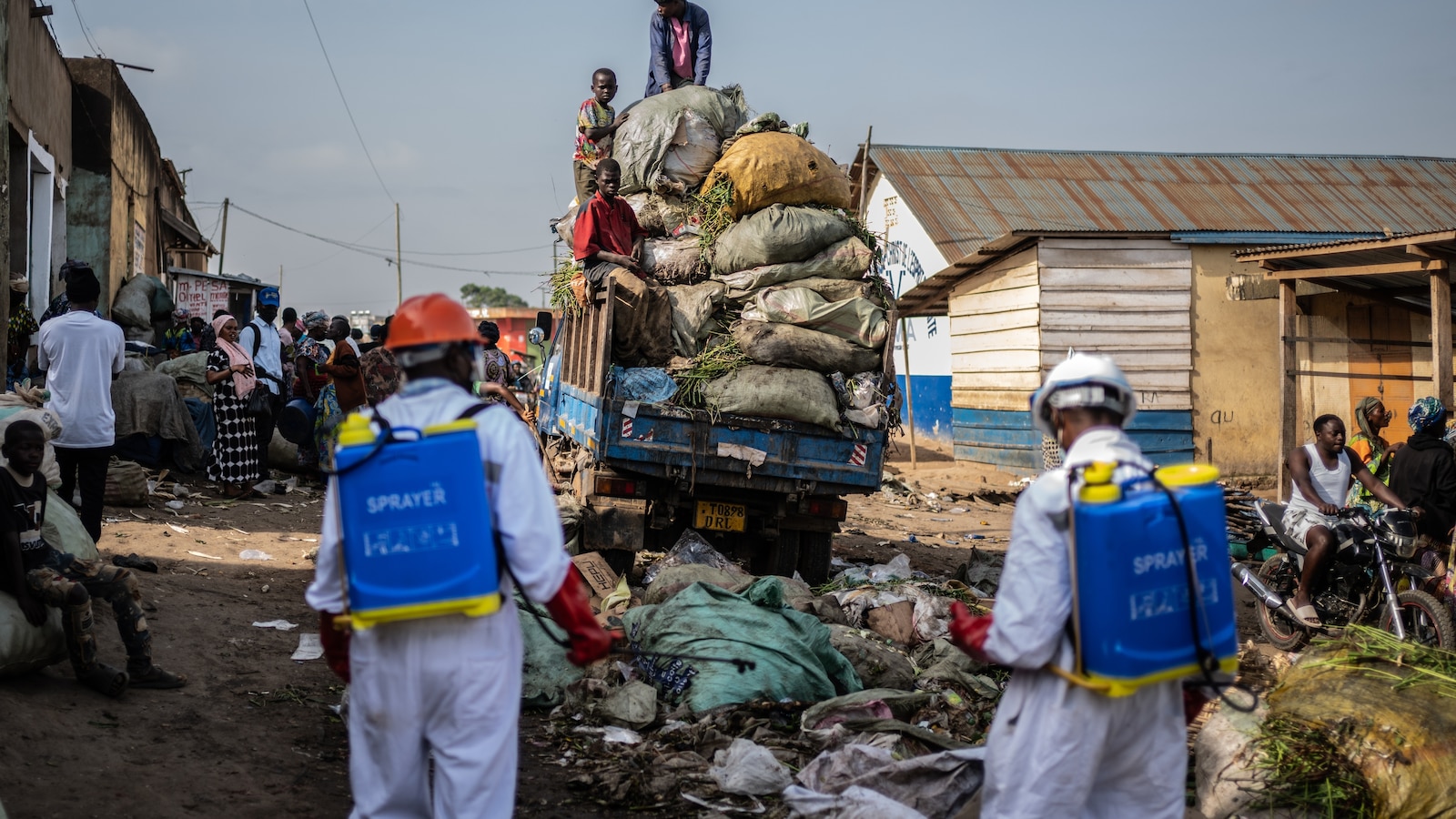
More than 700 suspected Ebola cases and more than 170 suspected deaths have been reported in eastern Congo, with the outbreak worsened by armed conflict, displacement of nearly 1 million people in Ituri, and attacks that burned two treatment centers. Aid capacity has been weakened by U.S. and other donor cuts, while local communities are resisting burial protocols and mistrusting responders. The situation raises regional contagion risk, with cases also reported in North Kivu, South Kivu, and Uganda.
The market implication is not a direct Ebola trade; it is a collapse in the operating reliability of fragile-state health systems. In environments like eastern Congo, every outbreak forces a choice between security logistics and clinical execution, so the marginal winner is not a vaccine maker but whichever NGOs, military contractors, telecom/logistics providers, and air/ground transport operators can function in contested terrain. The second-order loser set is broader: any company with exposure to central African project timelines, concession stability, or humanitarian procurement should expect longer lead times, higher security premiums, and more frequent work stoppages.
The more important signal is that this is a high-friction event with a low probability of clean containment over the next 4-12 weeks. When treatment centers are attacked and burial protocols are rejected, case detection usually degrades before official counts do, which means the reported incidence can lag the true spread by 1-3 weeks. That creates a tail-risk setup where the next catalyst is not medical data but operational failure: staff evacuation, camp spillover, or a cross-border cluster that forces adjacent governments to impose tighter movement controls.
The contrarian read is that the current market may still be underpricing the duration of disruption, but overpricing any direct biotech upside because this strain lacks an approved vaccine or treatment. The real investable takeaway is that humanitarian and security bottlenecks can become a persistent drag on regional growth, especially if displacement expands around Bunia and border areas. If the response remains fragmented between government and rebel-held zones, the outbreak becomes a proxy for governance risk rather than a one-off health shock.
AI-powered research, real-time alerts, and portfolio analytics for institutional investors.
Request DemoOverall Sentiment
strongly negative
Sentiment Score
-0.70
