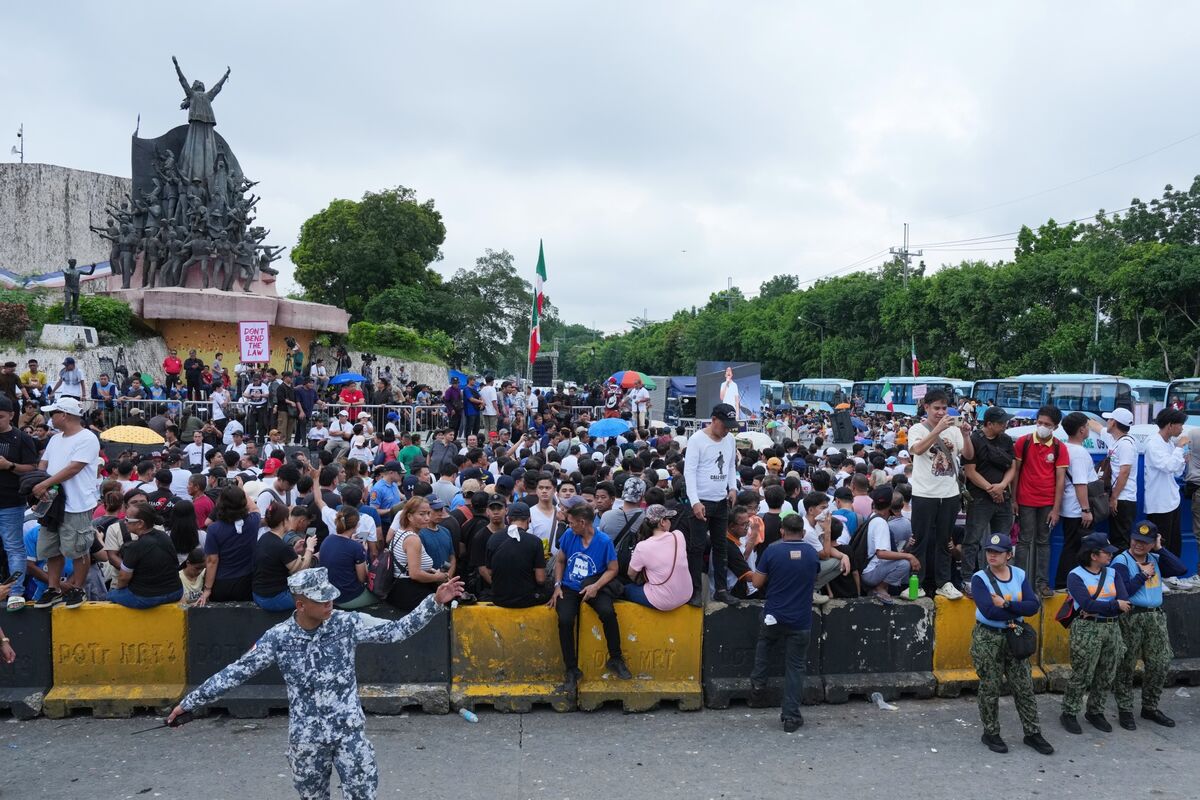
A Philippine religious group extended protests into a second day, with about 3,000 participants (down from 14,000+ Tuesday) disrupting Manila’s main highway and extending gridlock. Anti-riot police are present to maintain order while buses continue to block a linked road and lanes remain constricted. The disruption is likely to create localized transport/public-safety concerns, but no direct financial or policy change is cited.
This is a classic local-disruption event that only becomes investable if it migrates from traffic nuisance to economic choke point. The first-order hit is small and mostly intraday, but the market mechanism matters: Manila is the clearinghouse for retail footfall, last-mile delivery, and sentiment for domestic beta, so any spillover into airports, ports, or the CBD would matter far more than the protest itself.
The bigger second-order risk is flow-driven: the Philippines market is relatively thin, so foreign holders can demand a higher risk premium even when direct earnings damage is negligible. That would show up first in the peso and local financials/REITs rather than in operating data. If the crowd keeps shrinking and police contain the disruption, the correct trade is to fade any knee-jerk de-risking within 48-72 hours.
Contrarian view: consensus may be overrating persistence. Most politically symbolic road protests decay quickly unless they attract unions, students, or spread beyond one corridor; absent that, the revenue impact is deferred, not lost. The main falsifier is escalation into airport/port access or a multi-day shutdown of central Manila, which would turn this from noise into a real 1-3 month Philippines beta headwind.
AI-powered research, real-time alerts, and portfolio analytics for institutional investors.
Request DemoOverall Sentiment
mildly negative
Sentiment Score
-0.20
Ticker Sentiment
