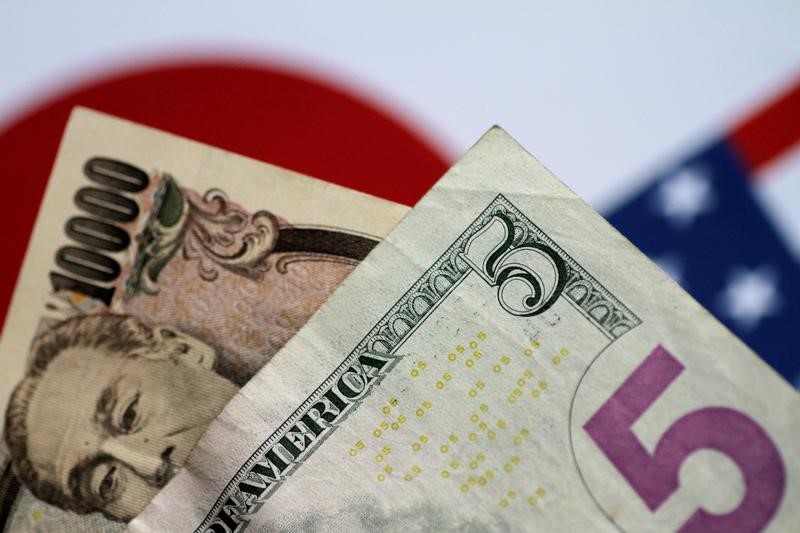
USD/JPY fell 1.7% to 155.09 yen, the yen's strongest level in over two months, as reports suggested Tokyo recently intervened in currency markets. The move was amplified by thin holiday trading volumes, and the Bank of Japan left rates unchanged last week while signaling it could hike if inflation rises. Overall, the article points to intervention-driven FX volatility rather than a broad shift in fundamentals.
The key market implication is not just yen strength, but the signaling function of a credible official backstop. Once market participants believe the authorities are willing to lean against disorderly FX moves, intraday trend-chasing becomes more dangerous and short-yen positioning can unwind violently in thin liquidity. That matters because the yen is a core funding currency: even a modest squeeze can force de-risking across global carry trades, pressuring high-beta equities, emerging markets, and speculative credit over a 1-5 day horizon.
The more interesting second-order effect is on Japan-linked rate dynamics. If intervention slows depreciation without a corresponding BOJ hike, it effectively tightens financial conditions through the currency channel while leaving domestic policy rates unchanged. That can steepen the political pressure on the BOJ to avoid appearing behind the curve; the result is a higher probability of a surprise hawkish shift later this quarter if inflation stays sticky, which would be a larger and more durable driver than intervention alone.
Consensus may be underestimating how quickly this can reverse. FX intervention usually buys time, not a structural rerating, unless paired with rate differentials narrowing. If US yields back up or risk sentiment improves, the yen can give back the move just as fast, especially given the holiday-thinned market and the fact that speculative short yen exposure remains an obvious crowded trade. The cleanest risk/reward is to trade the squeeze in near term while staying cautious about assuming a lasting regime change.
The cross-asset winner is likely Japan domestic defensives and import-sensitive sectors if yen strength persists for several sessions, while exporters and overseas-leveraged Japanese firms face margin compression. Outside Japan, the main losers are crowded carry beneficiaries: high-yield FX, high-beta Asia, and levered growth proxies that depend on easy global liquidity. In other words, this is less a standalone FX story than a potential short-term unwind catalyst for risk assets.
AI-powered research, real-time alerts, and portfolio analytics for institutional investors.
Request DemoOverall Sentiment
neutral
Sentiment Score
0.05
